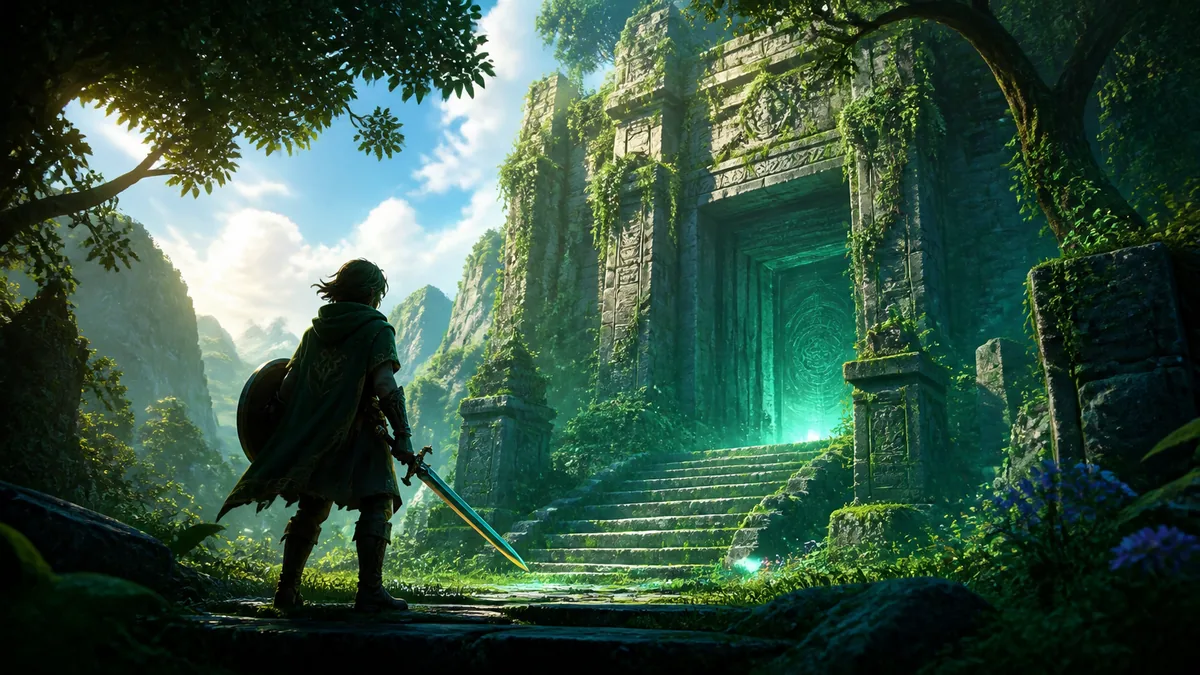
The Legend of Zelda: Ocarina of Time returning as a Switch 2 remake is the kind of announcement that changes the shape of Nintendo's year. This is not a small remaster meant to fill a quiet month. Ocarina is one of the company's most protected names, and using it during the Switch 2 era signals that Nintendo wants a serious nostalgia anchor alongside new projects.
The timing also makes sense. Switch 2 needs games that can sell hardware to lapsed players, not only people who follow every Direct. Ocarina of Time has that reach. It means something to players who grew up with the Nintendo 64, players who met it through the 3DS version, and younger fans who know its reputation without having played the original in a modern format.
A remake brings risk because the original is remembered as much for design confidence as for technology. Better lighting, animation, and interface work will help, but Nintendo has to protect the rhythm of exploration, dungeons, and music. The game cannot feel like a modern open-world Zelda wearing old clothes. It has to make the original structure feel intentional again.
The Verge reported that Nintendo announced an Ocarina of Time remake for Switch 2 with a 2026 release plan. The report also places the remake inside a busier Zelda period that includes upgraded Switch 2 versions of newer titles and a live-action movie scheduled for 2027.
That wider Zelda timing matters. Nintendo is not treating the franchise as a single release every few years anymore. It is building a calendar around games, upgrades, film, and anniversary energy. The danger is overexposure, but Ocarina is strong enough to carry a major slot if the remake feels carefully rebuilt rather than rushed for brand momentum.
This announcement also sits beside the broader return of older games in modern forms, including our coverage of Resident Evil Veronica moving into modern horror. Remakes work best when they clarify why the original mattered. They fail when they only modernize the surface. Nintendo's challenge is harder because Ocarina is already clean in memory, even when its camera and controls show their age.
The music will be another pressure point. Ocarina's identity is inseparable from short melodies, dungeon atmosphere, and the feeling that sound is part of exploration. A remake can improve orchestration and spatial audio, but it cannot bury the simplicity that made each song memorable. Nintendo has to make the soundtrack feel richer without turning it into a wall of nostalgia.
There is also a preservation argument. Many younger players know Ocarina as a name in best-game lists rather than as a living design. A Switch 2 remake can make the game playable on modern screens with modern expectations while keeping the original available as history. Those two goals should support each other, not compete.
What players should watch next is how much Nintendo changes. A faithful remake with improved controls and visual language could satisfy nearly everyone. A bolder rebuild could become more exciting, but also more divisive. Either way, the Switch 2 now has a remake that can speak to old fans, new buyers, and the larger question of how Nintendo preserves its most important games.