AI image generation is moving past the stage where novelty alone is enough. Creative teams do not only want a model that can produce a beautiful image once. They want layout control, repeatability, clear composition, fewer refusals, predictable edits and outputs that can be placed into real production workflows. That is a harder benchmark than making a single impressive demo.
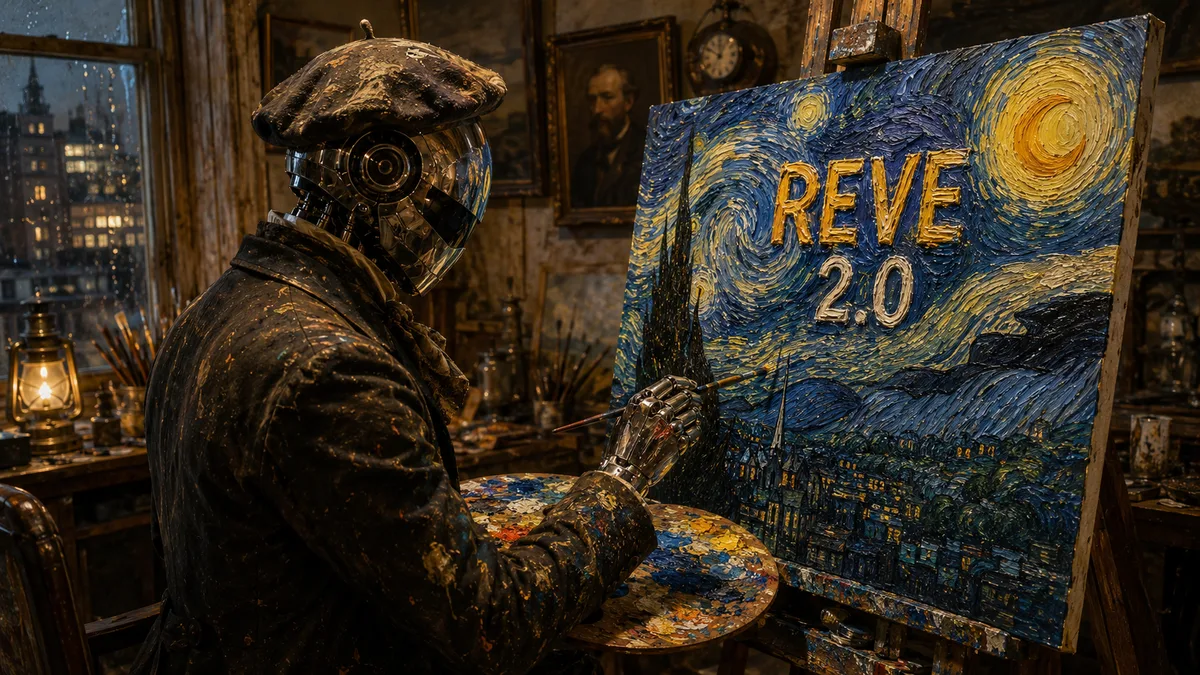
Reve 2.0 is interesting because it is being discussed around control rather than only style. In practice, layout control is what separates a fun image generator from a tool that designers, marketers and product teams can trust. If a model understands where objects belong, how framing should work and how instructions translate into spatial choices, it can reduce the number of manual retries.
Decrypt described the new model as a stronger option for layout control and noted its push toward high-resolution generation. That matters because resolution and composition solve different problems. A sharp image with weak layout is still difficult to use. A well-composed image that needs upscaling can also slow teams down. Production work needs both.
This is a useful contrast with our earlier look at DiffusionGemma's speed-first tradeoff. Some models focus on fast iteration, which is valuable for exploration. Others aim for polished, controlled output. Neither approach is universally better. The right tool depends on whether the user is brainstorming, shipping a final image, creating a campaign concept or building a repeatable brand workflow.
For professional teams, the biggest cost is often not the image generation bill. It is the time spent correcting outputs that almost work. A logo placed incorrectly, a product shown at the wrong angle, a hand blocking the important part of a device or a scene that ignores requested negative space can turn an impressive result into wasted time. Better layout reasoning directly attacks that hidden cost.
There is also an emerging trust issue around refusals and prompt interpretation. Creative users can tolerate safety boundaries, but they need consistent behavior. If a model refuses harmless commercial prompts or changes the subject unexpectedly, teams cannot build reliable pipelines around it. The models that win production use will be the ones that follow directions closely while enforcing safety rules transparently.
The next competition in AI image tools may look less like a beauty contest and more like a workflow test. Can the model keep a product in the same place across versions? Can it preserve a campaign mood without copying protected material? Can it create usable negative space for headlines without placing fake text everywhere? These details matter more to working teams than raw surprise.
Reve 2.0's attention is another signal that the category is maturing. The market is no longer impressed by image generators simply because they exist. Buyers want fewer retries, more control and outputs that fit into publishing, advertising and product design. That is where the serious competition will happen, and layout control is one of the clearest signs of a tool moving in that direction.
The tools that become daily production software will also need good asset management. Teams will want prompt history, approved style references, version comparison and rights notes attached to outputs. Image quality opens the door, but workflow memory keeps a tool inside a professional process after the first impressive result.