Chinese coverage of Anthropic's reported Samsung chip talks shows how quickly custom AI silicon has become a global story. The report is not only about one model company seeking a manufacturing partner. It is about frontier AI labs trying to control cost, supply, and performance at the hardware layer.
The pressure is easy to see. Large models need enormous training and inference capacity, and depending entirely on general-purpose GPU supply can leave a lab exposed to price swings, export rules, and cloud-provider priorities.
The thread also links naturally to our earlier look at the memory chip rumor. For this post, Anthropic Samsung Chip Talks In Chinese Media Show Custom AI Silicon Pressure makes that connection specific to 新浪财经: the rumor or report is only useful when it is read beside product timing, component pressure, and the user trust problem around Samsung.
The current report from 新浪财经 reported the Anthropic and Samsung chip-manufacturing talks in Chinese, tying the story to Claude, OpenAI, Google, and Microsoft competition. That source detail gives the article a concrete starting point, but the bigger value is in reading what the report says about the product category around it.
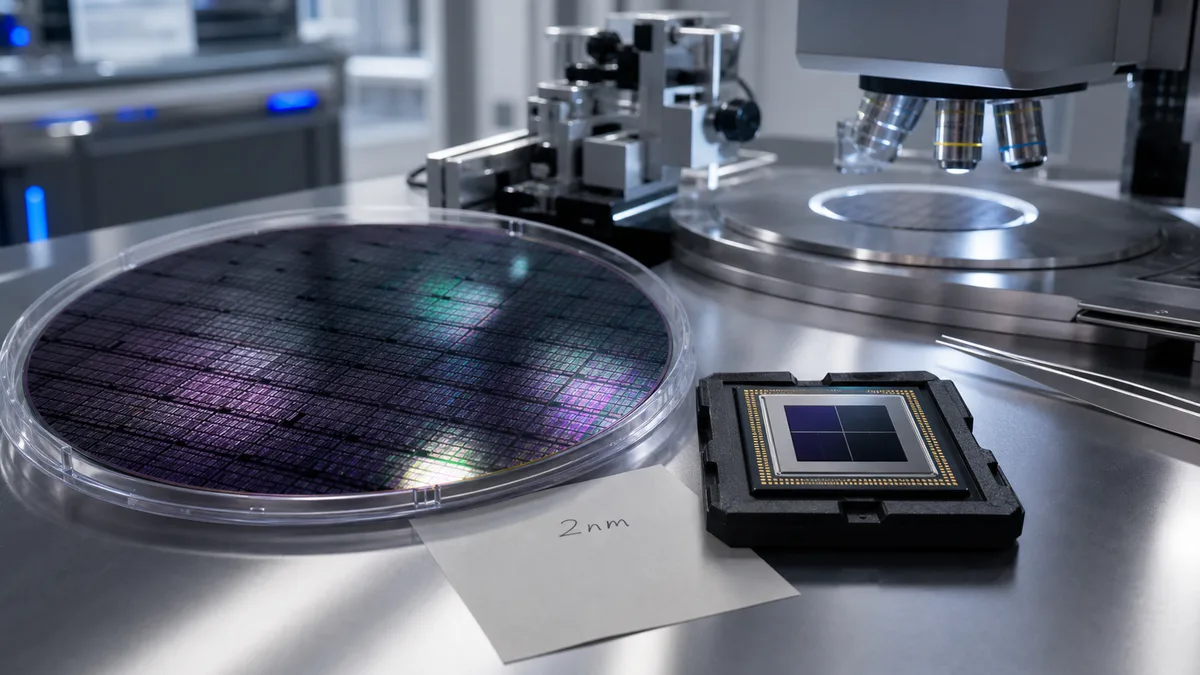
For AI companies, custom chips promise better economics if the volume is large enough. For Samsung, a high-profile AI customer would strengthen its foundry story and give the company another way to compete against TSMC in advanced-node manufacturing.
What makes this worth separating from a normal news brief is the way it changes near-term expectations. Anthropic Samsung Chip Talks In Chinese Media Show Custom AI Silicon Pressure is really about timing, confidence, and execution. A small leak can be forgettable, but a leak that points to supply, policy, capacity, or launch positioning can shape how buyers and rivals prepare.
A custom chip does not automatically beat an established accelerator. It needs software support, memory bandwidth, packaging, networking, and a deployment path. The hardest part may be making the chip useful across real workloads rather than one narrow benchmark.
Chinese-language attention matters because the AI hardware race is not confined to Silicon Valley. Investors, phone makers, cloud providers, and chip suppliers in Asia all watch these deals for signs of where future capacity and margins may move.
Another angle worth keeping in mind is audience behavior around 新浪财经. People following Anthropic Samsung Chip Talks In Chinese Media Show Custom AI Silicon Pressure are no longer waiting passively for official launch slides; they compare leaks, supplier moves, policy signals, and early pricing clues before deciding what to buy, build, or avoid.
Talks can end without a final product. Foundry discussions often happen years before commercial silicon is visible, and an early project can change node, design target, or partner.
If the report develops into a confirmed manufacturing program, it would make custom AI chips a central part of Anthropic's long-term strategy. It would also show that model companies see hardware control as a competitive necessity.
The practical reading is therefore cautious but not dismissive. For 新浪财经, the headline is the new development. For readers following Anthropic, the more durable point is whether the companies involved can turn that development into something reliable, understandable, and worth paying attention to after the first leak cycle fades.