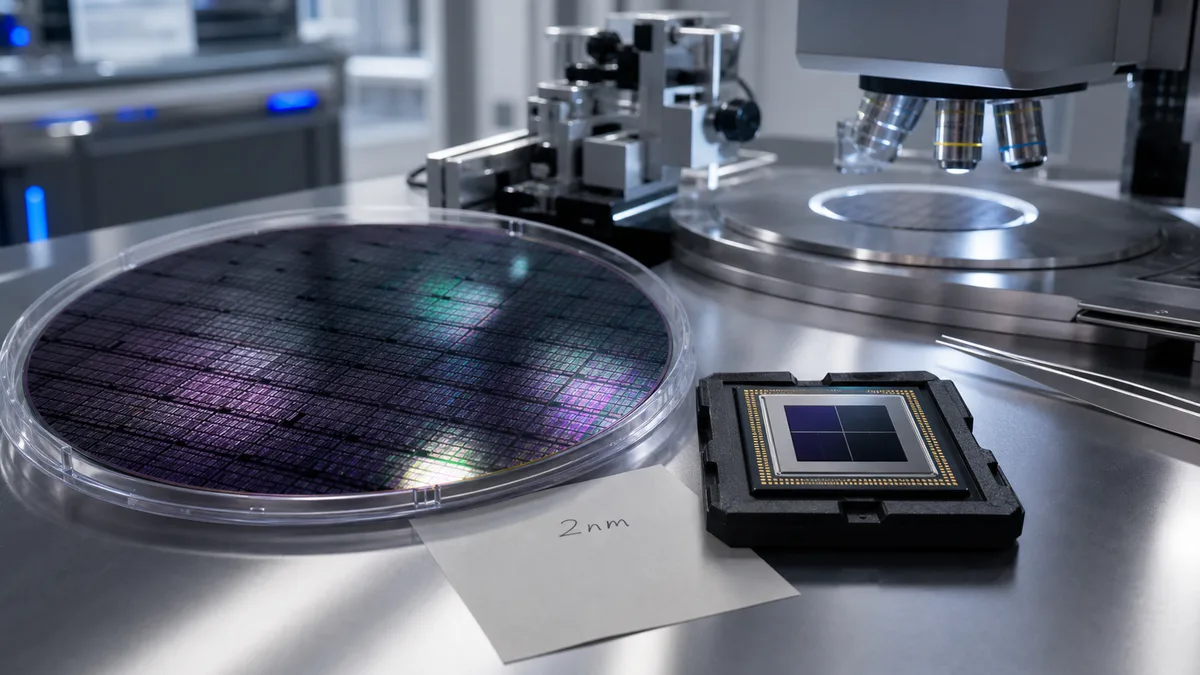
A Chinese-language report says Samsung may have won a massive AI chip foundry order from Meta, with Anthropic also evaluating Samsung. If accurate, the story would give Samsung a stronger answer to the AI silicon boom.
Foundry wins matter because AI companies are trying to secure custom chips, reduce dependence on standard GPU supply, and control inference costs over time.
This also connects with our earlier look at Samsung 2nm AI chip bet, because the same product cycle is now being shaped by design evidence, supplier pressure, and the way buyers read early hardware clues.
The report from Jiemian links Samsung's advanced process ambitions with Meta and Anthropic demand.
The signal is that the AI race is moving deeper into manufacturing contracts, not just model releases.
A 2nm-class bet would require yield confidence, packaging capacity, memory integration, and close design support. Winning the order is only the start.
For enterprise AI users, the impact is indirect but important. More custom silicon could eventually lower serving costs and diversify supply.
The timing is strong for Samsung because TSMC has dominated leading-edge foundry trust. AI customers looking for alternatives could shift that perception.
The risk is execution. A large order can become a liability if yields, timing, or performance miss expectations.
TSMC, Intel Foundry, Samsung, and advanced packaging providers are all fighting for the same AI infrastructure wallet.
Watch whether Meta or Samsung confirms any partnership language and whether Anthropic appears in future supply-chain reports.
The Jiemian report shows that AI model competition is increasingly tied to who can manufacture the chips behind it.
A grounded reading of Jiemian Samsung Meta Chip Report Shows AI Foundry Bets Getting Bigger sits between hype and dismissal. The details are specific enough to track, but they still need confirmation from launch material, filings, retail pages, or multiple unrelated leaks before buyers should treat them as final.
The business angle is also different from the fan conversation. Jiemian is describing one public clue, while the companies involved have to think about component costs, regional demand, software readiness, and how quickly rivals can copy the same idea.
Execution will decide whether this becomes a real advantage. A 2nm-class bet would require yield confidence, packaging capacity, memory integration, and close design support. Winning the order is only the start. That is why the final product or platform will be judged by how naturally the feature works, not only by how strong it sounds in an early report.
The practical takeaway from Jiemian is to watch for repetition from independent sources. If the same direction keeps appearing in certifications, supplier notes, app code, retail listings, or hands-on leaks, Jiemian Samsung Meta Chip Report Shows AI Foundry Bets Getting Bigger will move from rumor watch to launch expectation.
For Patriotic Tech readers looking at Jiemian, the value is not simply being early. The value is knowing whether Jiemian Samsung Meta Chip Report Shows AI Foundry Bets Getting Bigger can change upgrade timing, platform trust, developer planning, or the competitive story around Samsung Foundry.
For this specific Jiemian story, the last question is whether Jiemian Samsung Meta Chip Report Shows AI Foundry Bets Getting Bigger changes behavior after the first news cycle. A leak only matters long term when it changes buying plans, developer work, security posture, or competitor timing. That is the standard this report still has to meet.