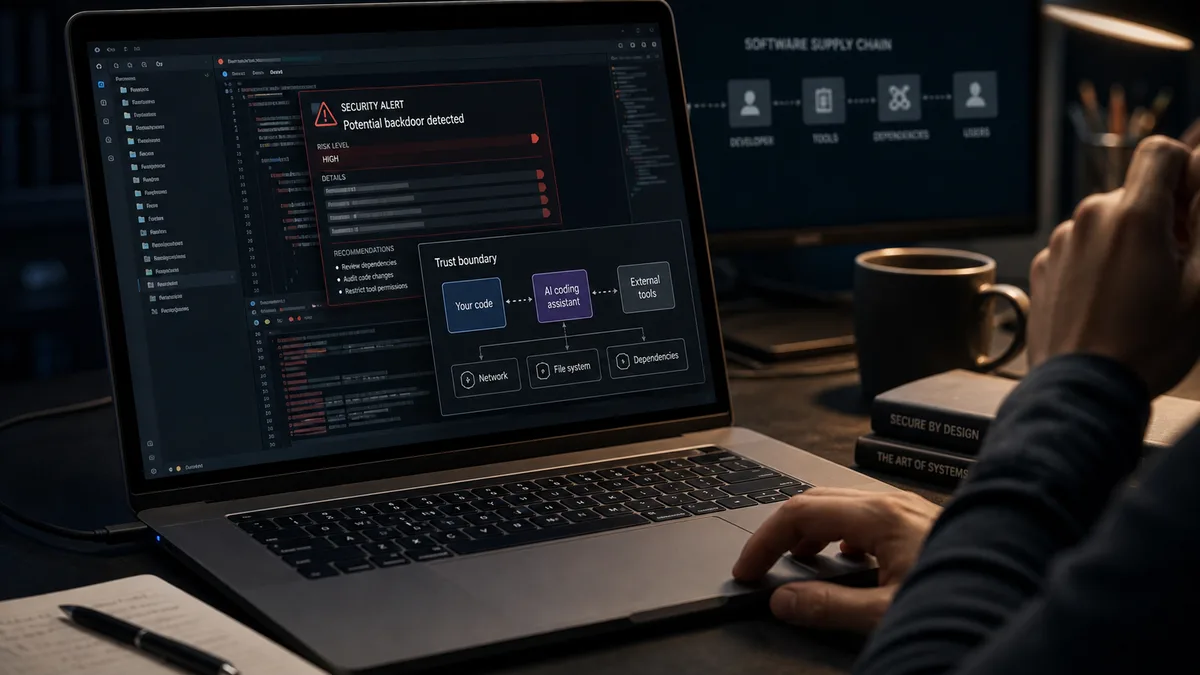
AI coding tools require an unusual level of trust because they sit inside a developer's working environment. They can read source files, propose changes, run commands, inspect errors, and sometimes interact with private infrastructure. That is why a report about hidden user-region detection in Claude Code drew attention. The issue is not only what the code did. It is whether developers can understand the boundaries of a tool that may touch sensitive projects.
Region checks are not automatically illegitimate. Companies may need to comply with export rules, sanctions, licensing terms, or product availability limits. The problem comes when detection logic is hidden in a way that surprises users or makes the tool feel like it is doing policy enforcement without clear disclosure. Developer trust depends on predictable behavior.
This is part of a wider AI access debate. Frontier models and coding agents are increasingly shaped by policy, capacity, and regional availability. We recently covered how an Anthropic model access cutoff turned AI availability into a policy risk, and the Claude Code report shows the same issue at the tool level.
IT之家 reports that Anthropic responded to claims about Claude Code containing code to detect Chinese users and said the relevant code would be removed in an update. That response is important because it shows the company recognized the trust problem, even if the broader policy environment remains complicated.
For developers, the lesson is practical. AI coding tools should make network behavior, telemetry, account checks, and execution permissions visible. A tool that edits code should not feel mysterious about what it sends, where it runs, or why access changes. Clear logs, settings, and enterprise controls are not optional extras when the product is operating in private repositories.
For AI companies, the challenge is balancing compliance with openness. They may be required to restrict use in certain regions or contexts, but hidden checks can damage credibility. A transparent policy may frustrate some users, but it is easier to evaluate. A silent mechanism can make even legitimate enforcement look suspicious.
The issue also affects teams choosing AI tools. Procurement teams will ask whether an assistant can be audited, whether it respects data boundaries, and whether it can operate under company policy. Hidden behavior makes those questions harder to answer. The more capable coding agents become, the more they will be evaluated like infrastructure rather than simple apps.
The Claude Code report is a reminder that AI coding trust has to be designed into the product. Good models and strong code suggestions are not enough. Developers need to know what the tool is doing around their files, accounts, location, and network. The companies that communicate those boundaries clearly will have an advantage as AI coding moves from individual experiments into serious engineering workflows.
Open-source norms may influence expectations here. Developers are used to inspecting tools, reading logs, and questioning dependencies. A closed AI coding assistant does not have to reveal every model detail, but it does need to behave with the same respect for transparency that serious engineering teams expect from build tools and infrastructure.