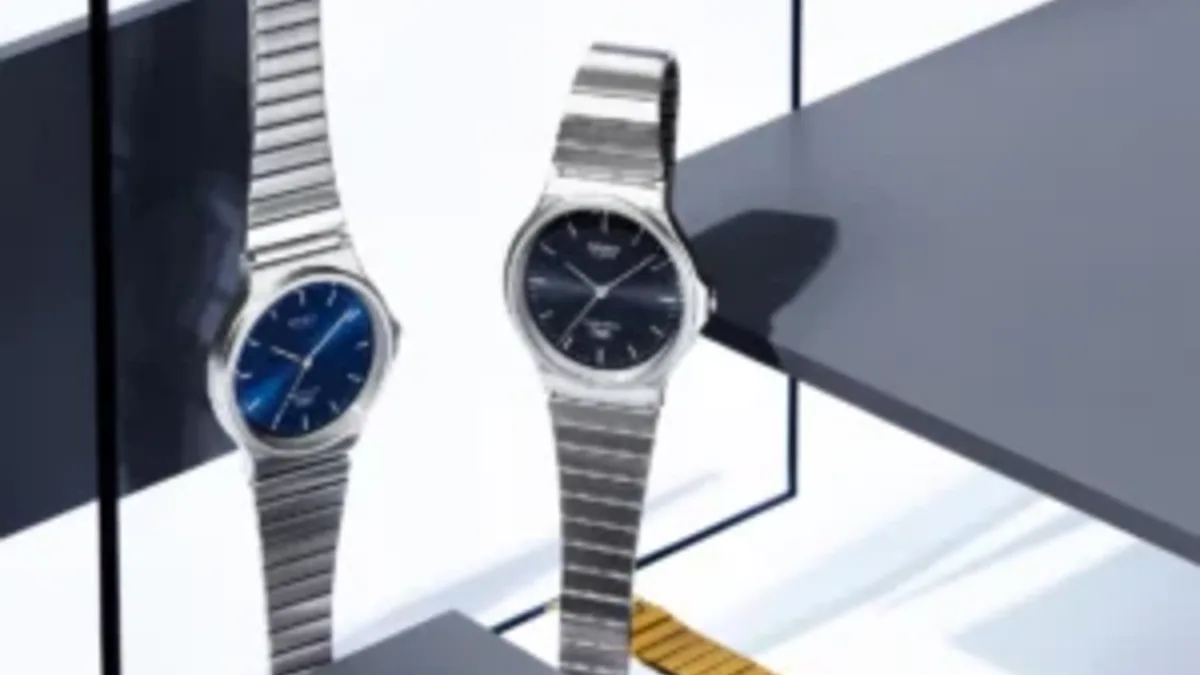
Casio's latest affordable metal watches are not trying to win the smartwatch race, and that is exactly why they are interesting. The new MQ-24D and MQ-24G models bring stainless steel bands and blue, green, and gold finishes to a low-cost analog format. In a market full of sensors, app stores, and subscription fitness dashboards, Casio is selling a simpler idea: a watch that looks good, tells time, and does not ask for attention.
That simplicity is not a weakness. Many people still want everyday gadgets that are reliable, inexpensive, and easy to understand. A basic watch can be worn without charging, paired without Bluetooth, and handed to someone without explaining settings. Casio has spent decades building that kind of trust, which gives even small design refreshes more weight than they would have from an unknown accessory brand.
The metal finish is important because budget watches often look budget first and functional second. Stainless steel bands can make a low-cost model feel more deliberate, especially when paired with color options that are not just black or silver. It gives buyers a way to treat the watch as a style object without entering luxury pricing.
Gizmochina reported the US launch, and the quiet appeal is easy to miss. The story is not that Casio has reinvented wristwear. It is that the company is still finding room at the low end by making small, understandable improvements that buyers can see immediately.
Why non-smart wearables still matter
Smartwatches have trained buyers to think of wrist gadgets as health computers. That has benefits, especially for workouts and alerts, but it has also made wearables feel busier. A plain Casio offers the opposite experience. It does not track sleep, buzz during meetings, or ask for a firmware update before a trip.
This contrast helps explain why the wearable market keeps branching. Some buyers want the advanced health features discussed in our wearable health data coverage. Others want an object that stays out of the way. Neither group is wrong. The useful lesson for gadget makers is that not every upgrade has to add software.
Casio's advantage is also emotional. A budget analog watch can feel familiar in a way many new gadgets do not. It is easy to gift, easy to wear, and easy to replace if it gets damaged. That makes it attractive for students, travelers, people who work with their hands, or anyone who wants a low-stress daily watch.
The launch will not shake the smartwatch market, but it does show why older gadget categories survive. Good design at a fair price still matters. Sometimes a product stands out by refusing to become more complicated than it needs to be.
There is a lesson here for the rest of consumer tech. Affordability does not have to mean feature poverty, and simplicity does not have to mean boredom. Casio is working inside a narrow brief, but it is still giving buyers color, material contrast, and a clear purpose. That discipline is something many overcomplicated gadgets could learn from.