The AI infrastructure story usually starts with GPUs, but the network between machines is becoming just as important. A reported hollow-core fiber trial in China shows why. If data can move faster and farther without signal regeneration, large compute clusters can become more efficient, more flexible, and less constrained by the physical limits of conventional fiber.
That matters because modern AI systems are not only collections of chips. They are giant communication problems. Training and serving large models require constant movement of weights, activations, checkpoints, storage traffic, and user requests. We have looked at the wider infrastructure pressure in edge AI and networking roadmap coverage, but backbone networking is where national-scale systems start to feel the strain.
Tom's Hardware reports that China's hollow-core fiber trial reached 51.3 Tb/s across 128 miles without signal regeneration. Those numbers are technical, but the strategic meaning is simple: the AI race increasingly depends on moving data with less delay and less equipment.
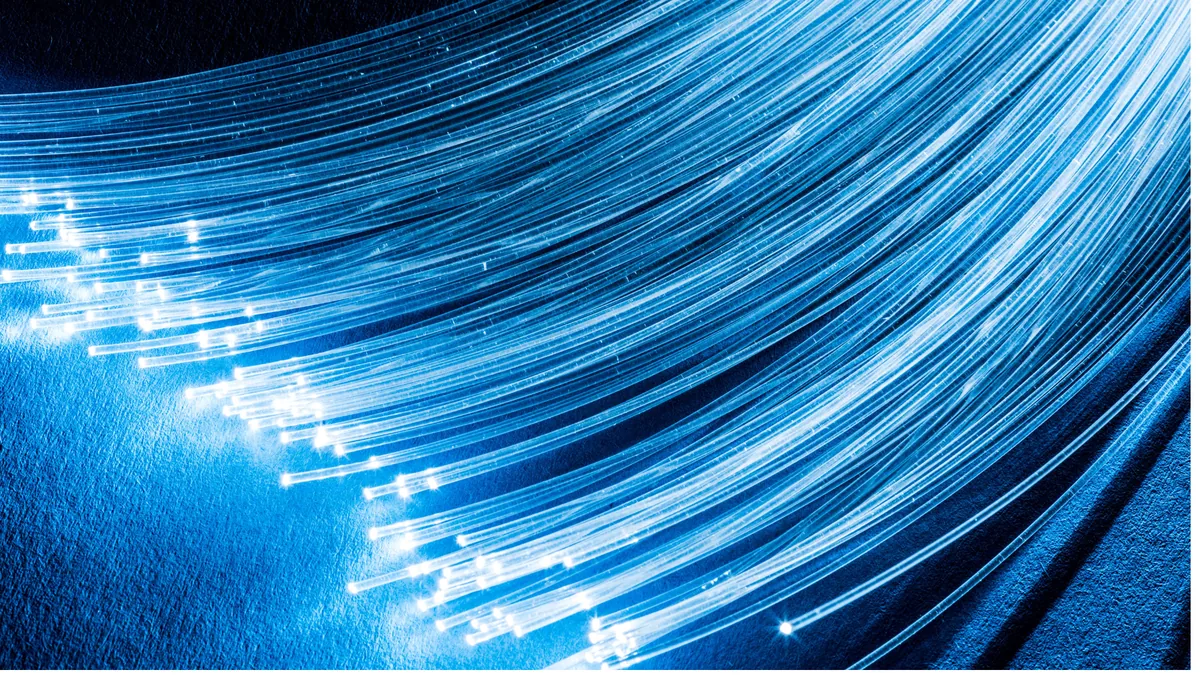
Hollow-core fiber guides light through air-filled channels rather than standard glass cores, which can reduce latency and improve performance in certain designs. It is not a magic replacement for every fiber line, and deployment costs will matter. But even limited use in data-center corridors, research networks, or cloud backbones could give operators more room to scale.
For AI companies, network performance affects everything from training time to inference reliability. A slow interconnect can waste expensive accelerators. A faster network can make the same compute footprint more productive. That is why networking vendors, cloud providers, and governments are all treating bandwidth as a strategic resource.
The trial also shows how AI infrastructure is becoming geopolitical. Countries are not only comparing chip access. They are comparing power grids, cooling systems, memory supply, data-center land, submarine cables, and now advanced fiber. The stack is broad, and weak links become national bottlenecks.
The practical takeaway is that the next AI breakthrough may not look like a chatbot demo. It may look like a better cable, a better switch, or a lower-latency route between clusters. Hardware beneath the model is becoming the story.
The distance in the trial is especially important. Short lab demonstrations are interesting, but AI infrastructure needs technologies that work across campuses, metro regions, and cloud backbones. If hollow-core fiber can reduce the need for regeneration over long spans, operators could simplify parts of the network and reduce latency-sensitive bottlenecks. That would matter for distributed training, backup replication, financial systems, and any workload where delay compounds across many steps.
The economics will decide adoption. New fiber is expensive to manufacture, certify, deploy, repair, and integrate with existing equipment. Operators will not replace conventional fiber everywhere just because a trial looks impressive. The likely path is targeted use where performance gains justify cost. AI clusters, national research networks, and high-value data routes are the obvious candidates.
For cloud customers, the benefits may be invisible but real. Faster backbone links can reduce waiting time for distributed jobs, improve storage replication, and make remote clusters behave more like a single pool. That can lower waste, because expensive accelerators spend less time idle while data catches up. The fiber itself may never appear in a product name, but it can still shape the cost of future AI services.