Supercomputer rankings can look like national bragging rights, but they also reveal where AI infrastructure is heading. A Chinese claim to the world's fastest supercomputer matters because large-scale compute is no longer only a scientific achievement. It is tied to model training, simulation, materials research, weather forecasting, chip design, and national technology strategy.
AI has made compute comparisons more visible. Companies talk about GPU clusters, governments talk about sovereign AI, and research labs need machines that can handle both classic simulation and modern machine learning. That overlaps with the networking story we covered in China's hollow-core fiber trial, because raw compute only matters if data can move efficiently around it.
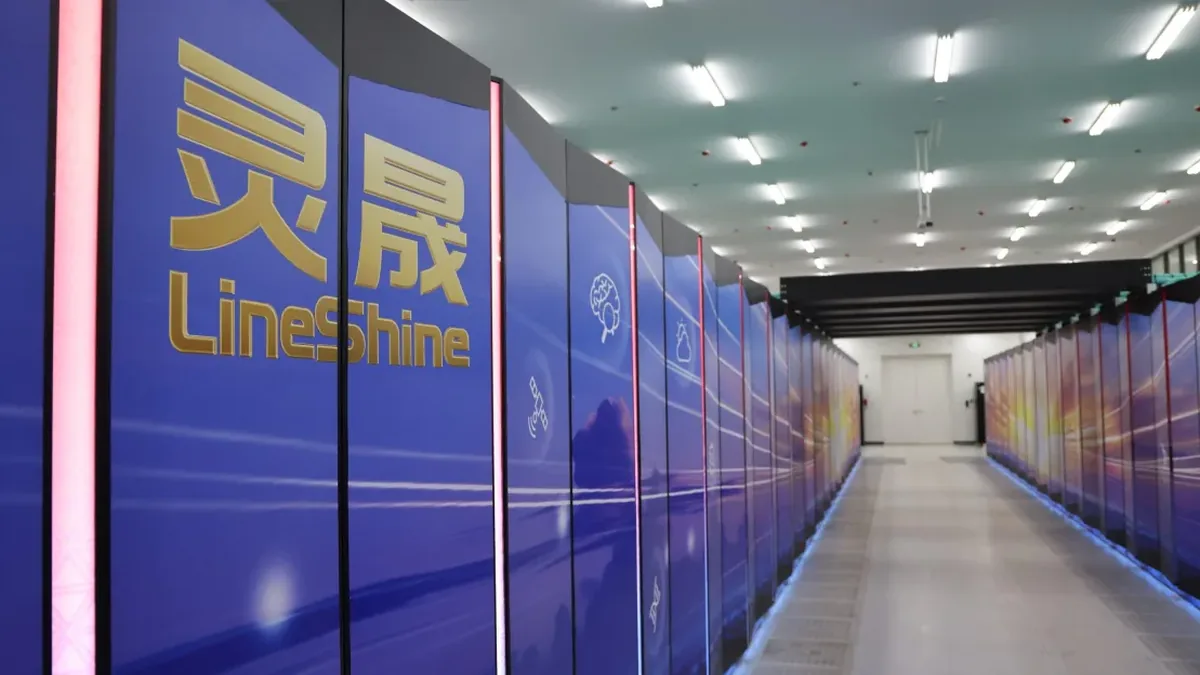
The Verge reports that China claims the world's fastest supercomputer, pushing the United States out of the top spot on the TOP500 ranking. Rankings do not capture every real-world workload, but they do shape perception and funding priorities.
The AI angle is especially important because supercomputers and AI clusters are converging. Traditional high-performance computing focuses on numerical simulation, while AI infrastructure focuses on massive matrix operations, memory bandwidth, and networking. The strongest systems increasingly need to do both.
There is also a software question. A fast machine is only useful if developers can program it effectively, move workloads onto it, and keep utilization high. Hardware headlines can hide messy realities around compilers, frameworks, storage, scheduling, and power consumption.
For governments, the ranking is symbolic. Compute capacity is now part of economic competitiveness, defense research, climate modeling, and industrial planning. Falling behind on public benchmarks can create pressure to fund new systems even when the practical picture is more complex.
The claim should be read as a signal, not the whole story. AI infrastructure is becoming a stack: chips, memory, interconnects, fiber, cooling, power, software, and talent. Supercomputer rankings are one visible scoreboard in a much larger race.
The ranking also affects talent. Researchers want access to machines that can run ambitious workloads, and national systems can become magnets for universities, labs, and industrial partners. A top supercomputer can therefore influence more than benchmark pride. It can shape where projects are attempted, where grants flow, and where software stacks mature.
Energy use remains the shadow behind the achievement. The fastest system is not automatically the most useful if power costs, cooling needs, or utilization problems make it difficult to operate. AI infrastructure has to prove performance per watt, not only peak speed. That is why future rankings may need to be read beside energy, memory, and real workload metrics.
The claim may also influence procurement decisions far from the supercomputing world. When a country demonstrates large-scale compute capability, domestic cloud vendors, chip suppliers, universities, and industrial users can all point to that progress when arguing for more investment. Rankings are imperfect, but they create a shared scoreboard that executives and policymakers understand quickly.
The next useful evidence will be workload access, not only peak ranking. If researchers and companies can run real AI and simulation jobs reliably, the claim becomes more than a trophy. If access is narrow, the system will matter more symbolically than practically.