Cisco is trying to make network operations ready for AI agents, not just human dashboards. CRN reports that Cisco used Cisco Live to unveil Cloud Control, AI Canvas, Agent Studio, and a broader quantum-security push. The theme is clear: as AI agents start acting across enterprise systems, networks need better visibility, trust, telemetry, and control.
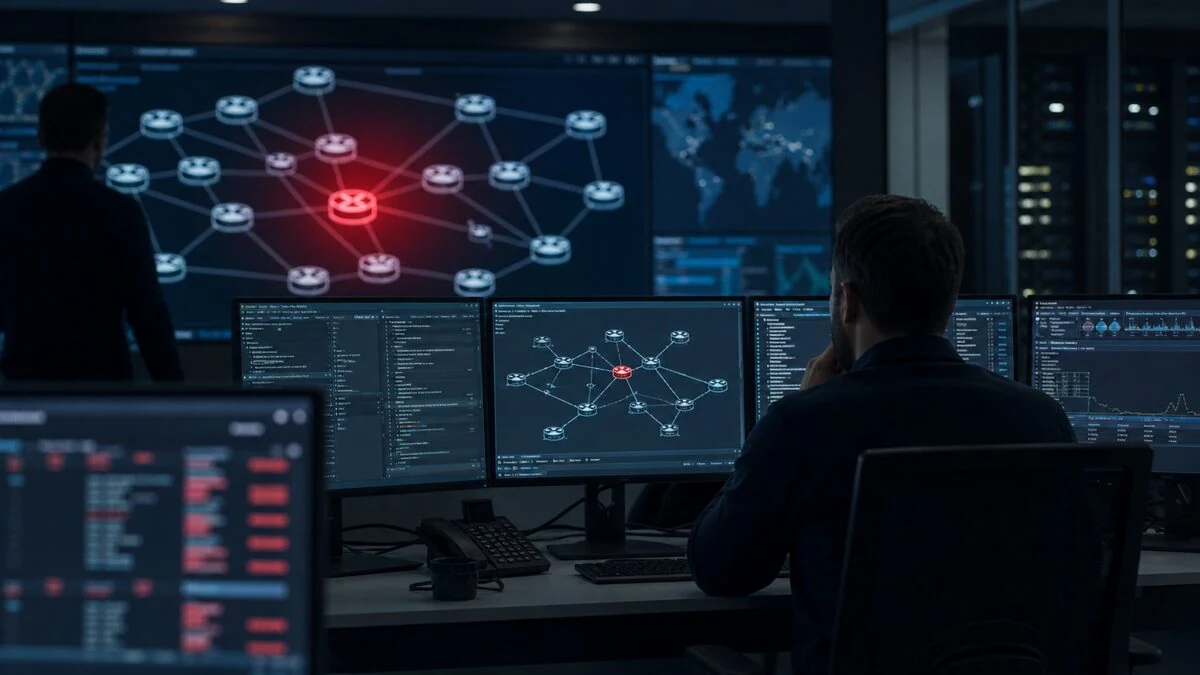
Cloud Control is presented as a unified platform across networking, security, observability, compute, and collaboration. AI Canvas is the workspace where human operators and AI agents can investigate and resolve issues using shared context. Agent Studio is meant to help teams bring in third-party agents or build their own workflows.
This matters because yesterday's network operations model was built around tickets, dashboards, alerts, and manual escalation. Agentic AI changes the pace. Our Cisco SD-WAN zero-day report showed why management layers are high-value targets, while our cloud security best-practices guide covers the baseline controls teams still need before adding automation.
Why agentic network operations are different
An AI agent that takes action is not the same as an alerting tool. It may query systems, open tickets, change configurations, trigger workflows, call APIs, or recommend remediation. Every step creates a routing decision, a trust decision, and a telemetry event. That is why Cisco is positioning the network as part of the AI control plane.
| Announcement area | Purpose | Operational concern |
|---|---|---|
| Cloud Control | Unified management view. | Keeping context across domains. |
| AI Canvas | Human and agent investigation workspace. | Preventing blind automated actions. |
| Agent Studio | Build and connect agents. | Governance of custom automation. |
| Quantum security | Prepare infrastructure for post-quantum risks. | Long-term encryption and trust planning. |
The quantum-security angle should not be ignored. Enterprises are being warned about "harvest now, decrypt later" risks, where encrypted data is captured today and attacked later when stronger quantum capabilities arrive. Network vendors are trying to make post-quantum readiness part of normal infrastructure planning before it becomes an emergency.
Security teams will care about how these tools handle evidence. If an agent recommends a firewall change or an access-policy update, the organization needs to know what data the agent used, who approved the action, which systems changed, and how to roll back. Auditability is not optional in regulated environments. It is the difference between helpful automation and a compliance problem.
The practical takeaway
Enterprises should not treat agentic network operations as a switch to flip. The right path is staged: better inventory, better telemetry, tighter access controls, clear approval rules, and limited automation before broad remediation. AI agents can make operations faster, but only if teams know what the agents are allowed to do.
There is also a skills question. Network engineers will not disappear, but their work may shift from manually chasing every alert to designing guardrails, validating AI-generated plans, and investigating the cases automation cannot resolve. That makes documentation, naming standards, and clean configuration data more valuable than ever.
Network teams should start with low-risk workflows such as summarizing incidents, grouping related alerts, finding configuration drift, and drafting change plans for human review. After trust improves, teams can move toward supervised remediation. Fully autonomous changes should be reserved for narrow, well-tested situations with strong rollback paths.
Cisco's announcements show where enterprise infrastructure is heading. The network is becoming less like passive plumbing and more like an AI-aware operations layer. That raises the ceiling for automation, but it also raises the bar for governance.