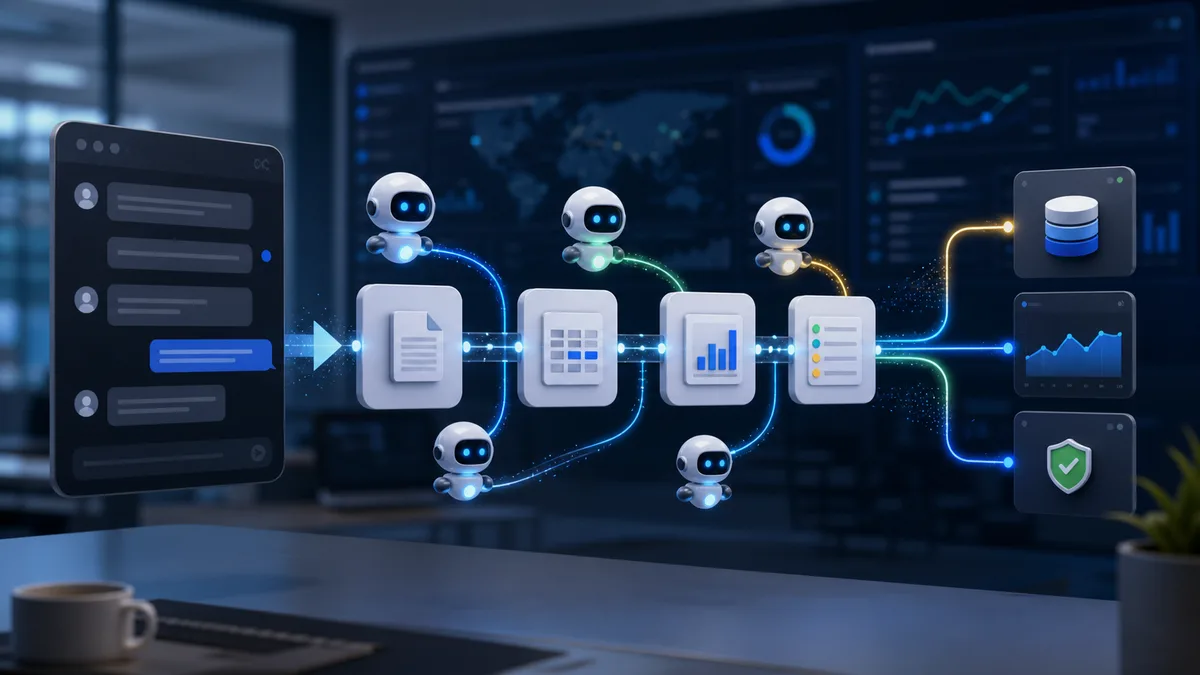
The most important enterprise AI shift is not the move from one chatbot to another. It is the move from asking questions to running work. A chat window can answer, summarize, and draft. A workflow agent needs to observe data, take steps, call tools, wait for approvals, and leave an audit trail. That is a very different product promise, and it is where major data platforms now want to compete.
Databricks has a natural reason to push in that direction. It already sits near enterprise data, analytics, machine learning pipelines, governance controls, and business users who need answers from complex systems. If the company can make agents feel like controlled coworkers rather than experimental assistants, it can turn the lakehouse into a place where work is executed, not only analyzed.
The phrase agent coworker is important because it changes expectations. A coworker is not just a tool that replies instantly. A coworker has responsibilities, context, handoffs, and boundaries. In software terms, that means permissions, monitoring, logs, escalation paths, data access rules, and the ability to show what happened after the user walked away.
SiliconANGLE reported on Databricks making the case for AI agents as a next-generation enterprise system of record. The idea is ambitious: if agents help create and update the work itself, they become part of how a company remembers decisions and actions, not just a layer that comments on them.
That logic connects to our earlier look at neoclouds becoming enterprise AI providers. AI infrastructure is moving upward. GPU capacity matters, but buyers also want managed services, data controls, and operational tooling. Databricks is coming from the data platform side, while neoclouds often come from compute. Both are racing toward the same enterprise budget.
The difficult part is trust. An agent that reads a dashboard is low risk. An agent that changes records, files tickets, sends messages, or updates a revenue forecast is another matter. Enterprises will need narrow permissions, test environments, rollback options, and clear accountability before they hand over important workflows. The best agent products will probably feel conservative by design.
There is also a cultural barrier. Workers may accept AI help when it reduces repetitive effort, but they will resist systems that make unclear decisions or create more verification work than they save. The coworker metaphor only works if the agent is useful, transparent, and humble enough to stop when it is outside its lane. Otherwise it becomes another automation layer people work around.
Databricks is pointing at where enterprise AI has to go. The market is getting crowded with assistants, but the durable value will come from agents that can sit inside real processes and survive compliance review. The chat era proved people like fast answers. The workflow era has to prove AI can handle responsibility.
That responsibility will also change how vendors sell AI. A demo can show an agent completing a task, but procurement teams will ask what happens after month three: how the agent is monitored, how failures are reported, how permissions are revoked, and how business users correct it. Databricks has the right platform ingredients, but the operational details will decide whether customers trust the coworker label.