Enterprise AI teams keep running into a practical limit: the model can sound confident while losing the exact business context that made the task valuable. Fine-tuning can make a model more specialized, but it can go stale and become expensive to manage. RAG can keep information current, but retrieval misses and long-context drift can make answers look better than they are. Both approaches often leave a human doing more checking than expected.
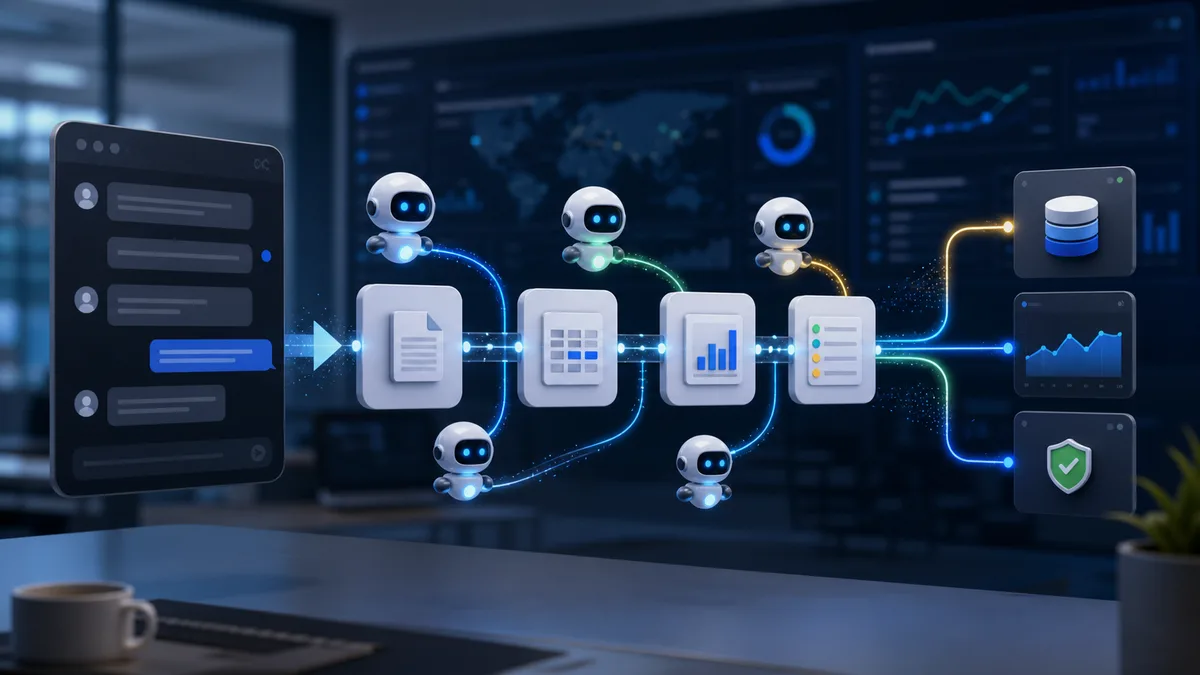
That is why hypernetwork-generated models are becoming an interesting idea again. Instead of permanently fine-tuning a large model or pushing every policy into the prompt, a separate generator can create a small specialist adaptation for the task at hand. In plain terms, the enterprise does not ask one general model to remember everything. It asks a system to build the narrower model the workflow needs right now.
The appeal is easy to understand in regulated work. A compliance review, audit workflow, claims check, or internal policy task does not always need a giant frontier model improvising across the internet. It needs current rules, repeatable judgment, traceable reasoning, and a way for experts to validate the output quickly. Smaller task-shaped models could make that easier if they are accurate and well calibrated.
VentureBeat examined the argument that hypernetworks can generate specialist models on demand and reduce the weaknesses of both fine-tuning and RAG. The most important point is not that the approach has already won. It is that enterprises are still searching for an architecture that can run longer workflows without constant human rescue.
The timing fits the same model-platform pressure behind our coverage of LLM research becoming a platform fight. The market is no longer asking only which model is smartest on a benchmark. Buyers want to know where business knowledge lives, how it gets updated, who owns the feedback loop, and whether the system can explain what it used.
Hypernetwork approaches could help with model sprawl if they work. Today, companies can end up managing many adapters, prompts, retrieval indexes, and evaluation suites for different teams. A generator that produces task-specific weights from current policy could reduce that clutter. It could also lower inference cost if the generated specialist model is small enough to run cheaply.
The weak points are serious. Generated models still need calibration, provenance, security controls, and strong evaluation. If the generator produces a confident but subtly wrong specialist, the failure may be harder to detect because the system looks purpose-built. Enterprises will also need clarity on where the generated model runs and whether sensitive feedback improves a vendor asset or stays inside the customer's environment.
The larger lesson is that enterprise AI is moving beyond the simple choice between bigger prompts and more fine-tuning. The next phase may be about dynamic specialization: build the right narrow model, ground it in current rules, and give humans fast evidence rather than another polished paragraph to reread. Hypernetworks are early, but they point directly at the problem that keeps many agent pilots from becoming real production systems.