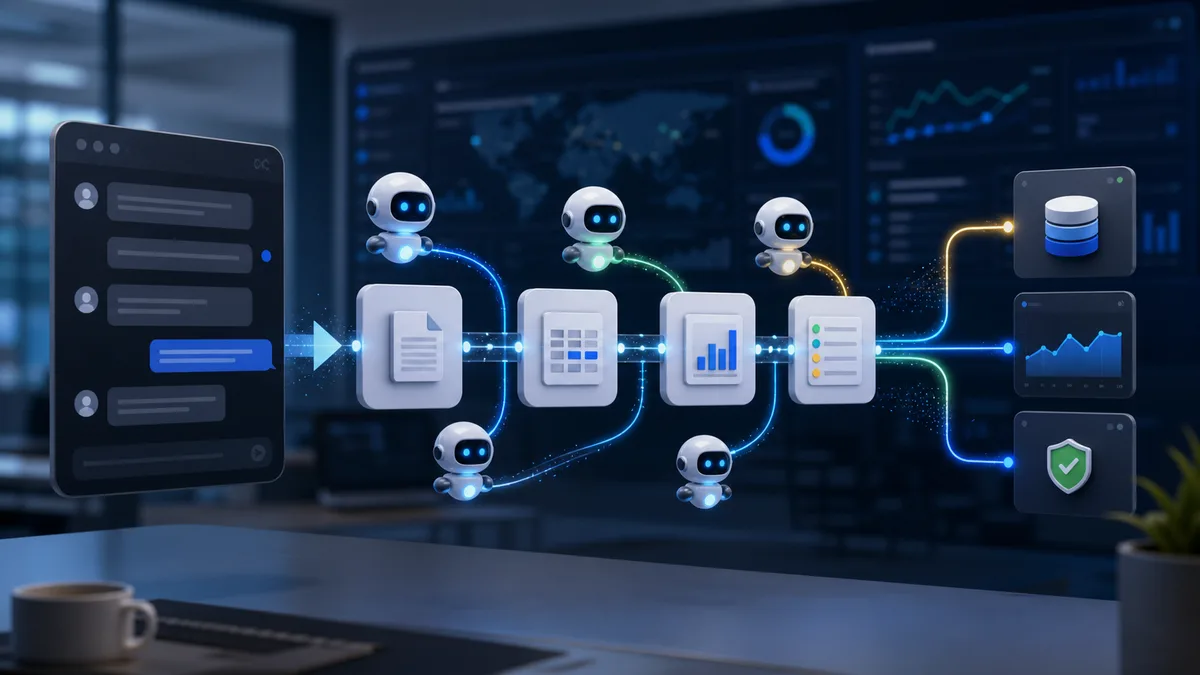
AI agents are quickly accumulating protocols. MCP gave developers a cleaner way to connect models with tools. A2A-style coordination tries to help agents communicate and divide work. Those are important advances, but they do not solve every systems problem. Once agents move from demos into production, teams still need a reliable way to move messages, context, state and results across real networks.
That is the transport gap. It is less exciting than a model benchmark, but it may decide whether enterprise agent systems are dependable. Tool access answers the question of what an agent can use. Coordination answers who should do what. Transport answers how the work actually moves, how failures are handled, how messages are traced and how systems avoid becoming a pile of brittle integrations.
VentureBeat explored the idea that MCP and A2A leave transport as an open problem. That framing is useful because it treats agents like distributed systems, not magic workers. Distributed systems need retries, queues, authentication, routing, observability, backpressure and version control. Agents do not get to skip those needs because a language model sits in the loop.
The issue also overlaps with our coverage of Microsoft's AI Terminal preview. As agents become part of developer environments, local devices and cloud tools will have to exchange actions safely. A broken transport layer could mean duplicated work, missing context, accidental tool calls or a failure that nobody can debug.
Enterprises will not accept agent systems that behave like enthusiastic but unreliable interns. They will want audit logs, permissions, policy enforcement and predictable failure modes. If an agent cannot reach a tool, should it retry, ask a human, switch tools or stop? If two agents produce conflicting outputs, which one wins? If a workflow crosses departments, who owns the handoff? Transport design influences all of those questions.
There is also a security angle. Agent messages may contain sensitive data, credentials, code, customer records or business decisions. Moving that context between systems requires encryption, identity, scoped permissions and careful retention rules. A casual integration that sends broad context everywhere may work in a prototype but fail a compliance review immediately.
The market may eventually consolidate around a few common transport patterns. Some teams will use message queues, some will rely on event buses, some will build agent runtimes with state management baked in, and some will choose vendor platforms that hide the plumbing. The important point is that transport cannot remain invisible. It needs to be designed, measured and tested like any other production layer.
AI agents will only become useful at scale if the surrounding architecture matures. MCP and coordination protocols are necessary, but they are not the whole stack. The next serious agent products will likely compete on reliability, observability and governance as much as intelligence. That is where the transport gap becomes a product opportunity, not just an engineering complaint.
Developers should also expect boring standards to matter. Timeouts, schemas, idempotency keys and trace IDs may not feel like AI features, yet they decide whether an agent workflow can be replayed, audited and trusted after a failure. The agent stack will mature when these ordinary distributed-systems details become default expectations.