AiThority's report on custom AI agents for security teams shows how quickly agent talk is moving from demos into operations work. The promise is not a chatbot that answers policy questions. It is an automated helper that can investigate alerts, connect evidence, and reduce repetitive SOC tasks.
Security operations centers are a natural target for AI agents because the work is noisy and time sensitive. Analysts have to triage alerts, inspect logs, correlate files, and decide whether a signal is routine or dangerous. That workflow can benefit from automation, but only if the system is auditable.
The thread also links naturally to our earlier look at the AI agent guardrails. For this post, AiThority Custom AI Agent Report Shows Security Teams Want Automated SOC Help makes that connection specific to AiThority: the rumor or report is only useful when it is read beside product timing, component pressure, and the user trust problem around SOC Automation.
The current report from AiThority covers Intezer's launch of custom agents designed to let security teams automate parts of their SOC workflow. That source detail gives the article a concrete starting point, but the bigger value is in reading what the report says about the product category around it.
For enterprises, the useful question is not whether an agent can act. It is whether the action is controlled, logged, reversible, and narrow enough for a high-risk environment. A security AI that saves time but creates blind spots would be a poor trade.
What makes this worth separating from a normal news brief is the way it changes near-term expectations. AiThority Custom AI Agent Report Shows Security Teams Want Automated SOC Help is really about timing, confidence, and execution. A small leak can be forgettable, but a leak that points to supply, policy, capacity, or launch positioning can shape how buyers and rivals prepare.
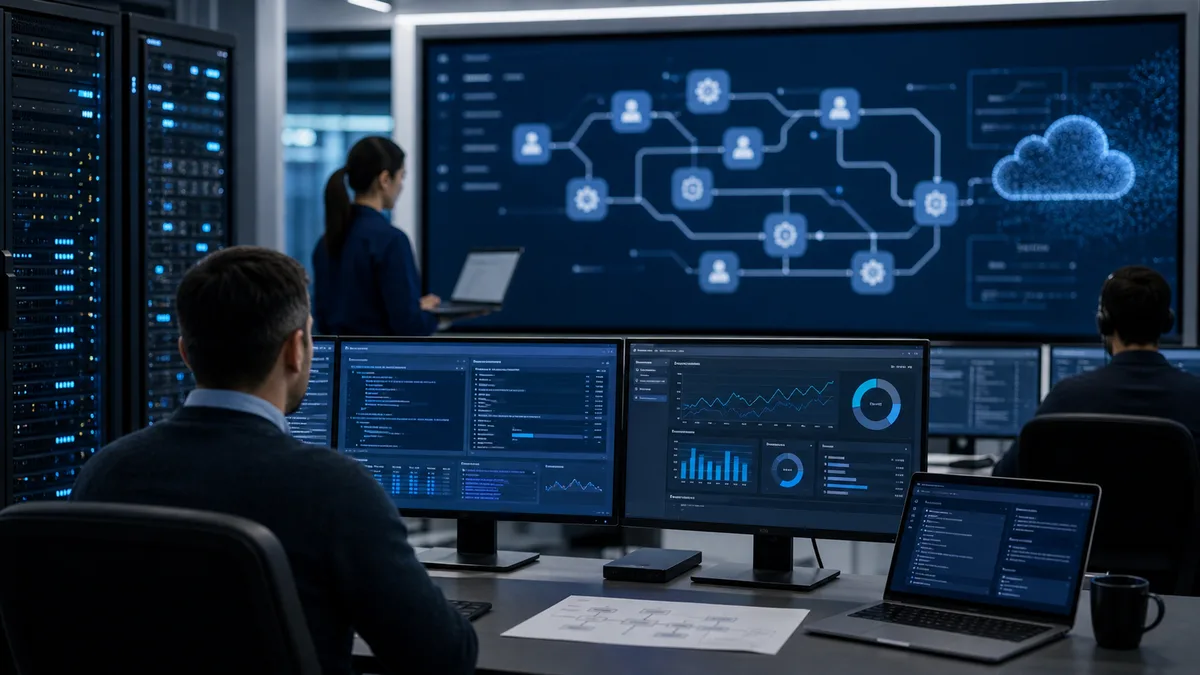
A SOC agent needs more than a large language model. It has to connect with SIEM data, endpoint telemetry, sandbox output, ticketing systems, identity logs, and malware-analysis tools. The orchestration layer decides whether the agent becomes useful or simply another alert source.
The market pressure is obvious. Companies face more alerts than analysts can comfortably review, while attackers are also using automation. Vendors that can turn AI agents into controlled investigation tools will have a stronger argument than vendors selling generic assistant windows.
Another angle worth keeping in mind is audience behavior around AiThority. People following AiThority Custom AI Agent Report Shows Security Teams Want Automated SOC Help are no longer waiting passively for official launch slides; they compare leaks, supplier moves, policy signals, and early pricing clues before deciding what to buy, build, or avoid.
Security automation should be introduced carefully. False confidence can be dangerous, especially if a model summarizes evidence incorrectly or takes action outside its intended scope. Human review and clear permissions still matter.
The next useful signal will be customer deployment evidence: reduced response time, fewer repeated analyst tasks, and better incident documentation. That is where AI agents in security will prove whether they are operational tools or just another dashboard feature.
The practical reading is therefore cautious but not dismissive. For AiThority, the headline is the new development. For readers following AI Agents, the more durable point is whether the companies involved can turn that development into something reliable, understandable, and worth paying attention to after the first leak cycle fades.