Model companies are learning that a better model is not always enough. Users need a place to put the model to work, a way to connect files and tools, and enough structure to keep long tasks from falling apart. That is why agent products are becoming the new battleground. The model is still important, but the product surface decides whether the capability becomes daily work.
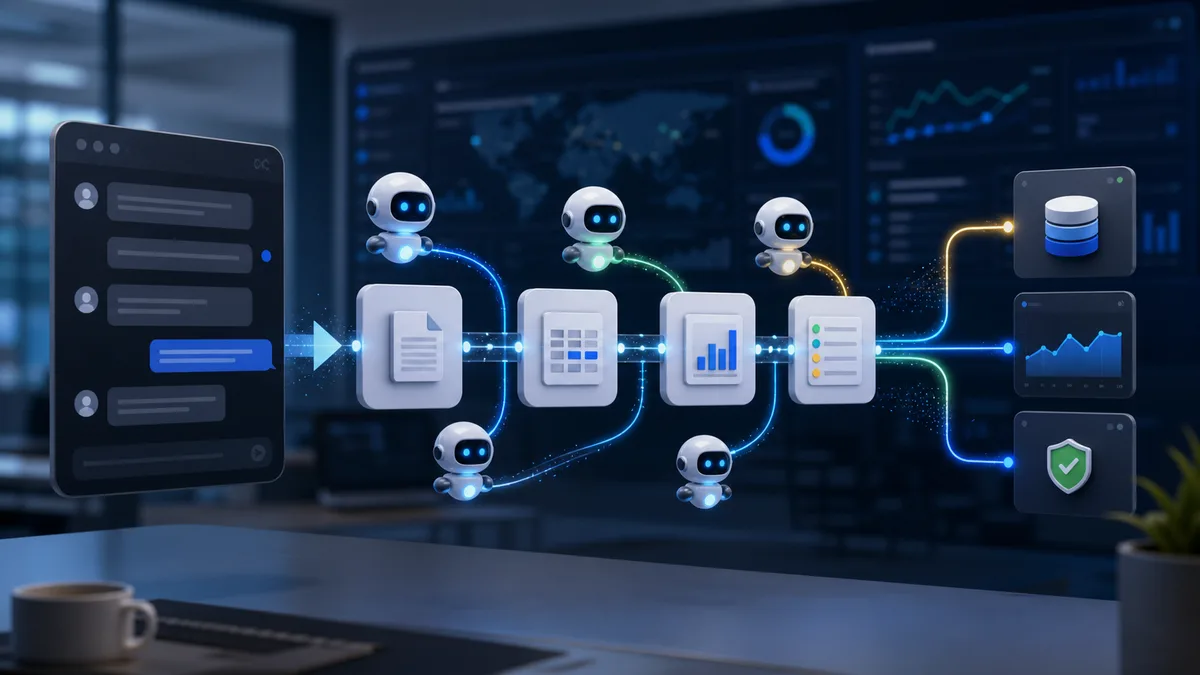
Mistral Vibe is part of that shift. Instead of presenting AI only as a chat assistant, Mistral is packaging long-horizon productivity and coding into modes that feel closer to a workbench. That matters because many valuable tasks do not fit into a single prompt. They involve reading context, planning, editing, checking, and continuing after interruptions.
The coding angle is especially important. Developers are already comfortable giving AI narrow jobs: explain a function, write a test, draft a migration, or inspect an error. The next step is broader: let an agent work across a codebase while the user supervises. That demands more than a strong autocomplete model. It demands environment awareness, rollback, permission boundaries, and clear progress reporting.
Mistral AI introduced Vibe as a unified agent for long-horizon productivity and coding, with Work and Code modes plus a VS Code extension. The launch shows that Mistral wants to compete in the workflow layer, not only the model leaderboard.
The move lines up with our earlier look at enterprise devices built around AI agents. Agentic systems are spreading across hardware, coding tools, cloud platforms, and enterprise dashboards. The question is no longer whether users will ask AI for help. It is where the agent lives and how much responsibility it can safely take.
Mistral's advantage is that it can tie agent products to its model lineup and enterprise positioning. The challenge is that this space is crowded. OpenAI, Anthropic, Google, Microsoft, developer-tool startups, and open-source projects are all trying to become the place where users run AI-assisted work. The winning product will need reliability more than novelty.
Long-horizon agents also need strong memory design. Remembering too little makes the agent repetitive. Remembering too much creates privacy and relevance problems. Users need control over what is stored, what is retrieved, and what is forgotten. That becomes even more important when the agent is connected to code, documents, and business systems.
Vibe is a reminder that the AI model race is becoming a product race. The best model can lose if it is awkward to use, and a slightly smaller model can win if it is embedded in a workflow people trust. Mistral is betting that agents for work and coding are not a side feature. They are the next interface for using advanced models.
The market will judge that bet through daily friction. Can a user start a job, pause it, inspect the reasoning, change direction, and recover safely from a bad step? Can a developer understand what the agent changed and why? Those mundane controls will matter more than the launch language. Long-horizon work is impressive only when the handoff back to the human is clean.