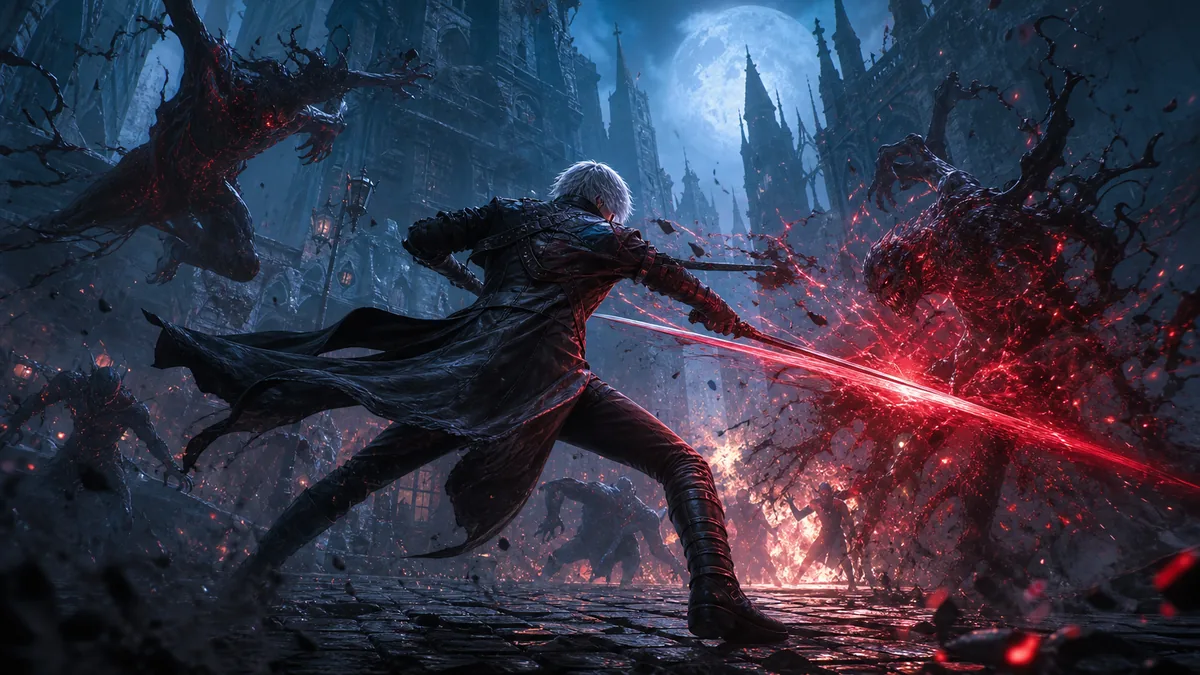
Devil May Cry 5 coming to Switch 2 as Devil Hunter Edition is a useful test for Nintendo's new hardware. Stylish action games are unforgiving. They need precise input timing, stable frame rates, fast camera response, and clean visual readability during chaotic fights. A port can look impressive in a trailer and still fail if the feel is even slightly off.
Capcom's 2019 action game has aged well because its combat remains expressive. Nero, Dante, and V each play differently enough that the game feels like three action systems sharing one stage. Bringing that to Switch 2 gives portable players a chance to practice combos, chase ranks, and replay missions without being tied to a desk or television.
The question is which version of the experience Switch 2 owners are getting. Devil May Cry 5 can be visually flashy, but action clarity matters more than maximum effects. If Capcom chooses performance stability over decorative excess, the port could become one of the system's better third-party action showcases. If it compromises input feel, the audience will notice immediately.
GamesRadar listed Devil May Cry 5: Devil Hunter Edition among the Nintendo Direct announcements, with a June 23 release on Switch 2. The same recap placed it inside a larger wave of ports and updates meant to broaden the console's early game library.
The port also says something about Capcom's confidence in Switch 2. The publisher is not only bringing lighter catalog titles. It is testing demanding action, RPG expansion content, and other major brands. That gives Nintendo players a stronger third-party story than the original Switch had in some of its early years.
Devil May Cry 5 sits naturally near our discussion of action games needing optimization before launch. Both stories revolve around the same truth: combat games live in the hands. A beautiful port is not enough if attack cancels, dodges, and style switching do not feel immediate.
Portable play adds another design question. Devil May Cry rewards focus, but handheld sessions are often shorter and more interrupted. Fast mission restarts, clear checkpointing, and readable menus can make the Switch 2 version feel better suited to its platform. A good port adapts around play habits, not only graphics settings.
The Vergil factor should not be underestimated either. Returning players often judge later editions by whether bonus characters and modes are included cleanly. If Devil Hunter Edition feels complete from the start, the port becomes easier to recommend.
Visual options would help too. Some players will prefer sharper image quality on a television, while others will choose a steadier frame rate in handheld mode. Capcom should let the audience make that tradeoff where possible. Stylish action is personal, and performance preferences are part of that.
If Devil Hunter Edition runs well, it will be an easy recommendation for players who missed the game or want a portable practice machine. It may not be new, but not every valuable Switch 2 release has to be new. Some ports matter because they prove the hardware can handle genres that depend on feel. Devil May Cry 5 is exactly that kind of test.