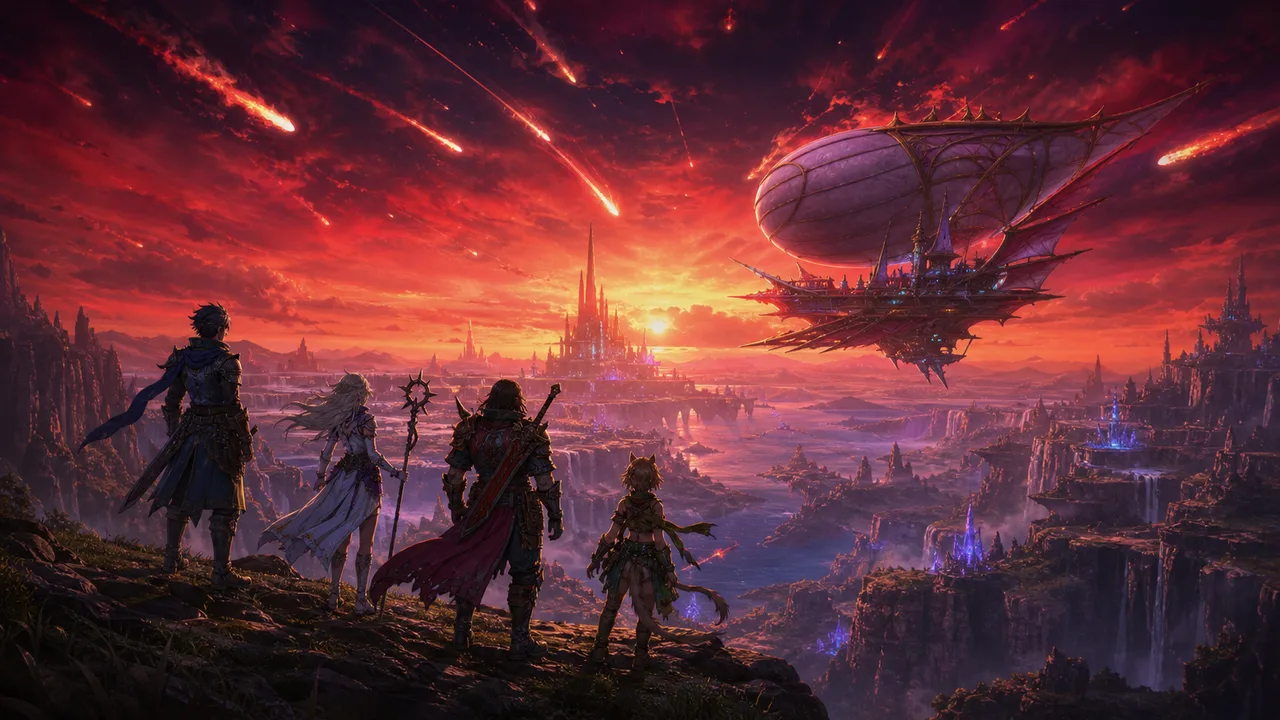
Final Fantasy VII Revelation is carrying more than the ending of one story. It is carrying the expectations of a remake project that has lasted long enough to become its own generation of Final Fantasy. The spring 2027 release window places the final chapter close to the original games 30th anniversary, and Square Enix is using that timing to frame Revelation as both conclusion and expansion. The message is clear: this is not only the third part, it is the chapter where the modern version has to prove the whole trilogy was worth the detour.
The biggest gameplay symbol is the Highwind. Letting players fly the airship, descend into a larger open world, and explore the planet with fewer boundaries directly addresses one of the lingering questions after Rebirth. The original Final Fantasy VII opened up dramatically once the party gained world-scale mobility. Revelation now has to recreate that feeling without turning the world into a checklist. The airship should make the planet feel connected, dangerous, and discoverable, not simply bigger.
Playable Vincent Valentine and Cid Highwind are also more than fan service. Both characters shift the party texture. Vincent brings a darker, gun-focused, transformation-linked identity, while Cid brings the grounded veteran energy that can cut through the operatic stakes. If Square Enix uses them as full systems rather than late-arriving cameos, the final combat roster could feel meaningfully complete.
The Verge reported the simultaneous spring 2027 launch across PC, PlayStation 5, Xbox Series X and S, and Nintendo Switch 2, along with the Highwind, open-world traversal, Vincent and Cid, Weapons, Wutai, and the new FITS gear system. That simultaneous platform plan is one of the most important business details because Final Fantasy VII is no longer being treated as a staggered PlayStation-first event.
The FITS system could be the mechanical surprise. A gear-based class idea that changes move sets and combat roles sounds like Square Enix trying to bring old Final Fantasy job flexibility into the remake trilogys action-tactical battle system. It could be excellent if it creates real party planning. It could also become noisy if every outfit is just a bundle of bonuses. Revelation needs clarity, because the trilogy already has materia, synergy attacks, party switching, limit breaks, summons, and weapon growth competing for attention.
There is also a technical story here. A simultaneous release on Switch 2, Xbox, PlayStation, and PC will put optimization under the spotlight immediately. The broader market is already watching how major games scale across devices, whether through console modes, handheld hardware, or PC configurations. Our recent look at portable gaming PCs getting more serious shows why big RPGs can no longer assume players only care about flagship performance.
Revelation has the chance to end this trilogy with confidence rather than exhaustion. It needs to respect the emotional pull of the original ending, resolve the remake timelines without disappearing into self-reference, and give players a world that feels worth saving. If it does, Square Enix may have pulled off one of the hardest remake experiments in games: not replacing a classic, but building a second version that can stand beside it.