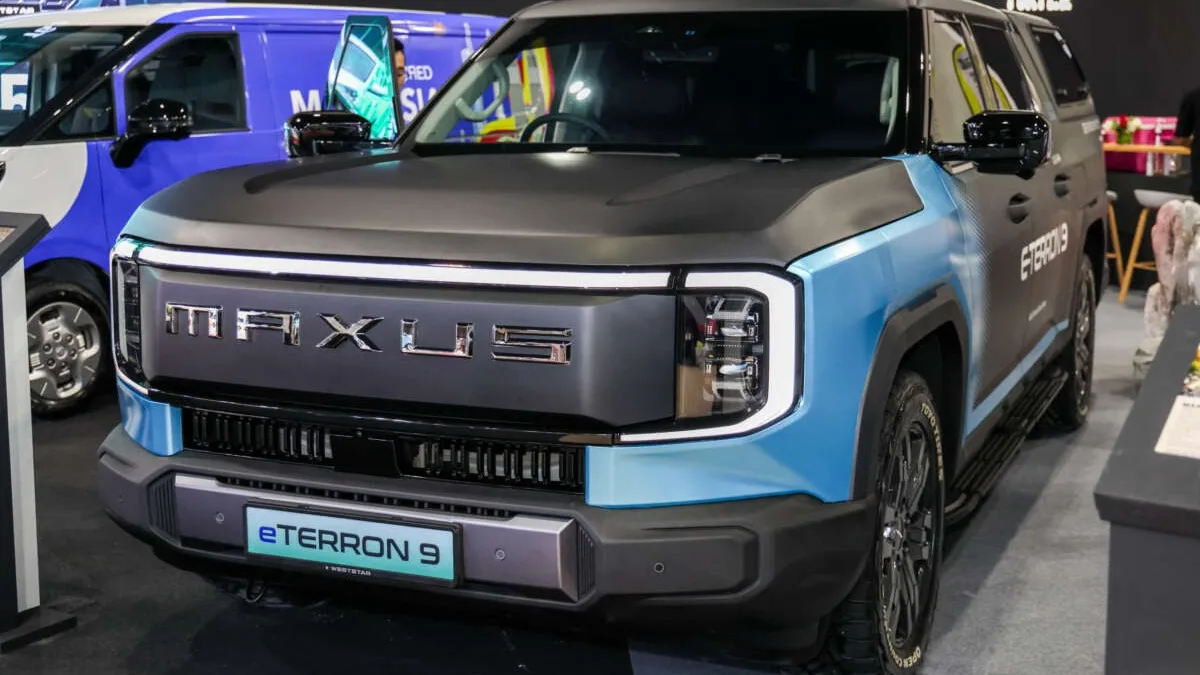
Malaysia's pickup market has a new electric talking point. The Maxus eTerron 9 has debuted locally with a fully electric drivetrain, all-wheel drive and a specification sheet aimed at buyers who want pickup utility without committing to diesel. It arrives alongside the diesel Terron 9, which gives Maxus a two-pronged approach for a market where commercial practicality and lifestyle appeal overlap.
The eTerron 9 is important because electric pickups remain a difficult category outside a few headline markets. A pickup has to tow, carry, survive rough use and justify its price against proven diesel rivals. That makes the Malaysian debut more interesting than a normal passenger EV launch. Maxus is not only selling range and acceleration; it is asking buyers to imagine electric power in a vehicle class still strongly associated with work and durability.
Paul Tan reported that Weststar Maxus unveiled the eTerron 9 for Malaysia with 442PS, all-wheel drive, 430km WLTP range and a RM224k price, while the 2.5-litre diesel Terron 9 is listed at RM141k. That price gap is central to the story because it shows how far EV pickups still have to go before they feel like the default choice.
The launch naturally relates to our coverage of GM's vehicle-to-grid and battery strategy. Pickups are especially interesting as energy products because they often have larger battery packs and spend time parked at homes, job sites or depots. The eTerron 9 is not being framed only as an energy asset, but the segment has that potential.
For private buyers, the electric model's appeal may come from quietness, instant torque and lower daily running cost if home charging is available. For business buyers, the calculation is more complicated. They will look at payload, uptime, charging access, service coverage and whether the vehicle can handle predictable routes without interrupting work. A strong WLTP figure helps, but real-world duty cycles will decide confidence.
The diesel Terron 9 gives Maxus a safety net. Some buyers will like the design and equipment but still choose the familiar fuel option because of price, refuelling speed or long-distance use. Offering both versions lets the brand participate in the EV conversation without abandoning the pickup customers who are not ready to change yet.
Malaysia is also becoming a more active launch market for Chinese and China-linked vehicle brands. Buyers are seeing more choices across EVs, hybrids and conventional models, which puts pressure on legacy pickup names. Maxus can use the eTerron 9 to stand out, but it will need strong dealer support and clear ownership messaging to turn curiosity into sales.
The eTerron 9 debut is a useful marker for where electric pickups stand today. The technology is ready enough to launch, but price and infrastructure still shape adoption. Maxus is giving Malaysian buyers a real option rather than a concept, and that is how new categories move from motor-show interest toward showroom reality.
The comparison with the diesel version will be especially revealing. If buyers mainly choose the Terron 9 diesel, Maxus still gains showroom traffic. If the electric model finds early takers, it will prove Malaysia has room for more than commuter EVs and premium electric SUVs.