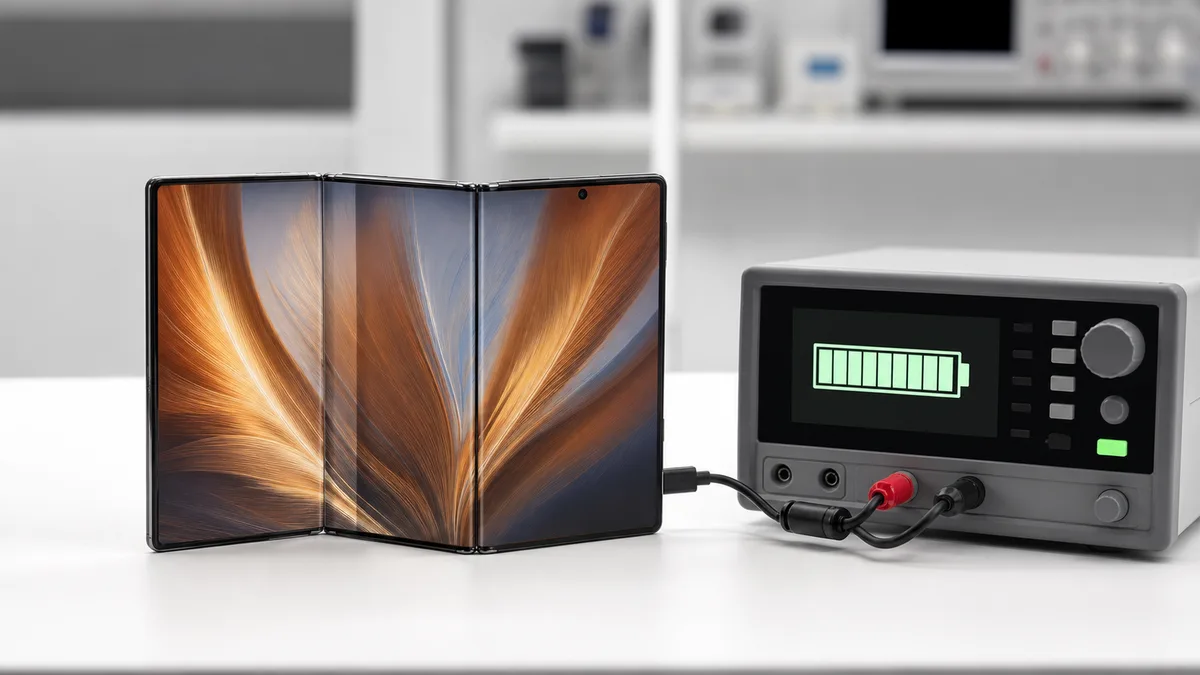
The Huawei tri-fold battery report matters because endurance is the least glamorous and most important part of a multi-panel phone. A tri-fold design can look spectacular when opened, but if the battery cannot survive a full day of mixed use, the novelty becomes fragile very quickly.
Huawei has already shown that foldable hardware can be used as a brand statement. The next challenge is making that hardware feel practical. A larger battery rumor therefore deserves attention because it points to the everyday weakness that large folding screens create.
The story connects with our earlier look at Huawei's wider hardware experimentation. Whether the company is working on phones or car technology, its leaks often point to ecosystem ambition rather than one isolated product.
新浪网 surfaced the tri-fold battery claim in Chinese-language coverage, with the source listing pointing to Sina's mobile news domain. The useful detail is the focus on capacity, because tri-fold phones need more than dramatic industrial design to become daily devices.
The technical tradeoff is difficult. Bigger batteries add weight and thickness, while folding devices already need hinges, protective layers, and reinforced frames. Huawei has to improve endurance without making the device feel like a tablet folded into a heavy brick.
For buyers, battery life will shape trust. A tri-fold screen invites video, multitasking, maps, documents, reading, and travel use. Those are exactly the tasks that punish a weak battery and make people carry a charger.
The competitive angle is also important. Samsung, Honor, Oppo, Vivo, and Xiaomi all watch Huawei's foldable moves closely. A better endurance story could force rivals to treat battery capacity as a headline feature, not a footnote.
The report should still be treated as early. Battery capacity can change before launch, and final endurance depends on chip efficiency, display brightness, software tuning, and charging behavior.
The next clues to watch are certification records, charging specs, thickness measurements, and weight leaks. Those numbers will show whether Huawei is solving the right problem or only increasing capacity on paper.
Charging behavior is part of the same story. A bigger battery helps, but users also care whether the phone charges quickly without getting too hot, whether it protects long-term battery health, and whether the charger situation is convenient for travel. Foldables are expensive enough that owners expect endurance to remain strong after the first year.
Software optimization may be just as important as capacity. A tri-fold device can display several apps at once, which means background activity, brightness control, and multitasking behavior need careful tuning. Huawei's hardware rumor becomes more convincing if the final software treats power management as a central feature.
Weight will be the emotional test in stores. A tri-fold phone can justify some extra heft because it replaces a small tablet, but it still has to feel comfortable closed. If the battery upgrade makes the device tiring to hold, Huawei may solve one complaint while creating another.
A tri-fold phone succeeds only if it feels useful after the first demonstration. Battery life is the quiet feature that decides whether a dramatic design becomes a real daily device.