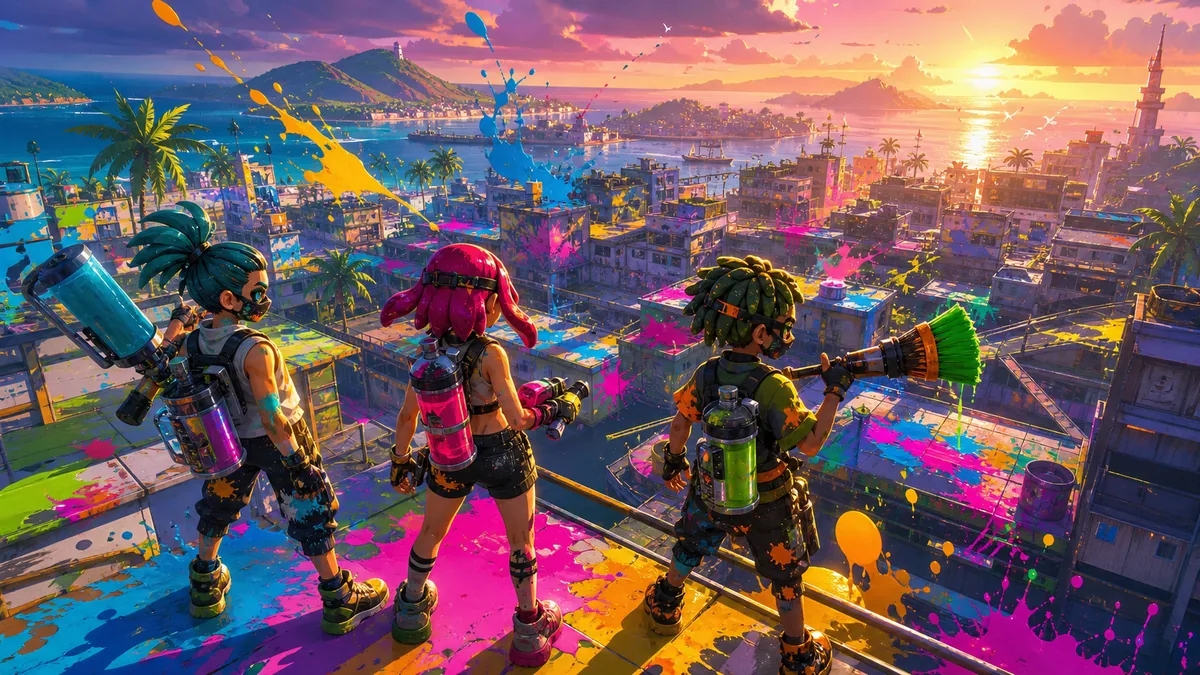
Splatoon Raiders is interesting because it moves Nintendo's ink shooter away from the multiplayer lobby and into a more directed adventure shape. The series has always had strong single-player ideas, but they often sat beside Turf War rather than defining the whole product. Raiders gives Nintendo a chance to show that Splatoon's world, music, fashion, and movement can support a broader adventure.
The July timing keeps it close to the Switch 2 launch year conversation. Nintendo needs releases that make the new hardware feel active through summer, and Splatoon has enough personality to cut through heavier RPG announcements. A game centered on Deep Cut and exploration can also reach players who like the universe but do not want to live inside ranked multiplayer pressure.
The trick will be making the action feel substantial. Splatoon's movement is built around ink, swimming, wall routes, and weapon identity. Raiders needs to use those ideas for exploration and combat without becoming a stretched tutorial. If it can add cooperative options, progression, and clever level structure, the spin-off could expand the franchise rather than dilute it.
Tom's Guide noted new Splatoon Raiders gameplay during the Nintendo Direct coverage and described the game as shifting toward a single-player action-adventure format. That framing is the key point: Raiders is being watched not as another multiplayer update, but as a test of what Splatoon can become outside its usual competitive loop.
Deep Cut gives the project a built-in personality advantage. Splatoon characters often do a lot with limited screen time, and a story-led spin-off can make the group's relationship to the world more tangible. The series has lore, but much of it has been discovered through fragments. Raiders can put that style into a more readable adventure structure.
The move also fits the broader Nintendo pattern of stretching familiar names into new formats, similar to how platformer revivals are trying to modernize without losing clarity. The strongest spin-offs do not simply borrow a logo. They find a mechanic that deserves more space. For Splatoon, that mechanic is ink movement and territory control.
Mission design will be the real proof. Splatoon levels can turn a wall, rail, grate, or puddle into a movement puzzle, and Raiders should lean into that instead of becoming a normal third-person action game with brighter paint. The best stages would ask players to think about space like Splatoon players already do: not as empty ground, but as territory waiting to be converted.
Bosses could also benefit from the adventure format. Multiplayer Splatoon often hides personality inside maps and music, while a campaign can make enemies theatrical, strange, and mechanically specific. Deep Cut gives Nintendo a good excuse to make each encounter feel like part of a larger performance.
If Raiders succeeds, it could give Nintendo a second Splatoon lane. Mainline entries can remain multiplayer anchors while spin-offs explore story, co-op, and worldbuilding. That would make the franchise healthier. Not every player wants another ranked climb, but many would happily spend a summer exploring strange islands with a paint weapon and a soundtrack that refuses to sit still.