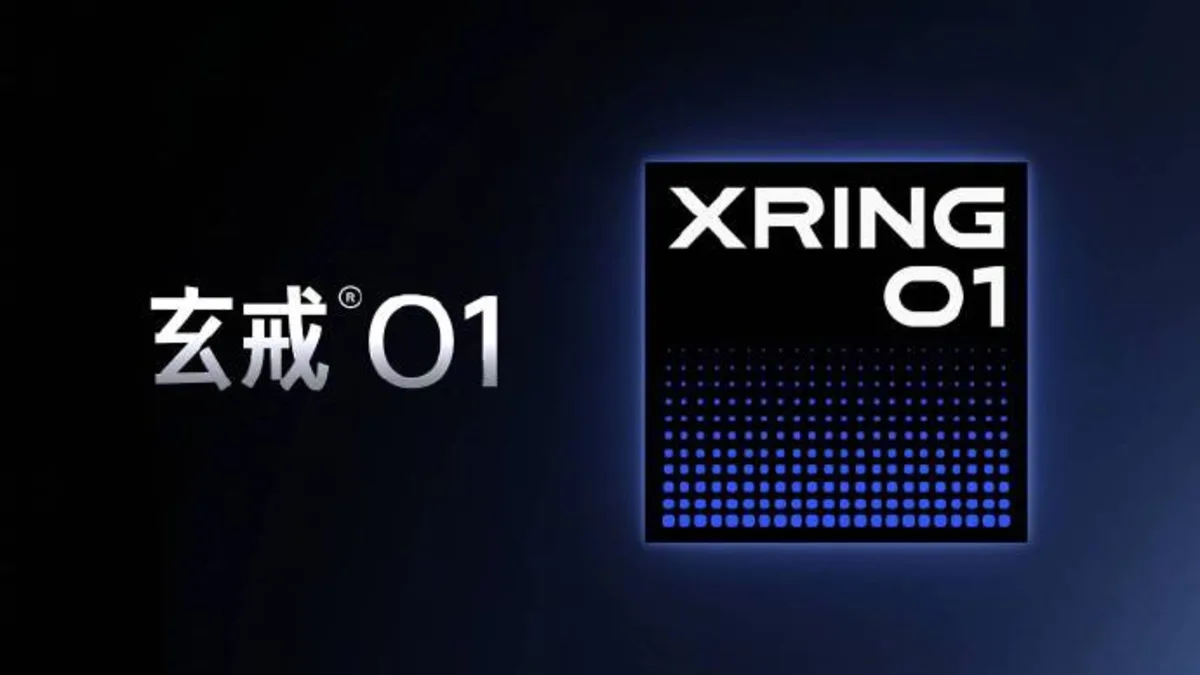
Xiaomi's chip ambitions are becoming harder to treat as a side project. The first generation of in-house silicon proved that the company wanted more control over device performance and differentiation. A rumored Xring O3 successor would suggest the next step is broader adoption, not just a showcase part for a narrow product line. That is where in-house silicon starts to become strategy.
Smartphone companies pursue custom chips for several reasons. They want tighter integration between hardware and software, better camera pipelines, stronger power tuning, unique AI features and less dependence on external roadmap timing. But custom silicon is expensive and risky. It only makes sense if the company can ship enough devices, build enough software support and keep improving across generations.
Notebookcheck reported that more details have surfaced around Xiaomi's expected Xring O3 chipset and that wider adoption is tipped compared with the earlier SoC. That wider adoption angle is the key detail. A chip used in one hero device is a statement. A chip used across several products can become a platform.
The strategic context is similar to our coverage of TSMC's foundry share and AI chip volume. Chip access, manufacturing capacity and design partnerships are now central to consumer tech competition. Companies that control more of their silicon roadmap may gain flexibility, but they still depend on foundry execution and supply-chain discipline.
For Xiaomi, a broader Xring lineup could help camera tuning and battery behavior across phones, tablets or connected devices. The company sells across many price bands, so it could eventually use in-house silicon to create consistent feature sets that are hard for rivals to copy quickly. That is the same logic Apple used for years, though Xiaomi operates in a much more price-sensitive and Android-based market.
The challenge is performance credibility. Qualcomm and MediaTek move quickly, and flagship buyers expect strong benchmarks, modem reliability, gaming stability and efficient thermals. If Xring O3 is positioned too ambitiously and falls behind, the custom-chip story becomes a liability. If Xiaomi positions it carefully and uses it where integration matters most, the chip can add value without carrying impossible expectations.
Modem performance is another test. A smartphone SoC is not only CPU and GPU. Connectivity, image processing, AI acceleration, power management and software support all shape the user experience. Xiaomi will need to prove that its in-house work can match the reliability users expect from established platform vendors. One weak subsystem can overshadow a strong benchmark score.
The Xring O3 rumor is important because it points to persistence. Custom silicon only becomes meaningful when a company keeps going after the first generation. If Xiaomi broadens adoption, it is signaling that chips are part of its long-term device identity. That could make future Xiaomi hardware less dependent on the same off-the-shelf platforms as competitors and give the company more room to define its own upgrade story.
Developers will watch the software side closely. Camera apps, game engines, AI features and thermal profiles all need stable platform behavior. If Xiaomi can make Xring predictable for app makers as well as attractive in hardware marketing, the chip program will feel less like a branding exercise and more like a real ecosystem bet.