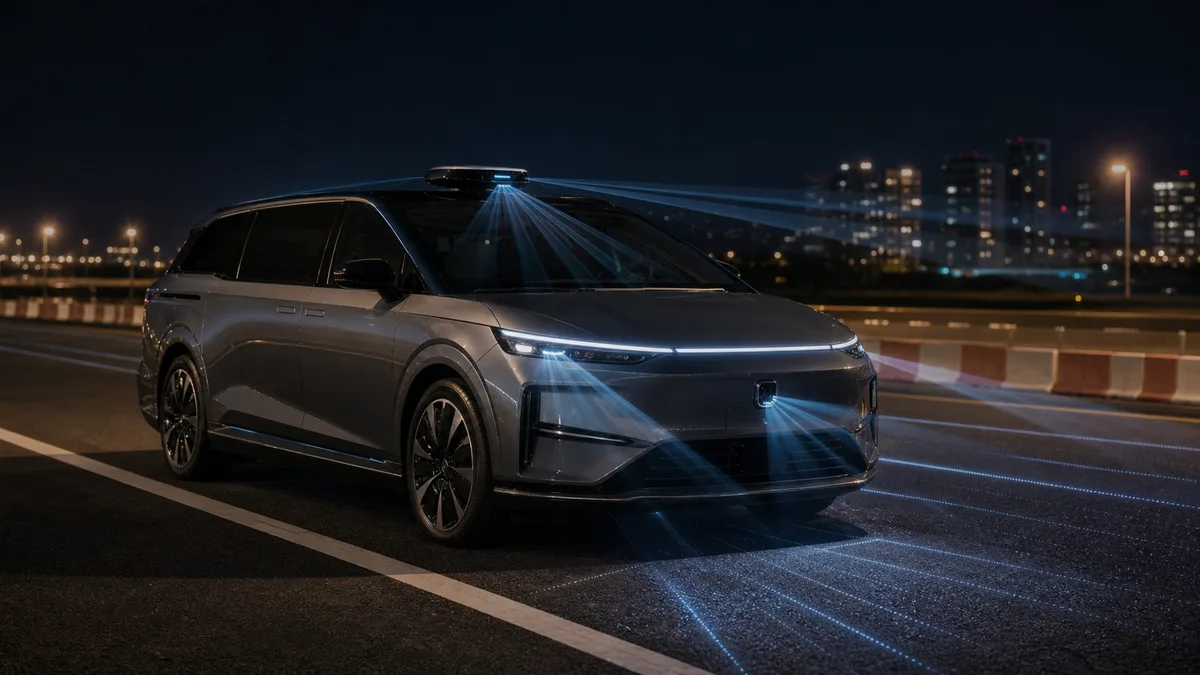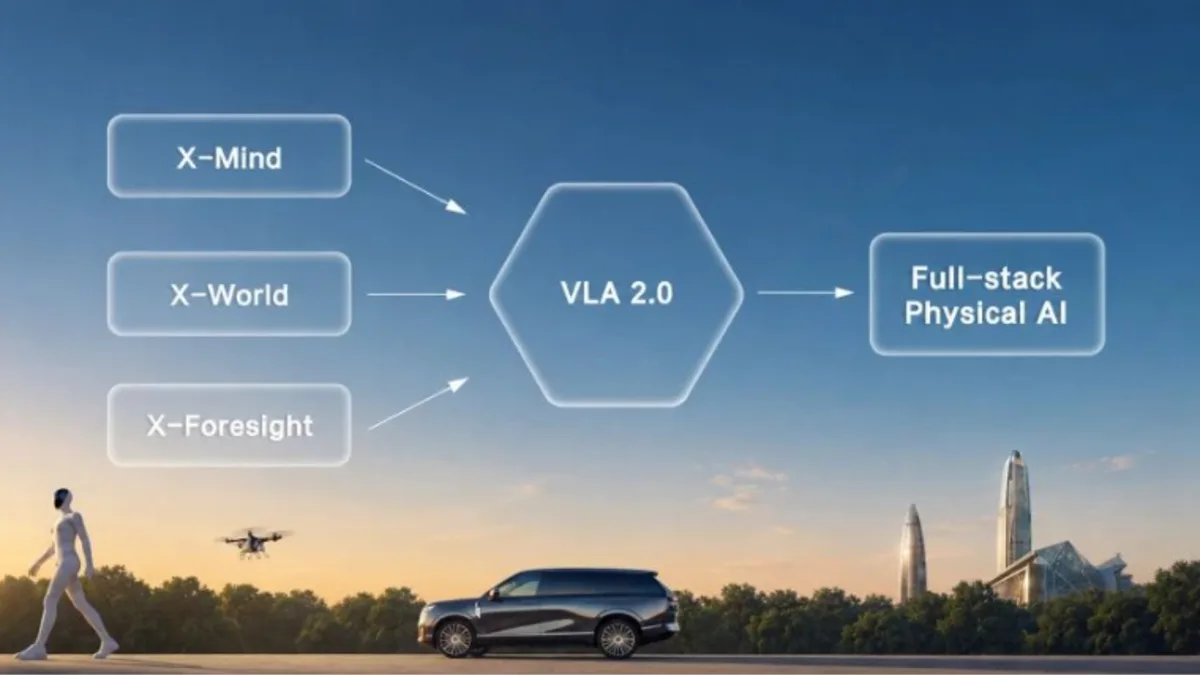
XPeng's X-Mind framework points to a more demanding phase for autonomous driving: prediction. The first wave of smart-car software was often described through sensors, maps, and lane keeping. Those parts still matter, but the harder question is what the vehicle believes will happen next. A car that can only react is always late. A car that can model likely movement around it has a better chance of driving smoothly and safely.
That is why the language around predictive AI is important. Urban driving is full of incomplete signals. A pedestrian may turn before entering a crosswalk, a scooter may drift toward a lane, a parked car may open a door, and a delivery vehicle may stop without warning. Human drivers manage those situations by reading context. Autonomous systems need a machine version of that judgment, and it has to work fast enough for real roads.
The new report from Gasgoo says XPeng has unveiled the X-Mind framework to advance predictive AI for autonomous driving. The timing is notable because Chinese EV makers are no longer competing only on range, screens, and price. Driver-assistance capability has become part of the brand promise.
We have seen a similar software-first vehicle story in our China-focused SUV coverage, where local market expectations are moving quickly around electrification, cabin software, and smarter driving features. XPeng sits directly in that pressure zone. It has to convince buyers that its cars are not just electric but increasingly intelligent in daily use.
The challenge is that prediction cannot be treated like a marketing label. A good framework must understand traffic participants, road rules, weather, camera and radar uncertainty, route intent, and local driving habits. It must also know when its confidence is low. In autonomous driving, a cautious pause can be better than a confident mistake. The best systems are not only bold; they are aware of their own limits.
X-Mind also shows why automakers are becoming AI infrastructure companies in miniature. They need data pipelines, model training, simulation, validation, edge deployment, over-the-air updates, and safety review. The car on the road is only the visible end of a much larger machine-learning loop. Every useful driving improvement depends on how well that loop collects cases, learns from them, and ships updates without creating new problems.
For buyers, the practical question is simple: does the car feel calmer? A predictive system should reduce hard braking, awkward hesitation, sudden lane corrections, and confusing handoffs. It should make assistance feel less like a nervous student driver and more like a careful co-pilot. If XPeng can show that difference in crowded Chinese cities, the framework becomes more than an internal technical milestone.
The competitive stakes are high because autonomous-driving claims are becoming hard to separate from EV value. Battery range can be copied, charging speeds can improve across brands, and interiors can converge quickly. A genuinely better driving-intelligence stack is harder to reproduce. XPeng's X-Mind announcement should be read as part of that race: the company wants its vehicles to be judged by how well they understand the road, not only how far they can travel on a charge.
The next proof will come from deployment details. XPeng will need to show where X-Mind appears first, how it improves real driver-assistance behavior, and how the company measures safety against earlier systems. A framework announcement starts the conversation, but road performance will decide whether customers treat it as a feature worth paying for.