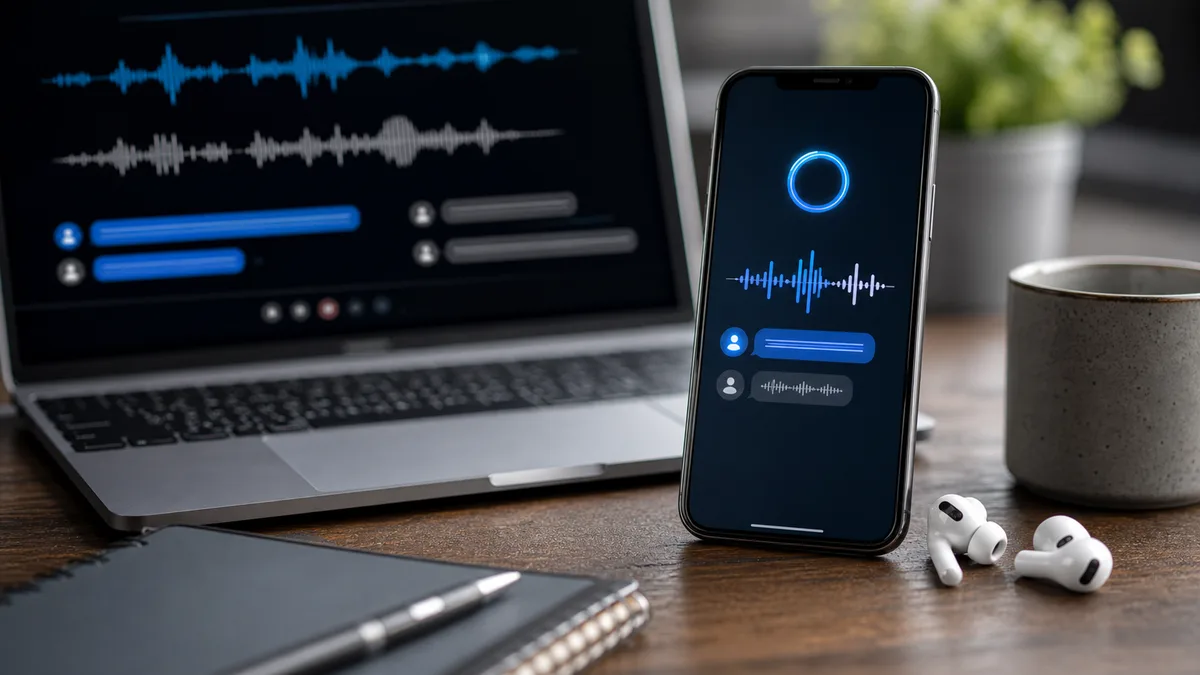
The Fun-ASR-Realtime report is a useful signal because voice AI is judged by impatience. Users notice delays immediately. A speech model can be accurate on paper, but if it lags during a meeting, call, car interaction, or live translation moment, it feels broken.
Realtime speech recognition is becoming a foundation layer for assistants, note tools, customer support, in-car systems, smart glasses, and accessibility products. Faster ASR does not only improve dictation; it changes how natural the whole AI interaction feels.
The report sits beside our look at AI voice notes becoming everyday tools. Once transcription becomes quick and reliable, people stop treating it as a special feature and start expecting it everywhere.
36氪 included the Fun-ASR-Realtime update in its Chinese tech news roundup, tying it to the broader movement of large-model features into practical products. That placement is useful because speech recognition often improves quietly until it suddenly changes user behavior.
The technical challenge is latency plus robustness. A realtime model has to handle accents, noise, interruptions, code-switching, names, numbers, and incomplete sentences without waiting too long to decide what it heard.
For AI assistants, faster speech recognition can reduce the awkward gap between speaking and response. That gap is one reason voice interfaces have felt less capable than text chat even when the underlying model is strong.
For enterprises, realtime ASR can improve call summaries, compliance notes, translation, meeting action items, and customer-service routing. The value grows when transcription is accurate enough to trigger downstream workflows.
There are privacy questions as well. Voice data is intimate, often includes other people, and may contain sensitive business or personal context. Faster models still need clear retention and processing rules.
The next signal to watch is integration. If Fun-ASR-Realtime appears inside widely used assistants, developer APIs, or workplace tools, the model moves from research update to daily infrastructure.
Realtime ASR also changes multilingual products. A meeting can move between languages, names, acronyms, and technical terms without giving the system neat pauses. Faster voice models have to handle that flow while preserving enough accuracy for summaries, captions, and search to remain useful later.
Hardware makers should care because microphones and edge processing become part of the experience. A strong speech model still needs clean audio capture, noise handling, and battery-aware processing. The best voice AI products will combine model improvements with better device design rather than treating ASR as a cloud-only feature.
Accessibility is another major use case. Faster and more accurate captions can help people follow live classes, medical conversations, workplace meetings, and public events. The value is highest when the transcription appears quickly enough to support the moment, not only as a polished record after everyone has left.
Developer access will decide how quickly the improvement spreads. If realtime ASR is available through stable APIs with clear pricing, smaller apps can add voice features without building their own speech stack from the beginning.
Voice is one of the most natural ways to use AI, but only when the machine feels present. Faster ASR is therefore not a small backend improvement; it is part of making AI feel less like typing into a form.