China Unicom's AI+eSIM push is a reminder that carriers do not want to be invisible pipes in the next connected-device wave. eSIM already makes it easier to activate devices without a physical SIM card. Add AI services and cloud support, and the carrier can start to look like part of the intelligence layer for wearables, industrial terminals, vehicles, cameras, and smaller smart hardware.
The idea is especially relevant as device makers try to build products that are connected from the start. A wearable, tracker, portable terminal, or smart camera may need identity, connectivity, security, and cloud access before the user ever opens an app. If carriers can package those pieces cleanly, they become more than monthly data sellers. They become platform partners.
This also connects to the broader question of agent and device interoperability that we explored in AI transport standards. Smart devices need more than one clever model. They need identity, permissions, connectivity, data routing, and a secure way to connect physical hardware to cloud intelligence.
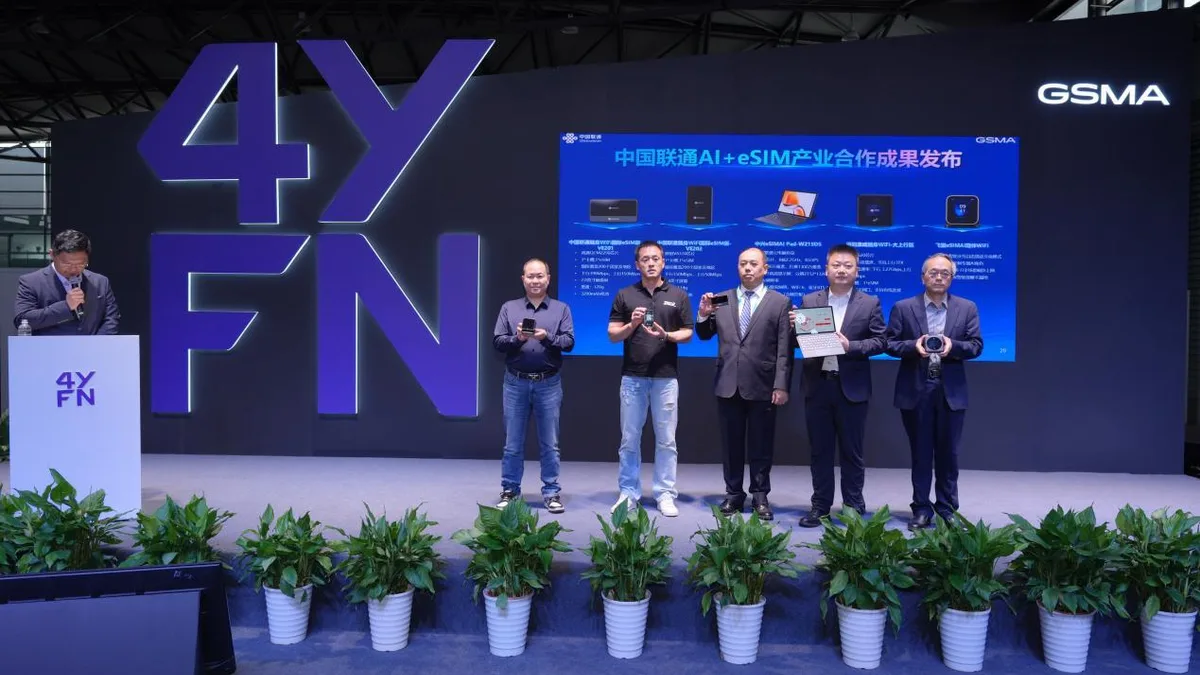
ifeng reported that China Unicom and GSMA held an AI+eSIM event during MWC Shanghai, releasing multiple industrial cooperation results. The report describes a cloud-smart terminal cooperation plan that combines eSIM connectivity, mobile networks, AI compute, and cloud services for scalable terminal products.
The most important word here is scalable. One-off connected devices are easy to demo and hard to support. A factory, retailer, logistics company, or consumer hardware maker needs activation, updates, data plans, and service management across many devices. eSIM can simplify that process if the surrounding platform is reliable and flexible.
AI adds both value and complexity. It can make devices more useful through voice control, image recognition, predictive maintenance, and context-aware services. It can also increase bandwidth, latency, privacy, and energy concerns. A tiny device that depends on cloud AI needs a connection that is not only available but also secure and cost-aware.
China Unicom's move should be read as part of a carrier strategy to stay relevant as intelligence moves into everyday hardware. The winner will not be the carrier that merely says AI the loudest. It will be the one that makes connected-device deployment easier for manufacturers and less confusing for users. eSIM is the entry point. The quality of the platform around it will decide whether the idea becomes infrastructure.
Consumers may not notice the carrier layer directly, but they will notice when setup becomes easier. A wearable or portable device that activates quickly, roams reliably, and keeps AI features available without confusing plan management will feel more polished. That is the real opportunity for AI+eSIM. The technology should disappear into a smoother experience. If users still have to fight activation screens, app permissions, and billing confusion, the platform promise will not matter.
The privacy side will need equal attention. A connected AI device creates identifiers, usage logs, and sometimes sensor data. Carriers that want to power this market must show how that data is protected, not only how smoothly devices connect.
That trust layer will matter as much as connection speed.