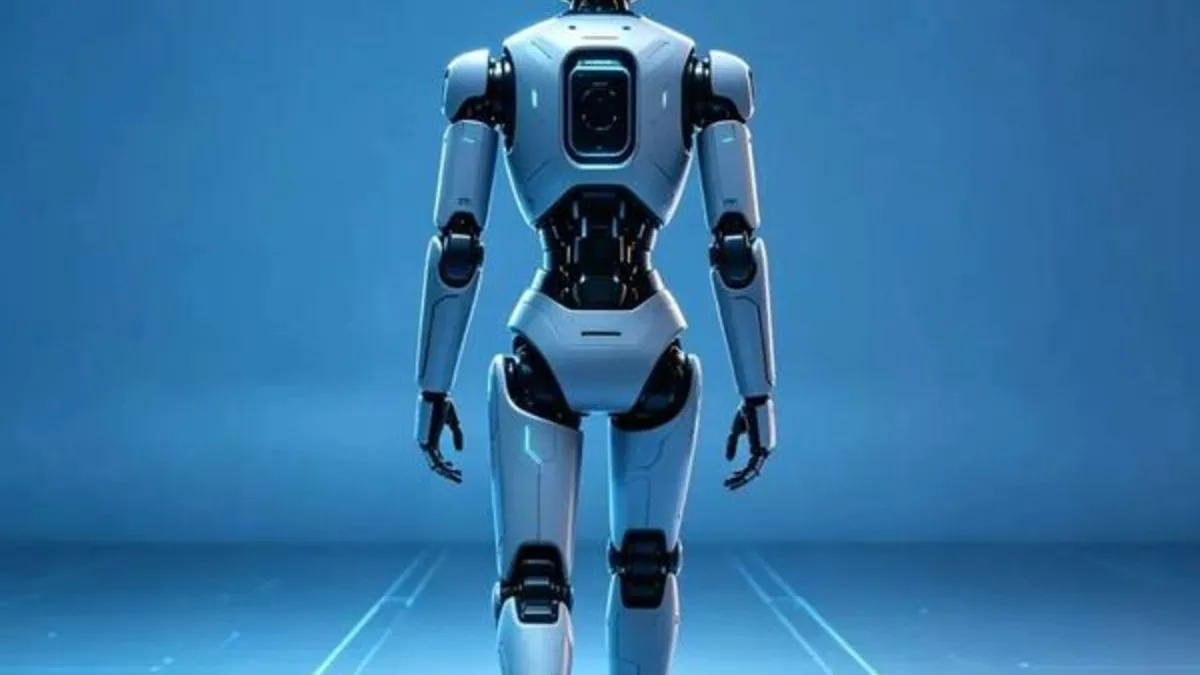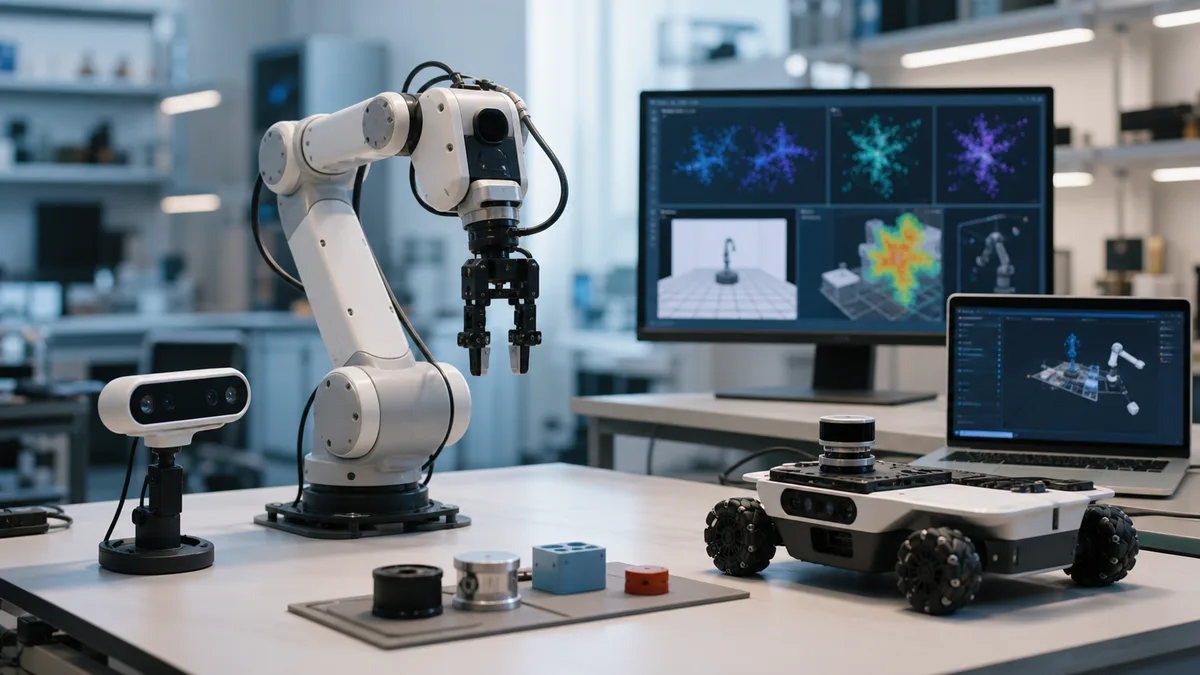
RoboScience's Visics release is part of a larger shift in robotics: the industry is trying to move from scripted demos to systems that can understand objects, goals, and motion in less controlled spaces. The idea of a robot brain sounds simple, but the real difficulty is translating perception into action. A robot has to see a scene, understand what matters, plan a movement, and adapt when the scene changes.
Visics is notable because it puts object trajectories at the center of that translation. Instead of treating language, vision, and action as separate islands, the model uses a framework described as vision-language-object-action. That may sound abstract, but it points to a practical need. Robots need a middle layer that can represent where things are, how they move, and what the machine should do next.
This connects closely with the physical AI trend we discussed in robot sports and physical AI benchmarks. The next stage of robotics will not be measured only by whether a robot can wave, walk, or carry a box once. It will be measured by whether it can repeat useful tasks in different rooms, lighting conditions, object layouts, and human environments.
Sohu reported that RoboScience released Visics as a general embodied large model, highlighting its VLOA architecture and the use of 3D point-cloud trajectories as a shared representation for action. The report frames the model as a step toward cross-scenario autonomous execution.
The important question is how much of this works outside controlled demonstrations. Robotics has a long history of impressive videos that do not survive messy daily use. Real spaces include reflective surfaces, moving people, cluttered tables, odd lighting, and objects the system has never seen before. A model that uses object trajectories may help, but deployment will require robust sensors, safety checks, and hardware that can act precisely.
Cost is another barrier. A robot brain is only useful if the full robot is affordable enough for warehouses, labs, retail spaces, hospitals, or homes. Cloud dependence can add latency and privacy concerns. On-device compute can add cost and heat. The best commercial systems will likely combine local perception with cloud learning and strict safety limits.
Visics should be read as a sign of where robotics AI is going. The field is moving from recognizing objects toward manipulating them with context. If RoboScience can turn the architecture into reliable deployments, it could help close the gap between smart-looking robots and useful robots. That gap remains the hardest part of embodied AI.
Developers should also be careful about the language used around general-purpose robotics. A model may generalize across more scenes than older systems, but that does not mean it can safely handle every home, store, or factory. Clear deployment boundaries will make Visics-style systems more trustworthy. A robot that knows when it is uncertain and pauses for help can be more valuable than one that tries to complete every task. Autonomy needs humility as much as ambition.
The commercial winners will likely be the systems that pick narrow jobs first and perform them reliably. General robotics may be the vision, but dependable semi-general work is what will convince customers to buy.