The AI market is starting to talk more seriously about the price of usage. Business Insider reported on Citrini Research's argument that the AI trade is shifting from a "free AI" phase into a tokenomics phase, where the cost of processed tokens and aggressive workplace AI usage begin to shape investor thinking.
The word tokenomics can sound like crypto vocabulary, but in this context it is about the cost of inference. Every chatbot answer, coding-agent run, document summary, and internal AI workflow consumes compute. When companies encourage heavy AI usage without measuring results, the bill can grow faster than the business case. That is why token costs are becoming an operating question, not just a vendor-pricing footnote.
Why edge AI is back in the conversation
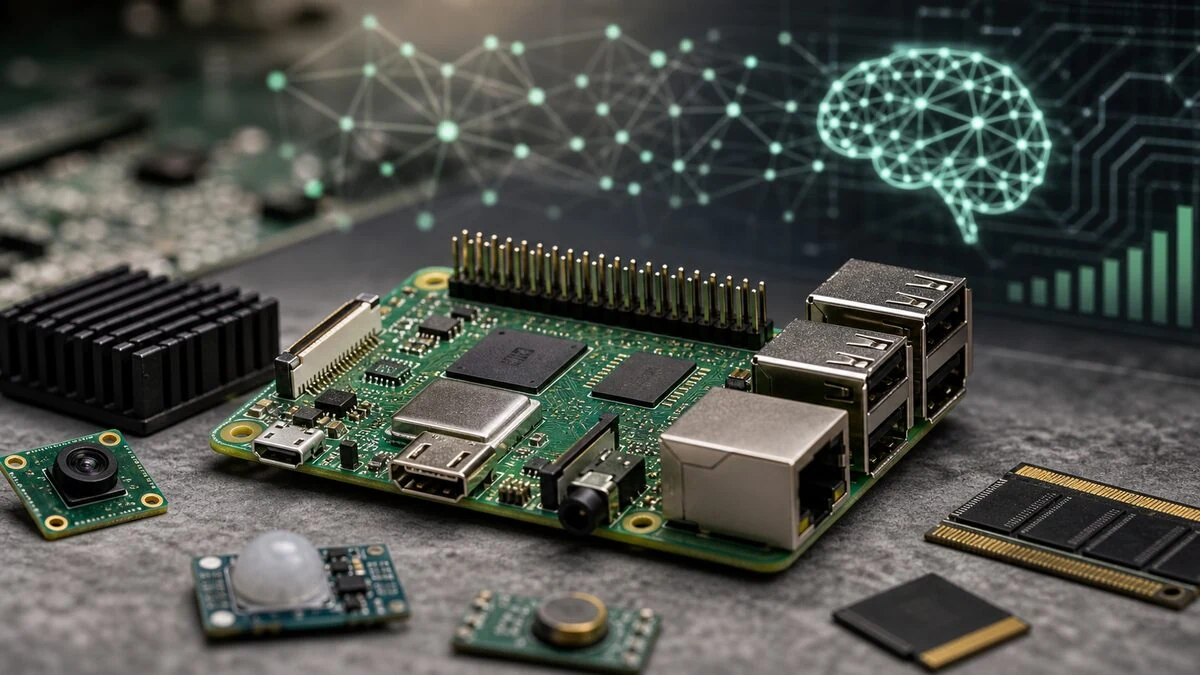
If centralized AI use becomes expensive, companies will look for ways to send fewer tasks to remote data centers. That does not mean cloud AI disappears. It means some work may shift closer to the user: laptops, phones, workstations, local servers, and edge devices. Local inference can reduce latency, preserve privacy, and control cost when the model and task are small enough.
| AI workload | Cloud advantage | Edge advantage |
|---|---|---|
| Large model reasoning | Access to powerful frontier systems. | Limited unless hardware is strong. |
| Document cleanup | Easy managed service deployment. | Can run locally for privacy and cost control. |
| Coding assistance | Better context and larger models. | Local models can handle repetitive tasks. |
| Real-time device actions | Heavy compute when needed. | Lower latency and offline resilience. |
The investor angle is that the first AI trade was concentrated around centralized compute: accelerators, data centers, cloud capacity, and networking. If customers become more cost-conscious, a second trade may form around efficiency: smaller models, edge chips, AI PCs, local orchestration, routing software, caching, and tools that decide when a task needs a premium model.
Tokenmaxxing also exposes a management problem. Counting tokens is not the same as counting output. A company can burn through AI usage while producing little measurable value. The better metric is whether AI reduces cycle time, improves quality, prevents errors, or opens new revenue. Token budgets should follow outcomes, not enthusiasm.
For vendors, the pricing shift will be delicate. Flat-rate access helped adoption, but usage-based economics are more sustainable when compute demand is high. Customers will accept that only if they receive clear controls, predictable invoices, and model choices that let them match cost to task importance.
That creates room for a new class of budget-aware AI tools. Routing engines, prompt compression, retrieval filters, local fallback models, and usage analytics can all help companies spend premium tokens only when they are needed. The most efficient AI stack may be the one that quietly says no to expensive inference for low-value work.
The tokenomics debate does not mean the AI boom is ending. It means the market is becoming more disciplined. Expensive tasks will still use cloud models. Routine tasks may move local. The most valuable software may be the layer that chooses the right model, location, and price for each job. That is why edge computing is suddenly relevant again.