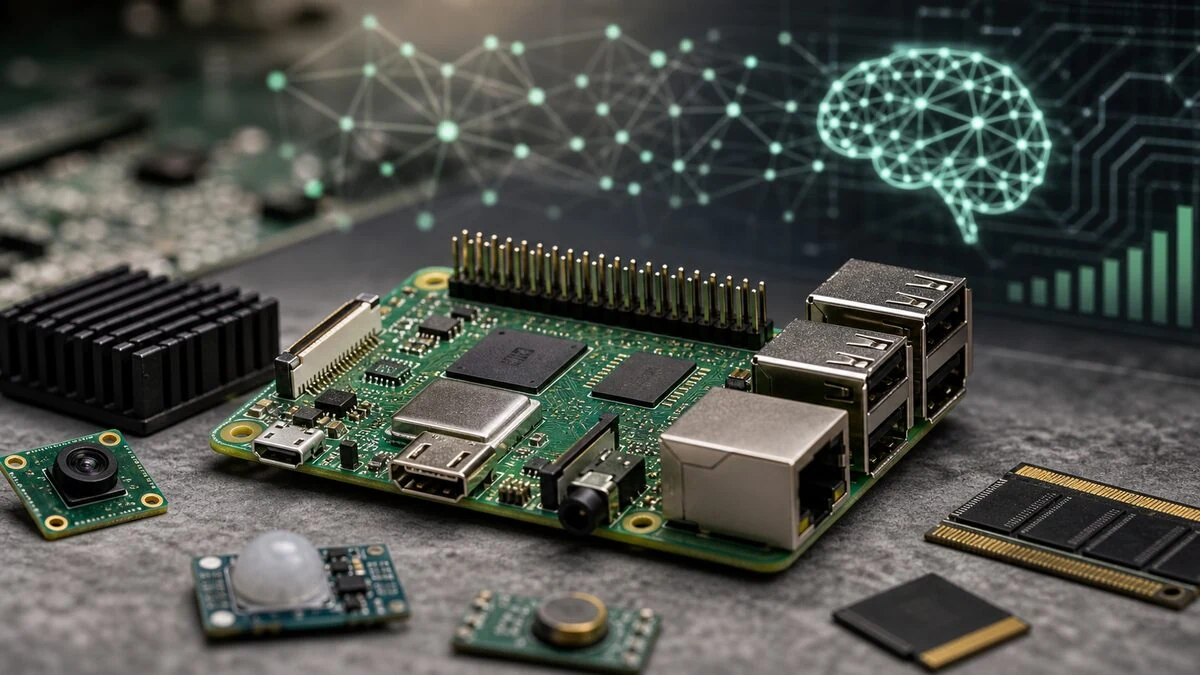
Raspberry Pi's latest trading update shows that the AI hardware story is not only about giant data centers. MarketScreener, carrying Reuters reporting, said the company raised its full-year 2026 profit forecast after a stronger first half, with AI-related demand helping push expected adjusted core profit significantly ahead of market expectations.
The numbers matter because Raspberry Pi sits in a different part of the AI stack. It is not selling the biggest training clusters. It is selling small, affordable boards that fit into automation, robotics, testing rigs, education, industrial devices, smart sensors, and edge computing projects. When demand rises there, it means AI experimentation is spreading beyond the cloud.
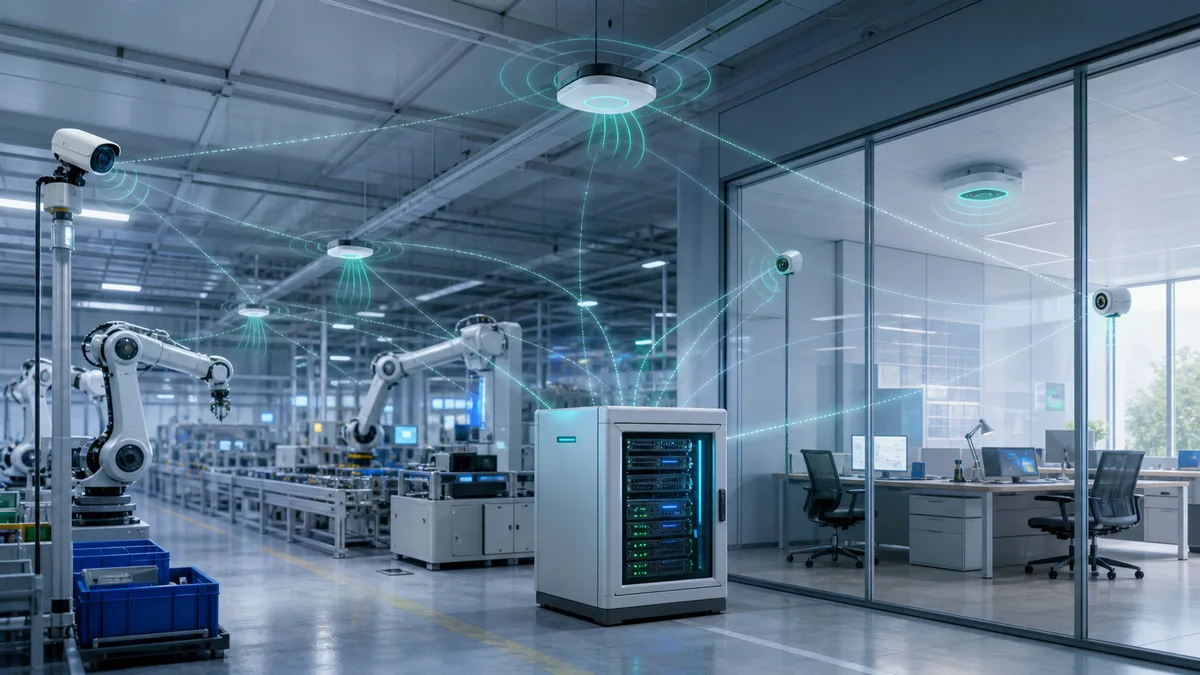
That trend overlaps with the world described in our IoT home automation guide. Devices closer to the edge need cheap compute, local control, and enough intelligence to act without sending every signal back to a distant server.
Why small boards matter in AI
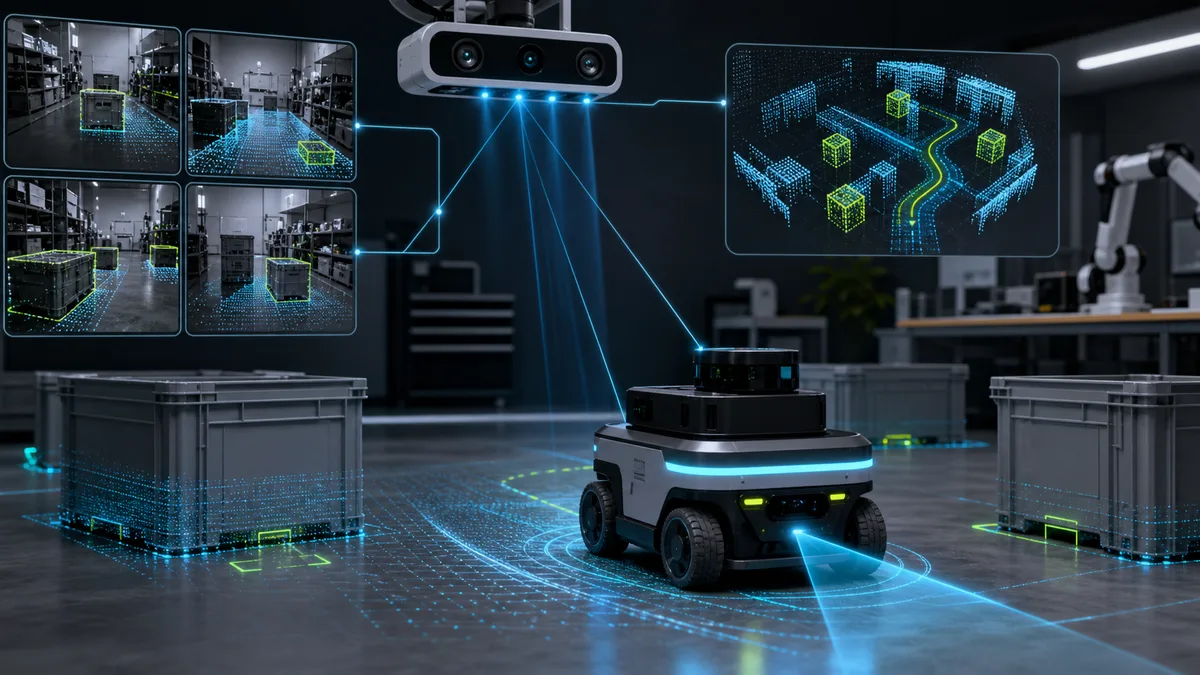
Edge AI is not about replacing cloud models. It is about putting enough processing near the sensor, camera, robot, or machine to reduce delay, protect privacy, cut bandwidth, or keep working when connectivity is unreliable. A Raspberry Pi board can be used for prototyping, light inference, device control, data capture, and field testing before a company commits to custom hardware.
| Use case | Why edge hardware helps | What buyers care about |
|---|---|---|
| Robotics | Local control reduces latency. | I/O, power use, camera support. |
| Industrial sensors | Data can be filtered before upload. | Reliability and long-term availability. |
| Education | Students can build physical AI projects cheaply. | Price, ecosystem, tutorials. |
| Smart devices | Basic AI can run near the user. | Privacy, heat, and maintenance. |
The catch is memory. AI demand has tightened supply for DRAM and related components across the industry. Raspberry Pi's update also pointed to margin pressure as lower-cost inventory is used up. That is the strange dual effect of the AI boom: it can lift demand for a product while making parts more expensive.
For industrial buyers, that makes planning more important than usual. A hobbyist can wait a few weeks or switch boards. A factory, retailer, farm, lab, or logistics company may need the same hardware revision for years. When AI demand pulls on the same memory supply chain, even small embedded projects can feel the pricing and availability pressure created by much larger customers.
The practical takeaway
For developers and small businesses, Raspberry Pi's update is a signal that edge AI is becoming a practical build category. Cameras, factory monitors, retail sensors, smart-home controllers, and lab tools do not always need a giant model. They often need a reliable local machine that can run a smaller model, collect data, and trigger an action.
For hardware buyers, the message is to plan around memory and availability. If a project depends on a specific board configuration, build a fallback plan before parts tighten. AI demand can make even modest hardware feel strategic when thousands of devices need the same memory chips.
This is not the glamorous side of AI, but it may be the side many businesses touch first. A warehouse sensor that flags a problem, a camera that detects a safety issue, or a workshop tool that logs quality checks can deliver value without a giant cloud bill. Edge AI will grow when it solves those narrow jobs reliably.
The broader lesson is that the AI boom has a long tail. Data centers get the headlines, but the devices at the edge decide how much AI actually touches everyday work.