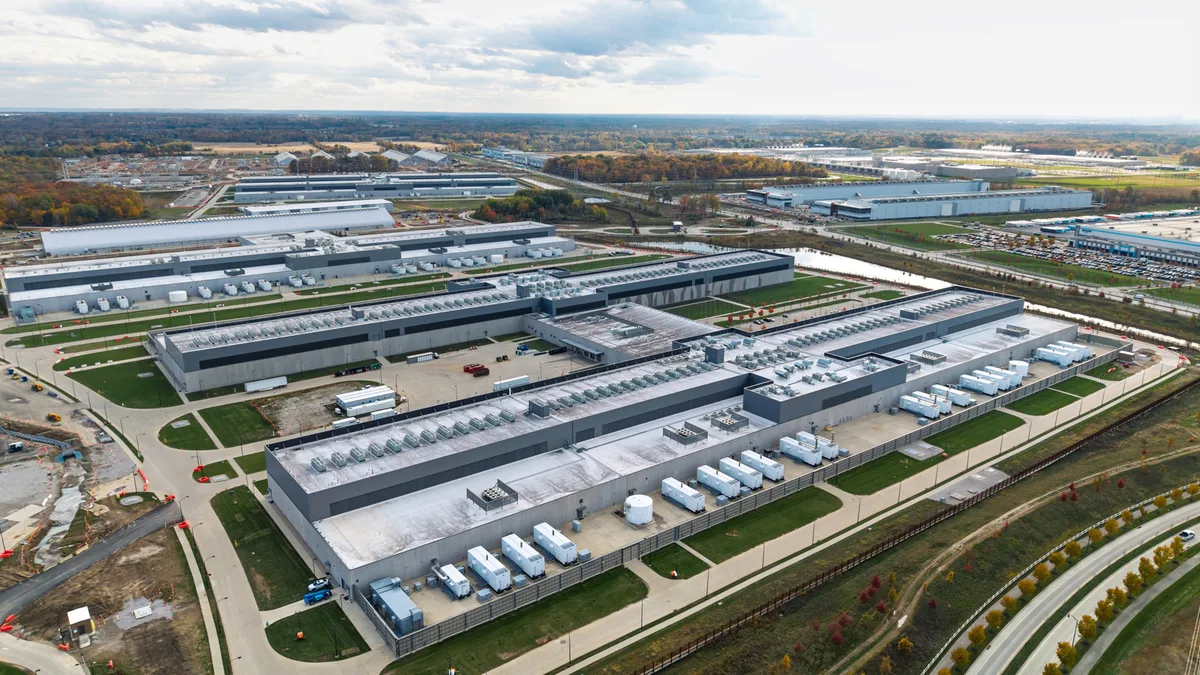
Anthropic reportedly entering its first major data center lease talks shows how quickly AI labs are turning into infrastructure buyers. A few years ago, many model companies could frame themselves mainly as research groups and software providers. Now the limiting factors are power, land, cooling, GPUs, networking, financing, and long-term hosting contracts. The companies that want to train and serve frontier models cannot avoid the physical layer anymore.
The reported involvement of Google financial backing is especially telling. Data center landlords and operators want confidence that expensive capacity will be paid for over many years. AI labs can have fast revenue growth, but they also burn enormous capital and face uncertain model economics. A guarantee from a deep-pocketed partner can make a lease more bankable. In practice, the AI infrastructure race is creating new financial structures around compute demand.
This is part of the same market shift we have covered in large-scale AI data center planning. Model companies are no longer just renting cloud instances in a flexible way. They are anchoring campuses, reserving capacity, negotiating power access, and shaping regional infrastructure decisions. The line between AI company, cloud customer, and infrastructure sponsor is getting blurry.
CNBeta reports that Anthropic has started talks for its first batch of data center leases and is seeking support through Google funding guarantees. The report places the talks within the broader scramble for AI computing capacity as labs compete to secure enough infrastructure for model training and deployment.
For Anthropic, direct capacity arrangements could reduce dependence on whatever cloud capacity is available in the open market. It may also help the company plan product commitments more confidently. Enterprise customers want reliable inference, predictable latency, and assurance that the model provider can keep serving workloads as usage grows. Owning or anchoring capacity is one way to support that promise, even if it adds financial risk.
The risk is that infrastructure commitments can outlive model advantage. AI labs are moving fast, but so are competitors and open models. A lease signed during a compute shortage may look wise if demand keeps rising, or burdensome if efficiency improves faster than expected. Anthropic's reported talks show the strategic dilemma facing every frontier lab: compute scarcity is too important to ignore, but infrastructure is too expensive to treat casually. The next AI winners may be determined as much by real estate, energy, and financing discipline as by model architecture.
There is also a competitive signaling effect. If Anthropic can show customers that it has dedicated capacity lined up, it can sell reliability with more confidence. That matters for enterprises that do not want model access to degrade during demand spikes. Capacity planning is becoming part of the product promise. In AI, the best answer is not useful if the service cannot deliver it quickly, securely, and repeatedly under real workload pressure. Power, cooling, network design, and geographic placement now sit close to model quality in the buying conversation, especially for regulated companies that need predictable latency and auditability.