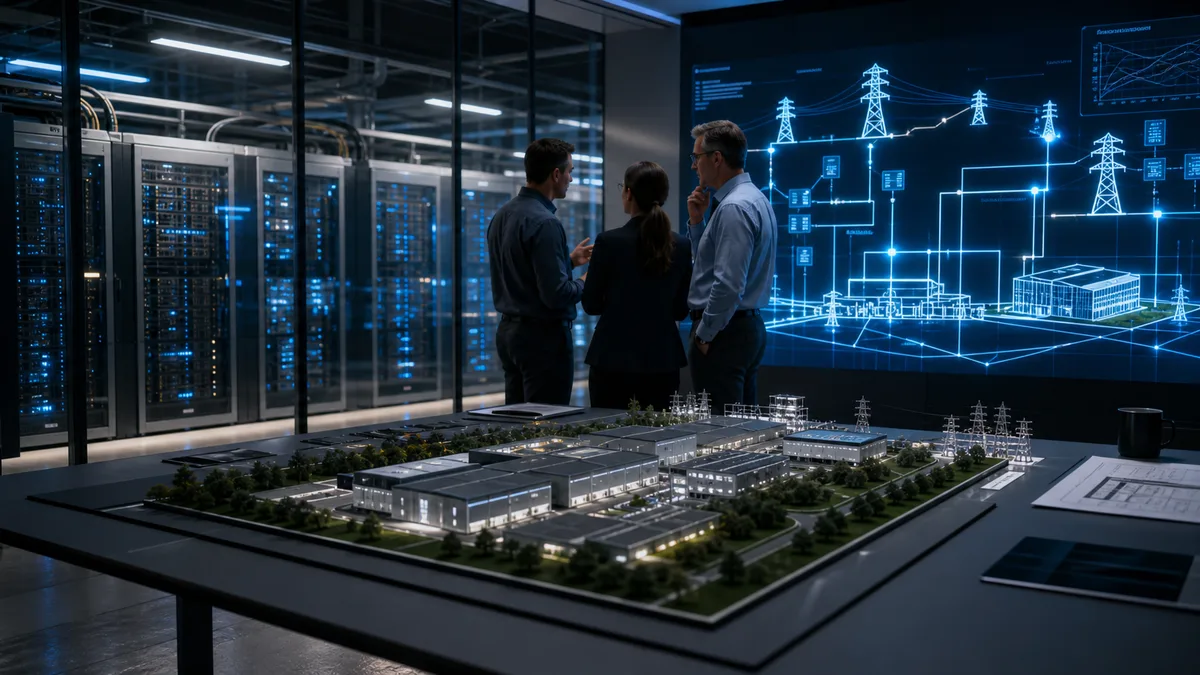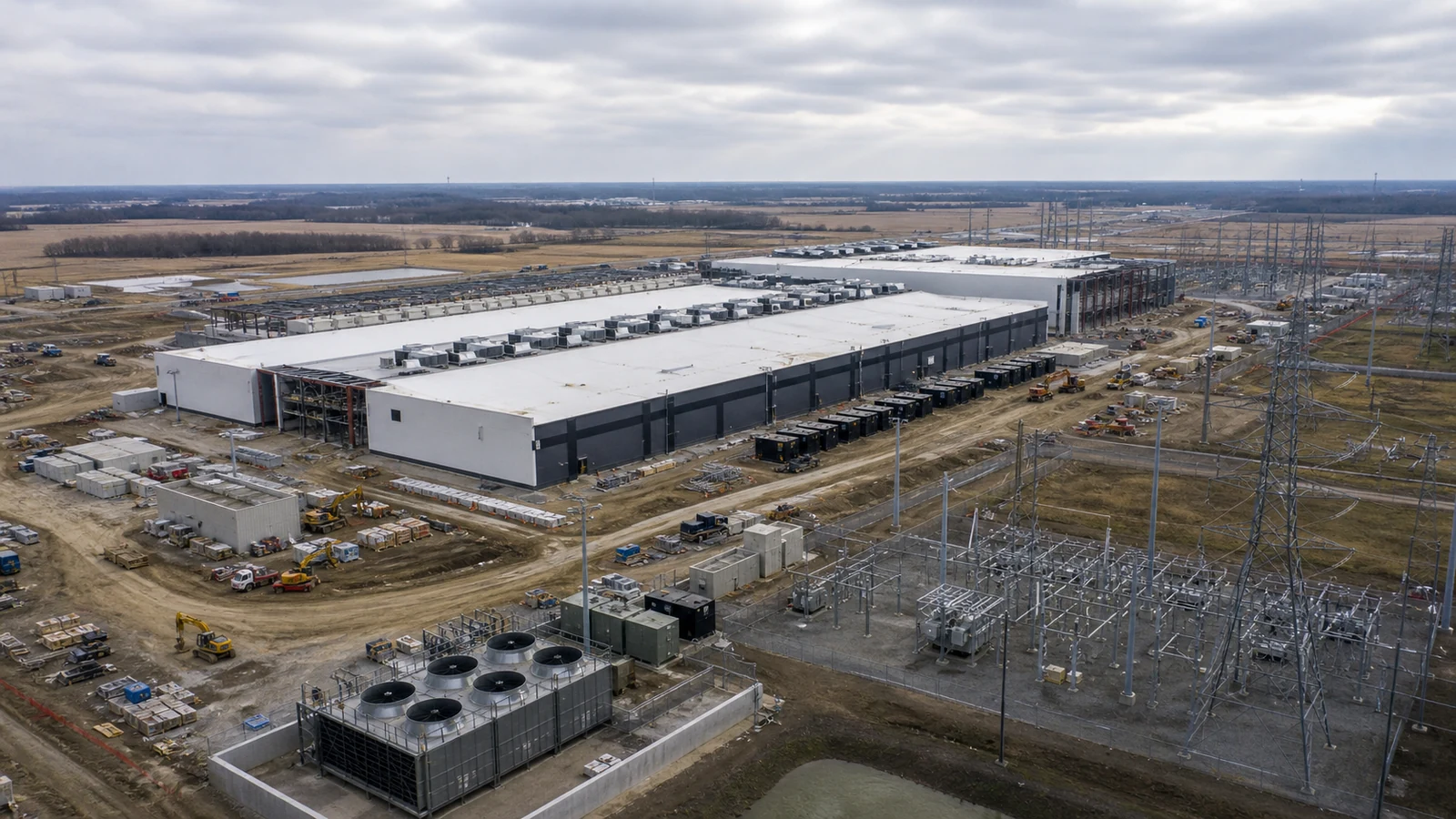
Reported talks around a 10 gigawatt Ohio data center show how quickly AI infrastructure planning has moved from ordinary cloud expansion to utility-scale engineering. A project at that size would not just be a real estate decision or a server procurement plan. It would be a power strategy, a grid strategy, a cooling strategy, and a financing strategy all at once.
That is the important part of the report. AI companies no longer appear to be thinking only in terms of more racks and more GPUs. They are thinking in energy blocks large enough to change local planning. When compute demand reaches that level, the cloud becomes tied directly to utilities, transmission, water, land, and long-term political support.
Patriotic Tech has already covered why companies are renting GPUs and TPUs instead of buying them. A 10 gigawatt discussion sits at the other end of the chain. Someone has to build the enormous shared capacity that makes that rental model possible.
The AI cloud is becoming an energy market
A data center project of this scale would need more than hardware. It would require stable power purchase agreements, grid interconnection, backup planning, cooling resources, and a long construction timeline. It may also raise local questions about electricity prices, land use, jobs, tax incentives, and whether the surrounding region receives enough benefit from the infrastructure it hosts.
Nvidia backing or involvement would make sense because GPUs are the expensive engine inside the AI cloud. But the chip supply story is only one layer. A powerful GPU is useless if the building cannot power it, cool it, and connect it. That is why AI infrastructure has become a physical economy, not only a software economy.
Ohio is notable because AI data center growth is spreading beyond the traditional coastal technology hubs. Regions with available land, energy strategy, fiber, and political appetite can become compute centers. The next AI map may look less like a map of startups and more like a map of power corridors.
The risk is overbuild. AI demand is enormous today, but infrastructure built at utility scale must make sense for years. Companies will need confidence that model training, inference, enterprise AI, and agentic workloads will keep absorbing capacity. The scale of the talks suggests they believe the demand curve is still rising.
The local impact would deserve as much scrutiny as the technology. Massive data center projects can bring construction jobs, permanent technical roles, tax revenue, and network investment, but they can also strain power planning and water resources. Communities will want to know whether the project strengthens the grid or merely consumes it. The talks surfaced by The Information make that debate part of AI policy because compute growth is no longer abstract. It has addresses, substations, transmission lines, and cooling systems. If Ohio becomes a major AI compute site, the story will be about economic development as much as model capability. Local officials will also have to explain the tradeoffs before construction momentum makes those choices harder to question. The next AI race may be decided by permits and power contracts as often as research breakthroughs.