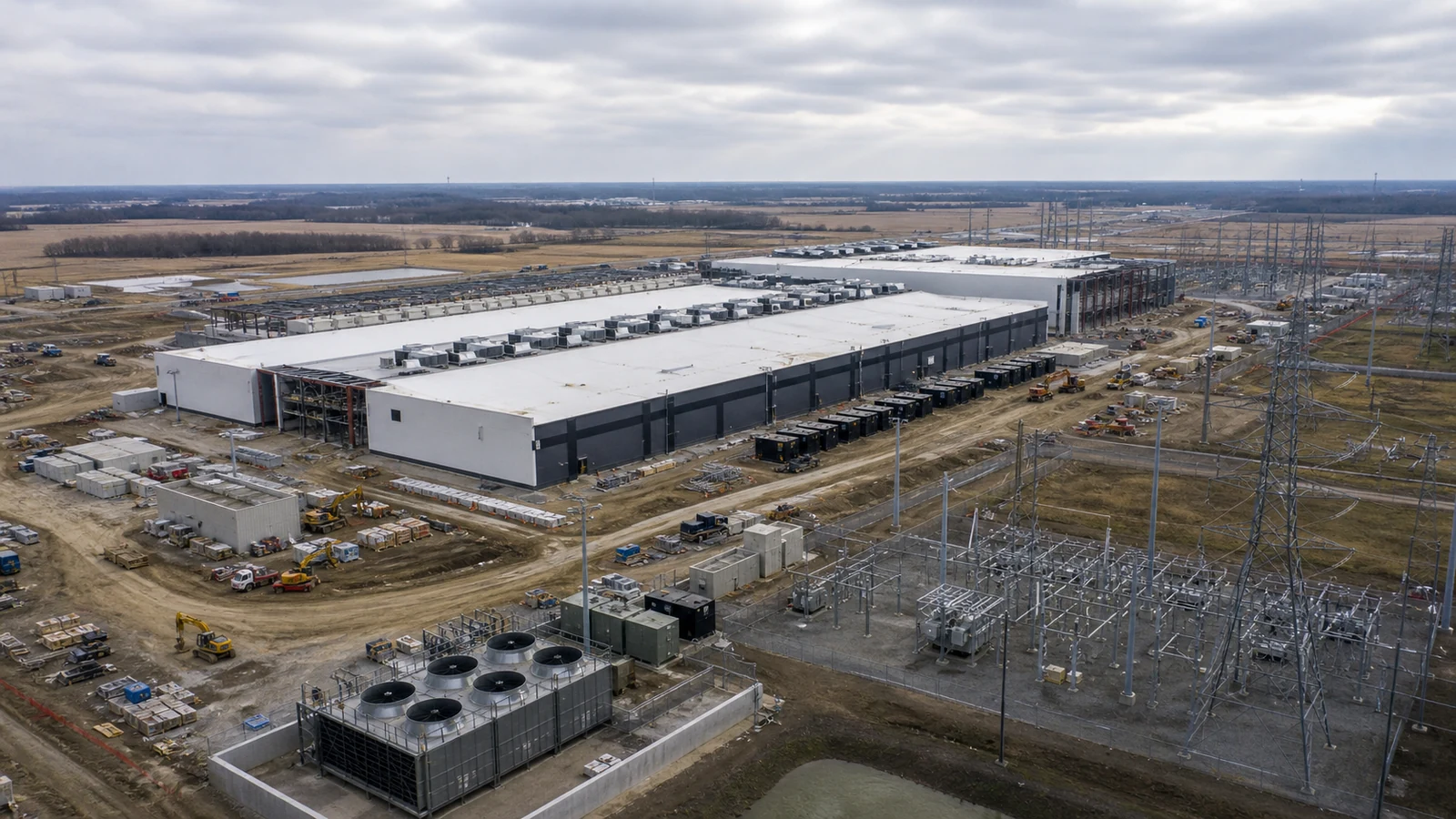
Apple may not be buying Nvidia hardware in the most obvious way, but the AI supply chain is not built around obvious relationships anymore. Barron's reported that Apple is effectively connected to Nvidia GPUs through Google Cloud infrastructure used for Apple Intelligence and private cloud workloads, a reminder that AI customers can depend on chipmakers even when the contract path runs through another cloud provider.
The point is not that Apple has suddenly become a classic Nvidia customer. It is that even companies famous for vertical integration still need outside compute when AI demand grows quickly. Apple can design its own chips for devices, tune its own privacy architecture, and control the user experience, while still relying on cloud partners for the heavy lifting behind some model workloads.
Why indirect AI spending matters
Investors often want a clean map: one company buys chips, another company sells chips, revenue follows. AI infrastructure is messier. A consumer-tech company may rent capacity from a cloud provider, the cloud provider may operate Nvidia clusters, and the end-user feature may still be marketed under the consumer company's brand. The economic exposure is real even if the supplier relationship is several steps removed.
| Company role | What it controls | Why the link matters |
|---|---|---|
| Apple | Device experience, privacy design, user-facing AI. | Needs scalable compute without losing product control. |
| Google Cloud | Cloud operations and available accelerator capacity. | Turns infrastructure into a service Apple can consume. |
| Nvidia | GPU hardware and software ecosystem. | Benefits when cloud customers absorb more AI workload. |
| End users | Demand for responsive AI features. | Latency and trust decide whether features are used. |
This structure also explains why Nvidia's market reaction to a single customer headline can be muted. Apple is important, but the financial impact depends on capacity scale, duration, pricing, cloud margins, and whether workloads expand. The symbolic value may be larger than the immediate revenue surprise: even Apple, with all its chip expertise, is part of the broader accelerator ecosystem.
For Apple, the challenge is perception. The company has built years of messaging around privacy, on-device processing, and tightly controlled systems. Using cloud AI does not automatically contradict that, especially if private processing is designed carefully, but it does require clear communication. Users need to understand what runs on device, what runs in a private cloud environment, and what protections apply.
For cloud providers, the Apple link shows why AI infrastructure can become a strategic bargaining tool. The companies with available capacity, strong security posture, and efficient accelerator operations can win workloads from firms that would otherwise prefer to own more of the stack.
It also makes capacity planning harder to read from the outside. A consumer feature may look like an Apple feature, run through a Google cloud region, depend on Nvidia hardware, and be limited by data center power in a completely different geography. That layered structure is why AI revenue often appears first as infrastructure demand before it becomes obvious in consumer subscriptions.
The bigger takeaway is that AI supply chains are becoming layered. Brand, model, chip, cloud, data center, and energy provider may all be different companies. A user asking an assistant a question may trigger value across several balance sheets. That is why AI infrastructure analysis now has to follow the workload, not just the logo on the product.