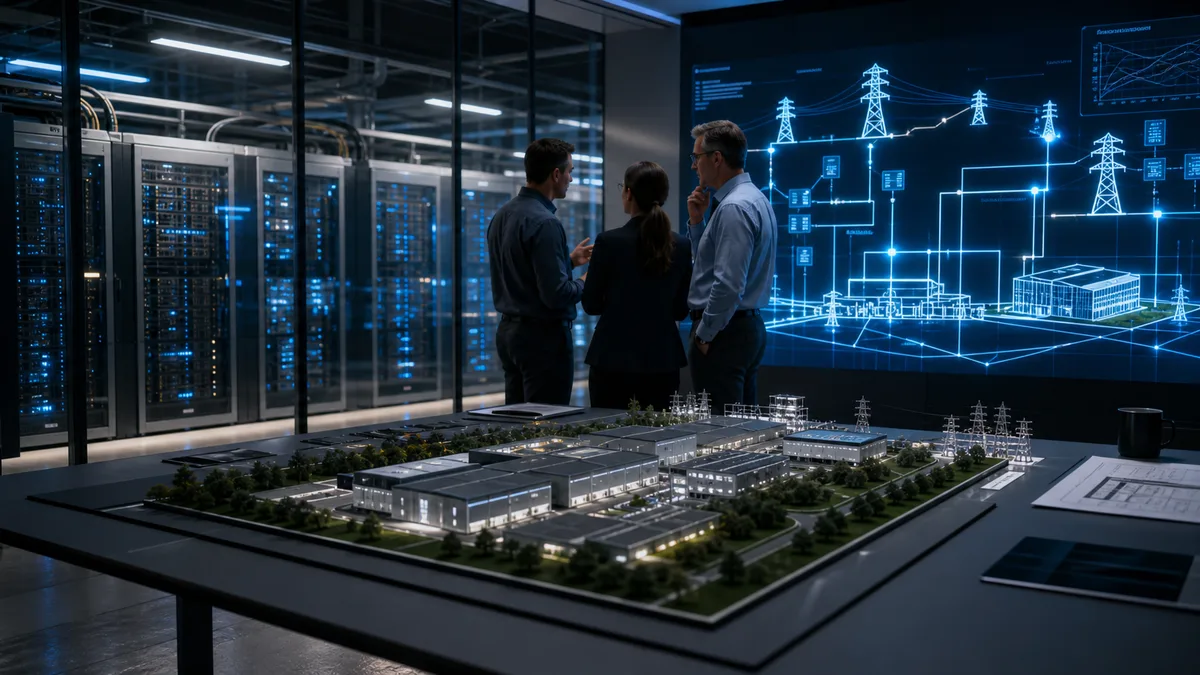
财联社's report on OpenAI talks around a massive Ohio data center makes the AI compute race feel less like ordinary cloud growth and more like utility-scale infrastructure planning. The numbers attached to modern AI expansion are now measured in power, land, cooling, and long-term grid access.
That is a major change from the earlier chatbot era. A successful model company now needs inference capacity for everyday users, training capacity for future models, and enough redundancy to support enterprise commitments. Data centers become part of the product.
The thread also links naturally to our earlier look at the OpenAI conversational AI leak. For this post, CLS OpenAI Ohio Data Center Report Makes AI Compute Plans Feel Utility Scale makes that connection specific to 财联社: the rumor or report is only useful when it is read beside product timing, component pressure, and the user trust problem around Data Centers.
The current report from 财联社 reported that OpenAI is discussing a large Ohio data center lease, framing it as part of a wider AI compute expansion. That source detail gives the article a concrete starting point, but the bigger value is in reading what the report says about the product category around it.
For communities and energy planners, the question is no longer abstract. Large AI campuses can affect power demand, water planning, tax incentives, jobs, and local infrastructure. The public will increasingly ask what they receive in return.
What makes this worth separating from a normal news brief is the way it changes near-term expectations. CLS OpenAI Ohio Data Center Report Makes AI Compute Plans Feel Utility Scale is really about timing, confidence, and execution. A small leak can be forgettable, but a leak that points to supply, policy, capacity, or launch positioning can shape how buyers and rivals prepare.
The technical challenge is not only installing servers. These facilities need dense power delivery, cooling systems, fiber routes, backup capacity, and hardware refresh plans. AI servers age quickly when model demand keeps rising.
OpenAI and its peers are competing for dependable capacity because model access is now a commercial promise. If compute is tight, product launches slow, API limits tighten, and enterprise customers look for more predictable alternatives.
Another angle worth keeping in mind is audience behavior around 财联社. People following CLS OpenAI Ohio Data Center Report Makes AI Compute Plans Feel Utility Scale are no longer waiting passively for official launch slides; they compare leaks, supplier moves, policy signals, and early pricing clues before deciding what to buy, build, or avoid.
Large data center talks can change before final construction or lease commitments. Local approvals, power agreements, financing, and equipment availability can all reshape the plan.
The next AI platform battle may be decided partly by who secures power first. Models will still matter, but the infrastructure behind them is becoming just as strategic.
The practical reading is therefore cautious but not dismissive. For 财联社, the headline is the new development. For readers following OpenAI, the more durable point is whether the companies involved can turn that development into something reliable, understandable, and worth paying attention to after the first leak cycle fades.