iPhone gaming has spent years sitting between two worlds. Apple has the chips, the displays, the App Store, and a huge user base, but touch controls still limit many serious games. That is why controller accessories matter. A phone becomes a more convincing gaming device when the input feels built for action instead of adapted from a glass screen.
Chinese tech coverage noting an Apple-listed controller grip is interesting because it points to a more formal accessory ecosystem around mobile gaming. A controller grip is not a console by itself, but it changes the ergonomics of the iPhone. It can make racing games, shooters, action titles, emulators, and cloud gaming feel less compromised.
The timing also makes sense. Apple has been pushing higher-end games onto iPhone and iPad, while cloud gaming and remote play have become more normal. The limiting factor is often not raw performance. It is comfort, battery, heat, and controls. A good accessory can solve at least one of those problems immediately.
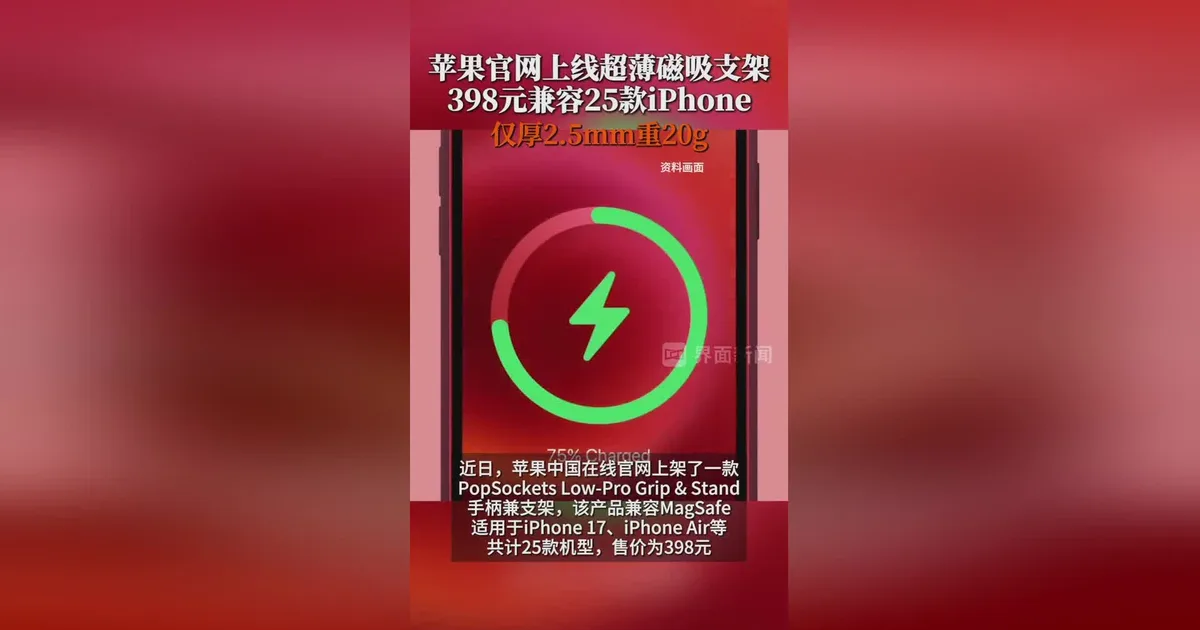
网易科技 surfaced the Apple controller grip item in its current technology feed, noting Apple's official listing and pricing context. The brief item sits among broader Chinese coverage of AI, chips, and device accessories, but the gaming accessory angle is the part that matters for phone buyers.
This fits with our earlier Apple hardware coverage, including the iPhone material leak discussion. Apple often changes the iPhone experience through small ecosystem pieces, not only through the phone itself. A controller grip is one of those pieces if it helps the device enter more living-room and travel gaming scenarios.
The accessory market is already full of third-party controllers, but Apple-adjacent visibility can move behavior. If buyers see controller play as normal rather than niche, developers have more reason to support physical controls properly. Better controller support leads to better games, which then sells more accessories. That loop is what mobile gaming needs if it wants to compete beyond casual touch titles.
There are still limits. A grip has to fit cases, handle heat, avoid blocking ports, feel balanced, and survive iPhone size changes. If compatibility is narrow, the product becomes a short-lived accessory. If it is designed around a flexible standard, it can become part of a longer gaming ecosystem.
The news is small, but the signal is not. iPhone gaming hardware is getting more serious because the games are getting more serious. The phone already has the power. Accessories like controller grips decide whether that power feels comfortable enough to use for a full match, a long flight, or a weekend away from a console.
The strongest version of this accessory story would include better discovery inside iOS. If games clearly show controller support, if Apple Arcade highlights grip-friendly titles, and if setup is simple, the accessory becomes part of the gaming experience rather than an optional afterthought. Mobile controllers have existed for years, but consistency has been the weak point. Apple can change that if it treats physical input as a first-class path for games, not just a compatibility checkbox.