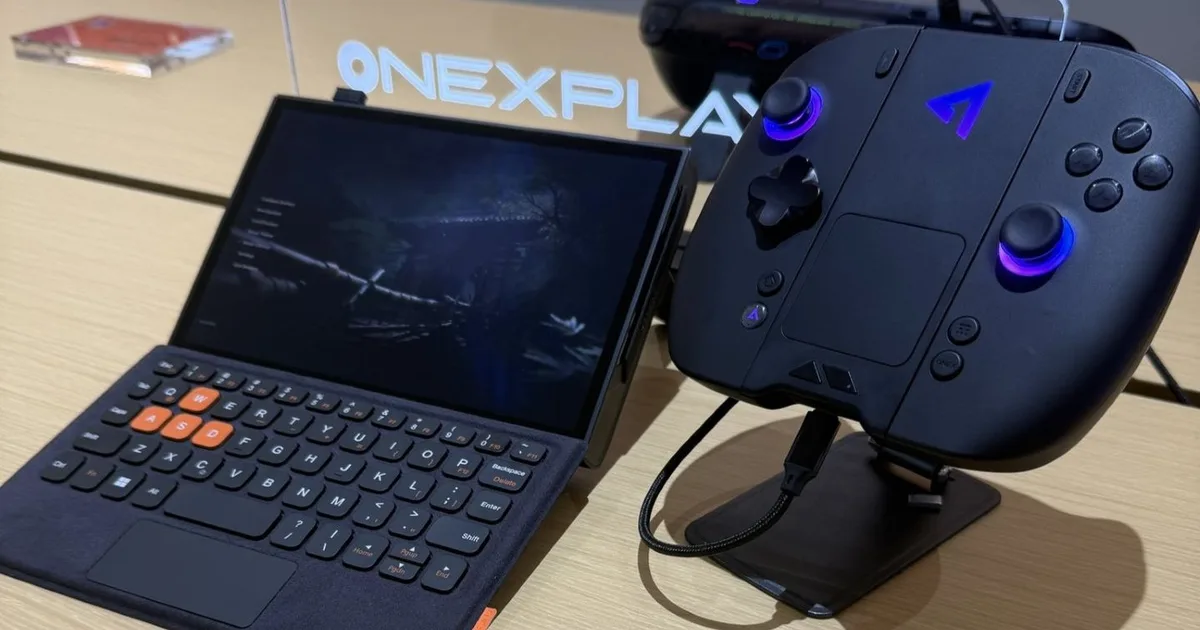
The handheld gaming PC market is no longer a one-shape category. OneXPlayer's latest showcase around Intel Arc G3 Extreme designs makes that clear. Instead of teasing a single successor, the company appears to be exploring several forms at once, from larger detachable-control machines to compact high-power handhelds. That variety says a lot about where portable PC gaming is headed.
The Steam Deck proved that PC games could become comfortable on a handheld, but it did not settle the design question. Some players want a light device for indie games and cloud streaming. Others want a larger screen for strategy titles, detachable controllers for tabletop play, or more wattage for demanding games. OneXPlayer seems to be testing all of those preferences rather than assuming one answer wins.
Intel's role is also important. AMD has dominated much of the handheld PC conversation, but Intel has been working to make Arc graphics and newer mobile chips more convincing for compact gaming machines. If Arc G3 Extreme hardware delivers better graphics, drivers, and efficiency, device makers will have more room to differentiate.
IT之家 reported that OneXPlayer showed multiple handheld gaming PC molds using Intel Arc G3 Extreme chips at a summer media event in Shenzhen. The report described models including OneXPlayer 3, OneXPlayer X2, X2 Mini, and OneXFly Apex Air, with screen sizes and power targets varying by design.
The most useful comparison is not only against other handhelds, but against the broader PC gaming software movement we covered when SteamOS opened the door to Intel handheld gaming PCs. Hardware diversity matters more if operating systems, drivers, and game launchers become easier to live with on small screens.
Battery capacity and thermal design will decide whether the strongest versions are practical. A handheld that can reach 45W looks exciting, but high wattage can quickly turn into fan noise, short battery life, and warm grips. Players will accept those tradeoffs for certain games, but a daily handheld needs a quieter balanced mode too.
The detachable designs are especially interesting because they blur the line between handheld, mini tablet, and compact gaming laptop. A 10.95-inch device with removable controls is not pocketable, but it could work as a travel screen, controller-based console, or couch PC. Smaller OLED models may serve a different audience that cares more about portability and screen quality.
The leak shows that OneXPlayer is not treating handheld PCs as settled. That is good for buyers. The next wave of portable gaming machines will likely be messier, but also more useful, because companies are finally designing around different player habits. If Intel's new chips perform well, the handheld PC market could become less predictable and more competitive very quickly.
Pricing will likely separate the concepts more than the spec sheets do. A larger detachable model can justify a premium if it replaces a travel laptop or serves as a small living-room console. A compact OLED handheld has to win on comfort, weight, and battery life. OneXPlayer should avoid pretending every model serves the same gamer. The strongest lineup would make those differences obvious, letting buyers choose between power, portability, modularity, and screen size without feeling lost in overlapping product names.