Consumer 3D printing has moved beyond the hobbyist corner, and Anycubic's latest funding news is another sign that the category is professionalizing. The interesting part is not only the size of the financing. It is what the money is expected to support: better printers, stronger materials, global channels, and the kind of service network that makes hardware feel less risky to normal buyers.
Desktop 3D printers used to be judged mainly by whether they could print at all without constant tinkering. That standard is no longer enough. Buyers now expect faster setup, cleaner software, safer enclosures, multicolor support, reliable filament handling, automatic calibration, quieter motion, and replacement parts that are easy to get. The companies that win will be the ones that reduce friction, not just the ones that push speed.
Anycubic already has name recognition among entry-level and enthusiast users, but funding changes expectations. More capital can help a hardware company scale manufacturing and support, yet it also creates pressure to expand faster. The brand will need to avoid chasing too many models if that makes the product line confusing.
36氪 reported that consumer 3D printing brand Anycubic completed a financing round worth several hundred million yuan, with the money aimed at FDM multicolor and multi-material printing, high-end resin products, core hardware and software, new materials, and global channel development.
This kind of local hardware story connects with the broader movement toward powerful desktop tools, including the local AI PC trend we covered. Creators increasingly want serious capability on a desk instead of only in a cloud service or factory. A reliable 3D printer is part of that same shift: more production power moving closer to the user.
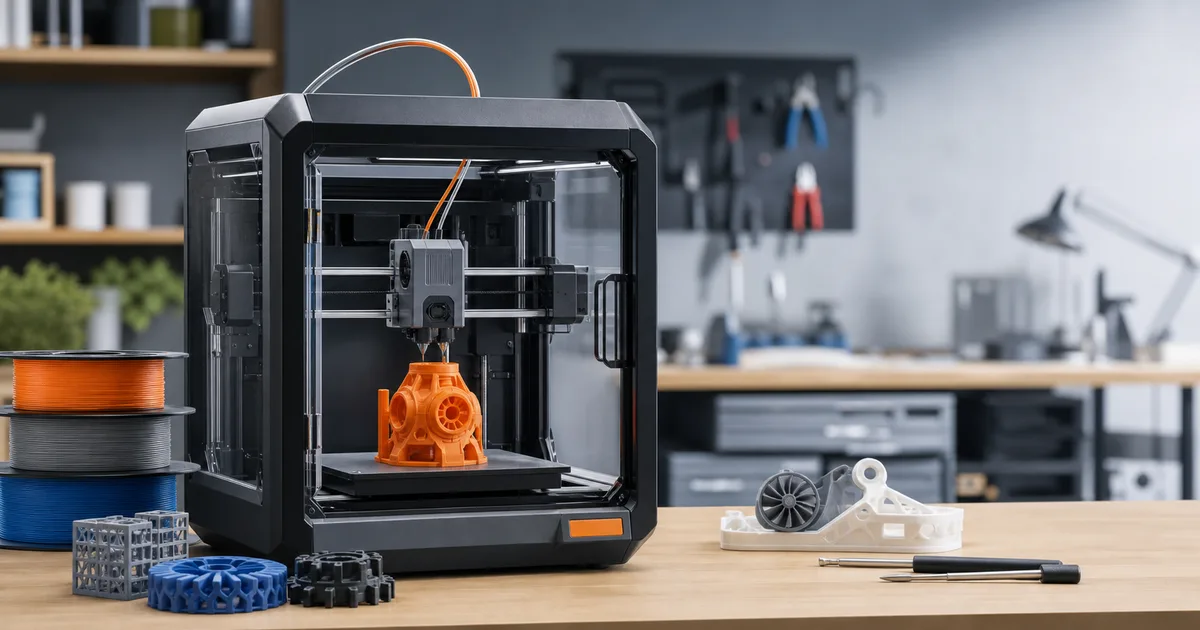
The multicolor and multi-material angle may be the most important. It is one thing to print a simple plastic part. It is another to make practical objects with flexible sections, stronger surfaces, colored labels, or better visual finish. If Anycubic can make those workflows easier for schools, small studios, repair shops, and home users, 3D printing becomes less of a novelty.
Global support will matter just as much as print quality. A consumer hardware brand can lose trust quickly if buyers cannot get nozzles, build plates, resin tanks, firmware help, or warranty service. Funding can help build that infrastructure, but only if the company treats service as part of the product.
The news does not mean 3D printers are about to become as common as inkjet printers. The category still requires space, patience, materials, and safety awareness. But the direction is clear. Consumer 3D printing is becoming a more serious hardware business, and Anycubic's new funding gives it a chance to compete on polish rather than only price.
Education could be one of the clearest growth paths. Schools and training labs want machines that students can use without constant technician intervention, and small businesses want printers that can make fixtures, packaging samples, replacement parts, and prototypes without a long setup ritual. If Anycubic uses the funding to make that experience calmer and more predictable, it could expand beyond enthusiasts. The winners in consumer 3D printing may be the brands that make the technology feel ordinary enough to trust.