HarmonyOS 7 is not only a consumer software story. It is also a developer story, and that may be the more important part for phones, tablets, foldables, wearables, and connected devices. A modern operating system can add clever AI features, but it cannot become a daily platform unless developers can build for it without fighting the tools.
That is why Huawei's Code Workshop approach is worth paying attention to. Instead of only publishing documentation and expecting developers to connect the dots, Huawei appears to be packaging examples, source code, and device adaptation patterns in a more usable way. For a platform trying to expand across different screen sizes and device types, that kind of practical help matters.
Developers do not just need inspiration. They need working samples, clear APIs, predictable layout behavior, and fast ways to test ideas across phones, tablets, foldables, PCs, and wearables. If HarmonyOS wants to grow beyond China's installed base, it has to reduce the cost of building polished apps for multiple form factors.
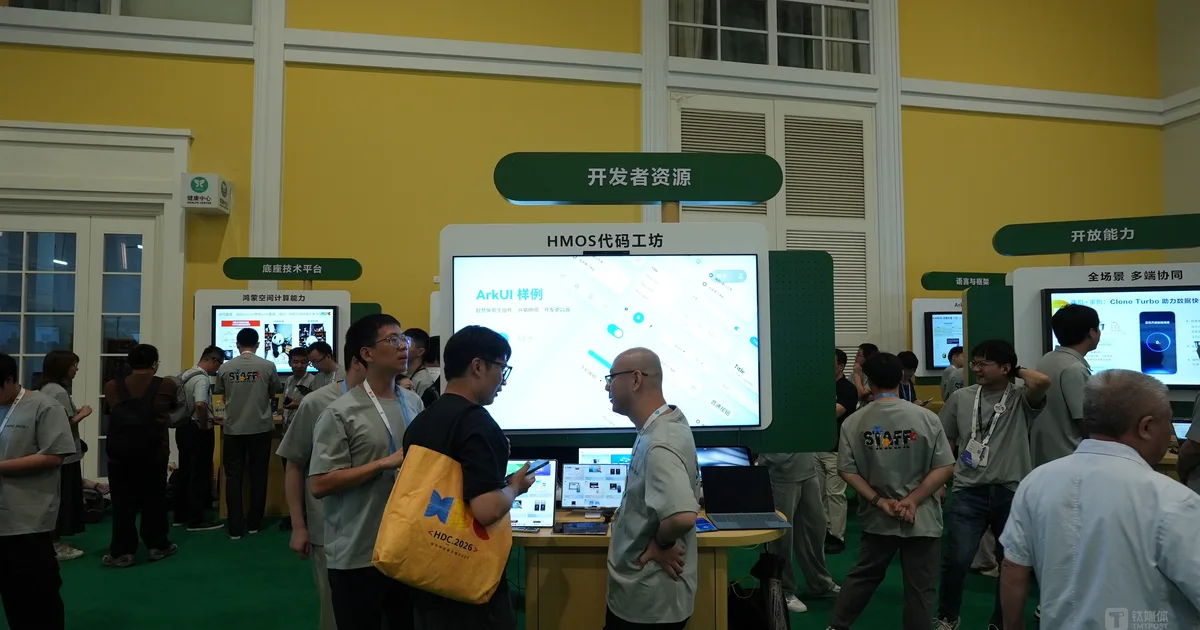
钛媒体 covered Huawei's developer push around HarmonyOS, including the HMOS Code Workshop app, examples, and a faster learning path for developers. The report framed the effort as a response to the challenge of helping a large developer community use new HarmonyOS capabilities more efficiently.
This links directly to the ecosystem question we raised in our HarmonyOS app ecosystem coverage. Operating systems are judged by what users can actually do, and that depends on whether developers find the platform worth their time. Easier tools can turn platform ambition into real app behavior.
The AI angle makes the tooling even more important. If HarmonyOS 7 adds more agent-like behavior, smart cards, cross-device actions, or visual interface effects, developers need understandable examples. Otherwise, only the biggest companies will implement the newest features well, leaving smaller apps feeling dated.
Huawei also needs to support different developer skill levels. Experienced teams want deep documentation and flexible APIs. Beginners need guided projects and working code they can modify. A healthy platform needs both, because today's student experiment can become tomorrow's popular local app.
The Code Workshop news may sound less exciting than a new phone launch, but it could shape the devices people actually use. Hardware gets attention quickly; software ecosystems earn attention slowly. If Huawei can make HarmonyOS development easier, future phones and tablets may feel more coherent because more apps will be designed for the system rather than merely ported to it.
The cross-device angle is where these tools could matter most. A developer building a note app, fitness app, shopping service, or media tool now has to think about phones, tablets, folding screens, watches, cars, and voice interfaces. Without strong examples, that workload can be intimidating. If Huawei gives developers reusable patterns for moving between those contexts, HarmonyOS apps can feel more native and less fragmented. That would benefit users more directly than any single developer-relations announcement.
The best outcome would be boring in the right way: apps install, scale, sync, and behave predictably across devices without forcing users to notice the engineering behind it.