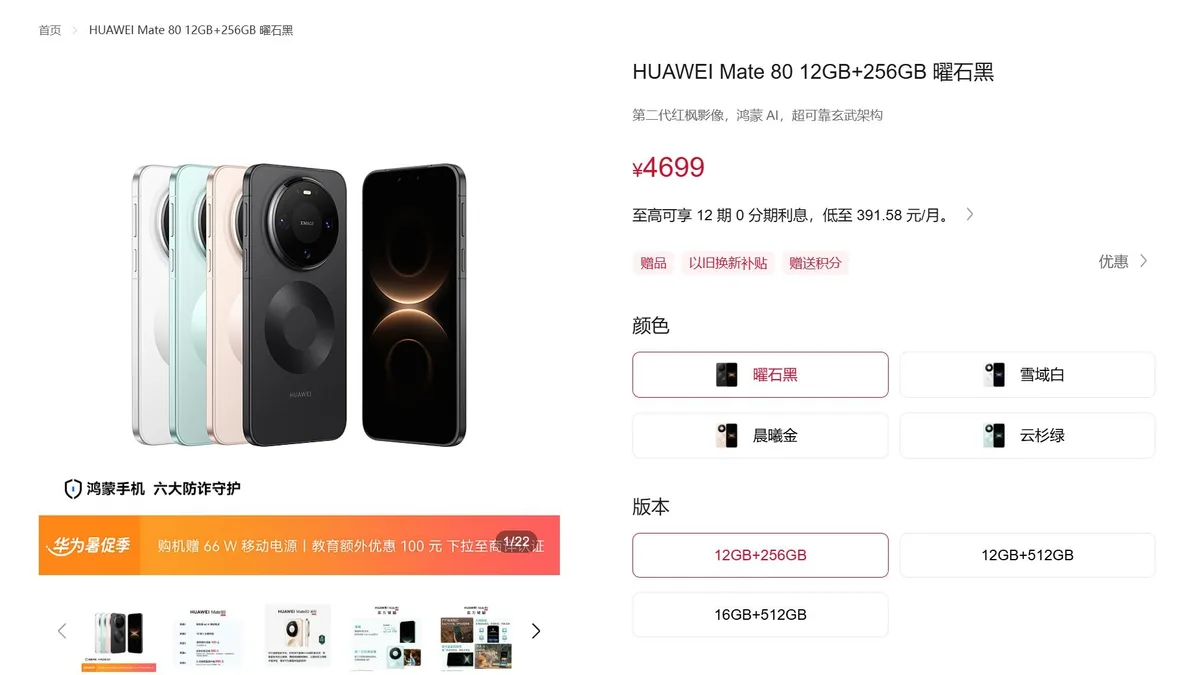
The reported Huawei Mate 80 sales figure matters because it keeps the premium China phone story focused on demand, not only specifications. Leaks about chips, camera sensors, and software are useful, but sales momentum tells a different kind of truth. If the Mate 80 series is approaching seven million units, Huawei is not only winning attention; it is converting that attention into buyers.
That would be significant in a market where high-end Android phones face pressure from every side. Apple still has brand gravity, Chinese rivals are aggressive, and buyers are more careful about expensive upgrades. A strong Mate 80 run would suggest Huawei continues to hold a powerful domestic position despite supply constraints and intense competition.
The figure also shows how much national brand confidence can matter in smartphones. Huawei's recent premium devices have been treated as technology statements as much as consumer products. Buyers may be responding to camera performance, satellite features, battery life, software ecosystem, or brand loyalty, but the result is the same: premium demand remains concentrated around phones that feel locally important.
The sales claim was reported by 快科技, and it fits with earlier supply-side chatter around the company's flagship path. Our Huawei Mate 90 chipset shortage coverage showed why production capacity can become just as newsworthy as camera hardware.
Sales Momentum Changes the Rivalry
If the Mate 80 series is selling that strongly, Huawei gains leverage beyond one model cycle. Strong volume supports accessory ecosystems, carrier attention, developer interest, and retail confidence. It also gives Huawei more room to push premium pricing if buyers believe the phones are genuinely competitive.
The report also puts pressure on rivals. Xiaomi, vivo, Oppo, Honor, and Apple all have reasons to watch Huawei's flagship traction closely. A successful Mate series can pull attention away from competing camera phones and force other brands to sharpen their own domestic-market messaging.
There is still a question of sustainability. Strong early or mid-cycle sales do not automatically guarantee long-term dominance. Supply, software support, chip availability, repair experience, and follow-up models all matter. Huawei must keep the ownership experience strong if it wants a sales milestone to become lasting loyalty.
For buyers outside China, the report is also a window into a market that often moves differently from global launch calendars. The Mate 80 story is about more than one phone. It is about how premium Chinese smartphones are increasingly shaped by domestic technology pride, camera competition, and supply chain resilience. That mix keeps Huawei central even when the global smartphone conversation looks fragmented.
The number also gives Huawei a stronger story heading into the next flagship cycle. Strong Mate 80 demand can make future leaks around chips, cameras, and software feel more credible because the audience is already proven. Rivals will not only be fighting the next Mate phone. They will be fighting the momentum of a product line that appears to have converted attention into real premium sales.
That momentum can influence suppliers as well. A phone line with strong demand is more likely to secure component priority, retail space, and developer attention. In a tight premium market, those advantages compound. Huawei's reported sales therefore matter not just as a scorecard, but as fuel for the next round of flagship competition.