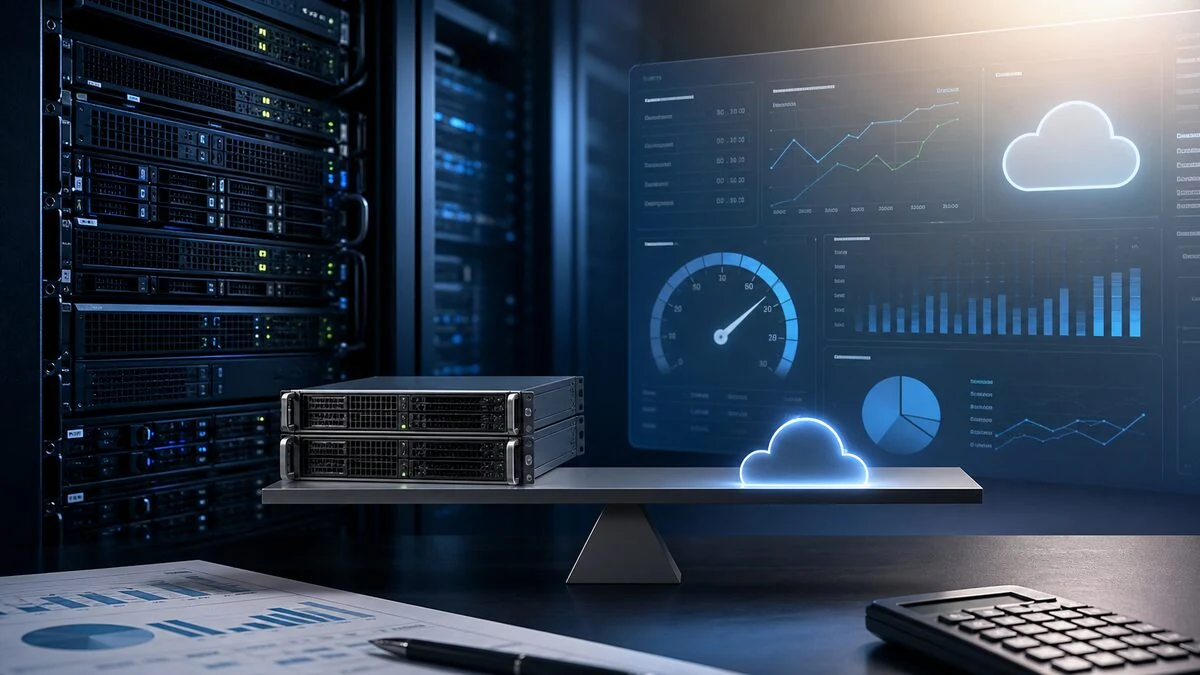
The cloud versus on-prem debate is becoming less ideological and more supply-chain driven. The Register reports that Nutanix CEO Rajiv Ramaswami says bare-metal cloud servers can now be cheaper and more readily available than on-premises hardware, partly because hyperscalers can buy servers and memory at enormous scale.
That claim matters because bare metal cloud sits between two worlds. It gives customers physical server access without forcing them to own the hardware. For workloads that need predictable performance, virtualization control, or licensing flexibility, bare metal can be more appealing than ordinary shared cloud instances. If it is also easier to source than enterprise hardware, the planning equation changes.
The story connects directly to our hybrid cloud guide, where workload placement is the central decision. It also links to our FinOps for AI article, because hardware shortages and cloud price shifts can quickly change the total cost of running AI and data-heavy systems.
Why pricing is not the whole answer
Cheaper and faster procurement does not automatically make bare-metal cloud the best choice. Infrastructure buyers still have to evaluate long-term cost, data transfer, support, compliance, latency, vendor lock-in, disaster recovery, skills, and operational visibility. A server that is fast to rent can still become expensive if the workload runs continuously and needs large data movement.
| Option | Strength | Tradeoff |
|---|---|---|
| On-prem hardware | Control, predictable location, existing governance. | Procurement delays and upfront capital cost. |
| Virtual cloud instances | Fast scaling and managed ecosystem. | Shared infrastructure and variable cost behavior. |
| Bare-metal cloud | Dedicated hardware without ownership. | Still depends on provider pricing and availability. |
| Hybrid model | Best-fit placement across environments. | Requires stronger operations discipline. |
The AI angle makes the decision harder. Some organizations prefer on-prem AI infrastructure because it can make costs more predictable and keep sensitive data closer. Others cannot get hardware fast enough or do not want to build data-center capacity, so cloud becomes the practical path. Neither side wins forever; the right answer changes with workload, pricing, availability, and risk.
Licensing can also change the answer. Some enterprise software behaves very differently on shared cloud instances, dedicated cloud hosts, and owned hardware. Before moving a workload to bare metal cloud, teams should check database licenses, virtualization rights, support terms, audit clauses, and backup costs. A low server price can disappear quickly if licensing or data transfer becomes expensive.
The practical takeaway
Teams should run fresh numbers before renewing hardware plans or signing long cloud commitments. Server lead times, memory prices, SSD availability, GPU access, support costs, and cloud discounts have all moved. A three-year-old cost model may be wrong.
Performance testing should be part of the decision. Bare-metal cloud can remove noisy-neighbor concerns, but latency to databases, storage throughput, backup windows, and network egress still need measurement. A workload that performs beautifully in one region or provider may look very different after data gravity and recovery requirements are included.
The right comparison should include people and process, not only hardware. On-prem systems need procurement, racking, patching, power planning, spares, monitoring, and lifecycle replacement. Cloud systems need cost controls, account governance, network design, and vendor management. Bare metal cloud moves some work to the provider, but it does not remove operational responsibility.
The smartest approach is workload-by-workload placement. Keep workloads on-prem when control, compliance, or steady utilization justify it. Use bare-metal cloud when dedicated hardware and faster availability matter. Use managed cloud services when speed and ecosystem value outweigh raw server economics.