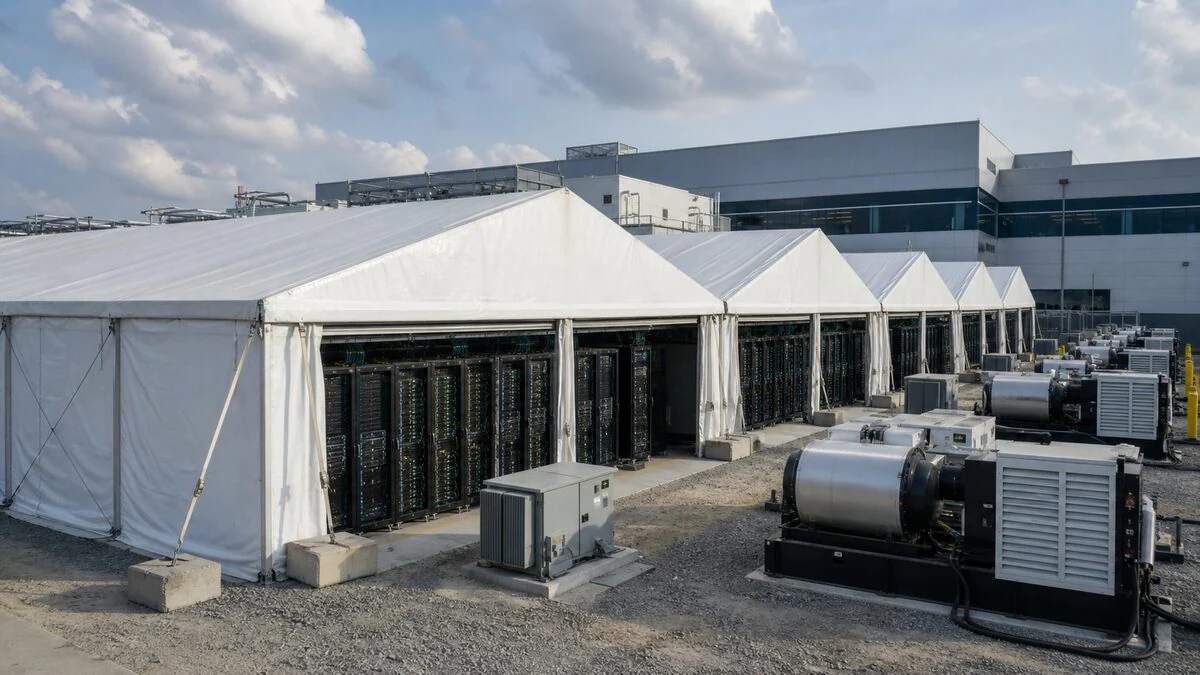
The cloud AI race is getting more custom. SDxCentral reports that Broadcom is leaning hard into AI infrastructure as demand for networking and custom XPU platforms continues to accelerate. The story fits a larger industry move away from generic compute toward purpose-built systems designed around model training, inference, networking, and memory bandwidth.
XPUs are not just another chip marketing term. They represent the reality that AI infrastructure increasingly uses many kinds of processors: GPUs, custom accelerators, CPUs, DPUs, NICs, and switching silicon. The hyperscale cloud providers want more control over cost, performance per watt, supply, and workload fit. Custom silicon gives them another lever.
That shift connects directly to our AI cloud infrastructure guide, which explains why companies rent accelerators instead of owning them. It also lines up with our neocloud explainer, because specialized compute providers are trying to compete by making GPU and accelerator access easier.
Why custom silicon is gaining attention
AI workloads are expensive because they stress the full stack. The chip matters, but so do memory, networking, software, cooling, utilization, and power contracts. A cloud provider that can design or influence more of that stack can chase better efficiency and reduce dependence on one supply chain.
| Infrastructure layer | What is changing | Why cloud buyers care |
|---|---|---|
| Compute | Custom XPUs and accelerators are expanding. | Better fit for training or inference workloads. |
| Networking | AI clusters need faster east-west traffic. | Slow networking wastes expensive accelerators. |
| Memory | Bandwidth and capacity are key constraints. | Models need fast access to large working sets. |
| Power | Efficiency is now a buying decision. | Data centers are limited by grid and cooling capacity. |
The business question is whether custom infrastructure creates enough advantage to justify the complexity. Hyperscalers can spread chip and system-design investment across enormous internal demand. Smaller enterprises cannot do that, which is why most will consume this work indirectly through cloud services rather than buying custom hardware themselves.
That indirect consumption matters. A company running AI search, support automation, code assistants, fraud detection, or internal copilots may never buy an XPU, but it will still feel the result through cloud pricing, latency, model availability, and service limits. When cloud providers improve the underlying stack, customers see it as faster APIs, better reserved capacity, cheaper inference tiers, and more predictable scaling.
The practical cloud takeaway
For enterprises, the lesson is not to copy hyperscalers. It is to ask better cloud questions. Which workloads need premium accelerators? Which can run on cheaper inference hardware? Which can use managed services instead of custom clusters? Which need data locality, and which are fine in shared infrastructure?
Procurement teams should also avoid treating all AI compute as the same. Training a large model, fine-tuning a smaller model, running retrieval, serving a chatbot, and batch-scoring documents can have very different infrastructure needs. Matching workloads to the right tier is where cost control starts. Buying the most expensive accelerator for every task wastes money and can make AI projects look less sustainable than they really are.
Broadcom's AI infrastructure push is another signal that cloud computing is becoming more specialized. The winning platforms will not simply offer more compute. They will offer the right compute, connected efficiently, priced clearly, and available when demand spikes.