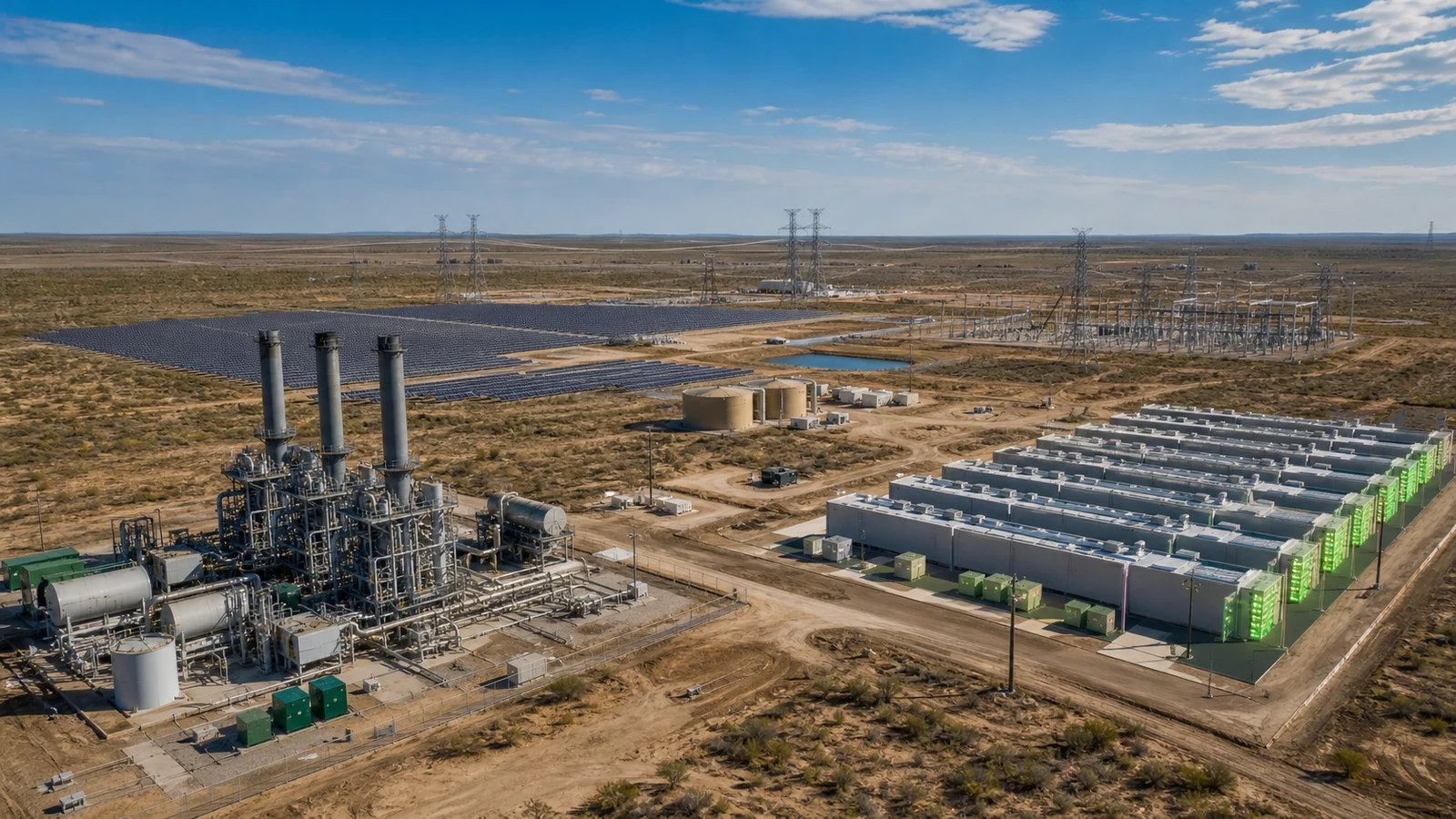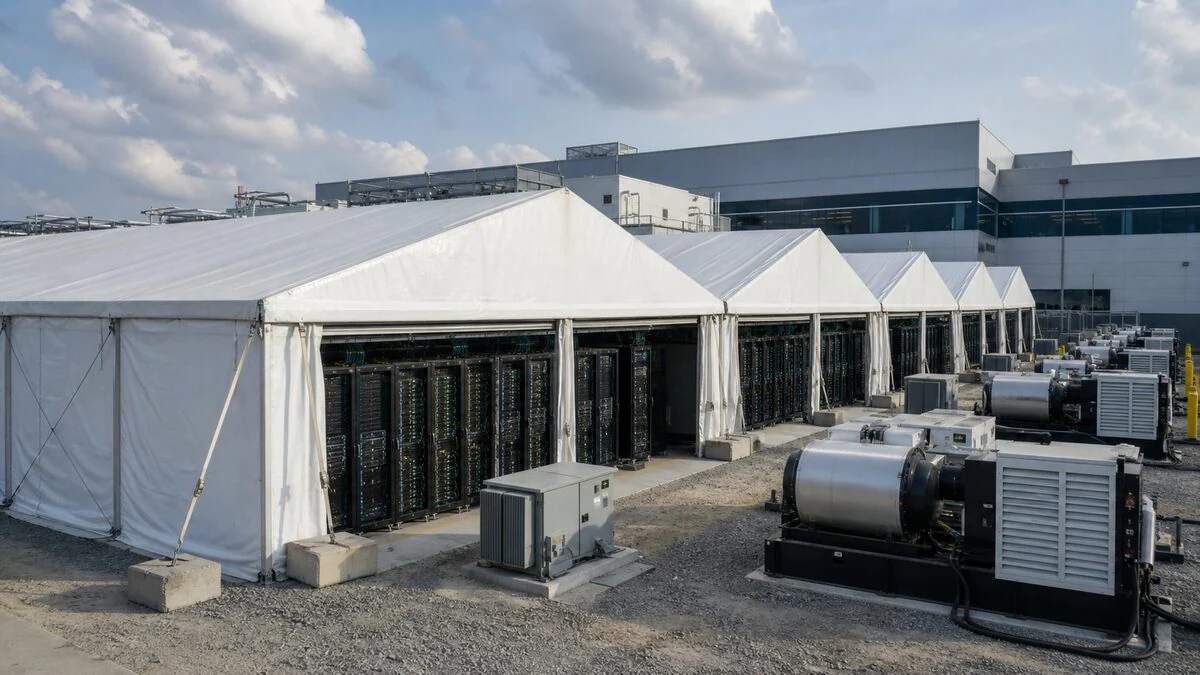
Meta's AI infrastructure race is moving so fast that normal data-center construction appears too slow. Tom's Hardware reported that Meta is putting up tent-like structures in the U.S. to house AI servers, with some structures taking about three months to build and using jet engines for power. The report described the setups as temporary or makeshift, but the hardware inside them is anything but small.
This is what the AI buildout looks like when demand outruns real estate, grid capacity, and construction schedules. Training and serving large models requires huge clusters of accelerators, high-speed networking, cooling, power, and physical space. If a permanent facility takes years, a company with enough money may try to bridge the gap with temporary structures.
This is part of the same infrastructure race covered in our AI infrastructure land-rush analysis. It also connects directly to GreenOps in cloud computing, because fast compute expansion brings cost, carbon, and energy-planning questions with it.
Why tents make sense, even if they sound strange
A data center tent is not a camping tent. It is an industrial structure used to create controlled, deployable space faster than a traditional building. The appeal is speed. If Meta can reduce deployment time from years to months for certain workloads, the company can bring AI capacity online sooner and respond faster to demand from internal products, research teams, and model training schedules.
The tradeoff is complexity. Temporary structures still need power, cooling, physical security, fire protection, networking, maintenance access, and weather resilience. If power is coming from dedicated turbines or jet-engine-style generators, the operational and environmental questions become even louder.
There is also a procurement lesson here. AI capacity is now planned around the slowest part of the system, not just the most expensive chip. A company can buy accelerators, but it still has to find transformers, switchgear, cooling gear, fiber routes, trained technicians, and enough power. Temporary server halls are a response to those bottlenecks, not a replacement for them.
| Benefit | Why Meta may want it | Risk to manage |
|---|---|---|
| Faster deployment | AI clusters can come online sooner. | Temporary systems can be harder to standardize. |
| Capacity bridge | Buys time while permanent data centers are built. | Long-term operating costs may be higher. |
| Power flexibility | Dedicated generation can bypass grid bottlenecks. | Fuel, emissions, and noise scrutiny can rise quickly. |
| Location flexibility | Can expand around existing campuses. | Security and weather hardening become critical. |
The bigger AI infrastructure story
AI companies are no longer constrained only by chips. The constraint is the whole stack: land, power, substations, cooling equipment, transformers, fiber, construction crews, and permitting. The companies that can assemble that stack fastest get more room to train larger models and serve more AI features.
Meta is not alone in chasing capacity, but the tent strategy shows how aggressive the race has become. It also shows that AI infrastructure is starting to look more like heavy industry than software. When a product roadmap depends on power turbines and temporary server halls, the boundary between tech company and industrial operator gets thinner.
What to watch
The first thing to watch is whether these temporary deployments become a bridge or a pattern. If they are short-term overflow capacity, they may quietly disappear as permanent campuses come online. If they become normal, regulators, local communities, and investors will ask harder questions about efficiency and environmental cost.
The second thing to watch is whether other AI-heavy companies copy the approach. Compute demand is not slowing. If temporary AI server halls prove fast and reliable, they could become part of the new data-center playbook. It is not elegant, but the AI race is not waiting for elegant solutions.
The investor angle is just as important. Every temporary build still consumes capital, fuel, hardware, and engineering time. The return depends on whether those servers produce better models, more useful AI features, or enough product revenue to justify the rush. In AI infrastructure, speed is valuable only if the capacity is used well.