Semi-solid batteries usually enter consumer tech conversations through electric cars and future phones. FRONTIERs FRT300P brings the idea into a much smaller, more practical product: a 10.1-inch Windows 11 Pro 2 in 1. It is not a glamorous flagship tablet, but it may be a more interesting battery story than many higher-end launches.
The FRT300P uses a gel-electrolyte lithium polymer battery rated at 7.7V, 3650mAh, and 28.1Wh. The capacity is not huge, so the headline is not runtime alone. The point is chemistry and packaging. Semi-solid battery designs are often discussed for safety, stability, and durability benefits, even if real-world advantages depend on the exact implementation.
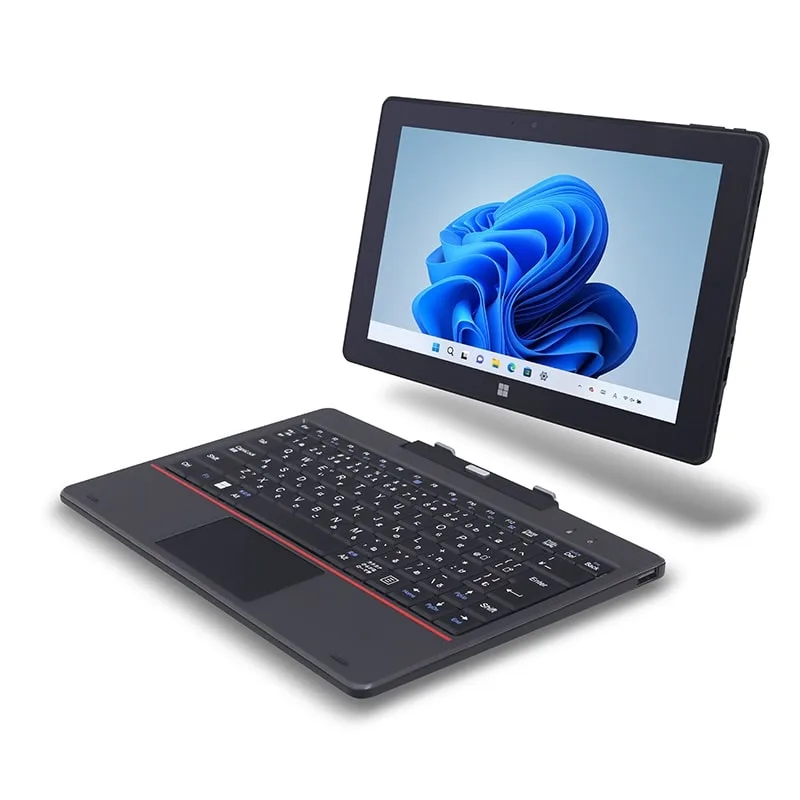
The rest of the device is modest and businesslike. Intel N150 Twin Lake silicon, 8GB of LPDDR5 memory, 128GB eMMC storage, a 10.1-inch 1920 by 1200 IPS touch display, front and rear cameras, a detachable keyboard, and Windows 11 Pro make it feel like a compact field or office tablet rather than an entertainment slate.
IT Home reported that Japanese PC seller FRONTIER announced the FRT300P on June 12, calling it an industry-first 2 in 1 tablet with a semi-solid battery. The report lists two USB-C 10Gbps ports, one USB-A 10Gbps port, Micro HDMI, Wi-Fi 5, Bluetooth 5.0, 630g weight, and a tax-included price of 59800 yen.
The choice of Windows 11 Pro is important. This is not being pitched as a toy tablet. It is closer to a low-power work machine for forms, light office tasks, education, industrial use, or mobile administration. The keyboard and port selection make sense for that audience, even if eMMC storage is not exciting.
The launch also connects with the broader gadget shift we noted in June device coverage: focused hardware can still matter when it solves a specific problem. A compact Windows tablet with safer or more stable battery chemistry may appeal to organizations more than consumers chasing OLED screens.
That enterprise angle could be where the FRT300P makes the most sense. Schools, warehouses, clinics, and field teams often care about predictable deployment more than premium finishes. A low-power Windows tablet with real ports, a bundled keyboard, and a battery chemistry story can be easier to justify for fleet use than a consumer tablet that needs adapters, app workarounds, and separate management assumptions.
Its value will depend less on launch-day excitement and more on whether administrators can deploy it without drama.
The biggest limitation is performance. Intel N150 is efficient, but it will not turn the FRT300P into a creative workstation. The 128GB eMMC storage may also feel cramped for Windows updates and business apps over time. Buyers should treat this as a portable utility machine, not a Surface Pro rival.
Still, the battery choice gives the product a reason to exist. If semi-solid cells prove useful in small Windows devices, they could appear in rugged tablets, education machines, medical carts, and field terminals. The FRT300P may not be a mass-market gadget, but it is an early sign that battery experimentation is leaving the lab and entering ordinary portable PCs.