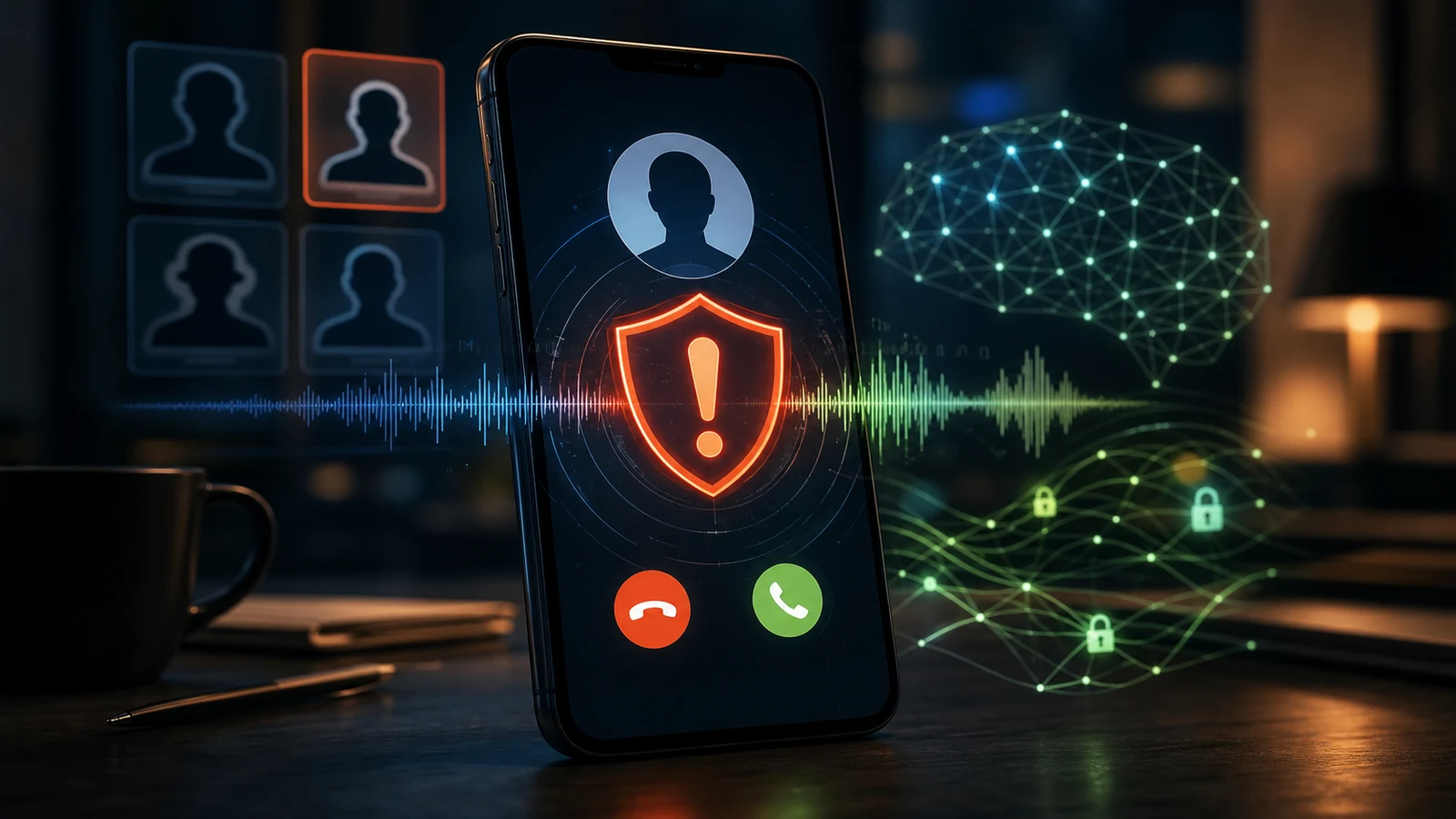
Scam calls are becoming harder to spot because attackers can spoof familiar names, numbers, and voices. The Verge reported that Google's Phone app will warn users when a caller appears to be impersonating one of their contacts, with the feature starting on Pixel phones running Android 12 or later and relying on encrypted verification between supported Google Phone users.
The idea is simple: if a call claims to come from someone in your contacts but the verification does not line up, the app can raise a warning before trust does the scammer's work. That matters because many fraud attempts succeed by creating urgency through familiarity. A fake bank call is one risk. A fake call that appears to be from a parent, partner, coworker, or child is more dangerous.
Why caller identity needs stronger proof
Phone numbers were not designed for the current scam environment. They can be spoofed, recycled, ported, and abused. Contact lists make the problem worse because people naturally trust names they already recognize. Google's approach tries to add a verification layer that checks whether the caller is really connected to the identity shown on the screen.
| Scam tactic | Detection idea | User benefit |
|---|---|---|
| Contact-name spoofing | Compare claimed caller with verified app identity. | Warns before the user answers with trust. |
| Urgent money request | Surface suspicion early in the call flow. | Gives people a reason to pause. |
| Number-only trust | Add encrypted app-level confirmation. | Reduces dependence on caller ID alone. |
| Family impersonation | Highlight mismatch with known contacts. | Protects against emotional manipulation. |
The limitation is adoption. The feature works best when both sides use Phone by Google and meet the technical requirements. That means it cannot stop every suspicious call, and it should not be treated as a complete scam shield. A warning system is still useful, but users will need to understand that no warning does not always mean no risk.
Google's decision to start with Pixel devices makes sense because the company can control the app, Android version, and rollout more tightly. The challenge will be expanding protection without making the experience confusing. If users see too many warnings, they may ignore them. If warnings appear too rarely, people may overtrust the absence of one.
The feature also raises a broader point about mobile security. Phones have spent years improving app permissions, biometric unlock, and phishing protection, but the basic voice call still carries old weaknesses. As AI voice cloning and social engineering improve, call identity needs to become more than a number displayed on a screen.
Carriers still have a role here. App-level warnings can help, but network-level authentication and stronger anti-spoofing enforcement would reduce the number of suspicious calls that reach users in the first place. The strongest defense will combine carrier filtering, verified caller identity, app warnings, and simple user education around urgent payment or password requests.
The best outcome is not that people stop answering calls. It is that phones become better at telling users when caution is justified. A clear impersonation warning can change the moment before a scam works. That is where mobile AI is useful: not as a chatbot novelty, but as a quiet guardrail at the exact point where a person is about to make a trust decision.