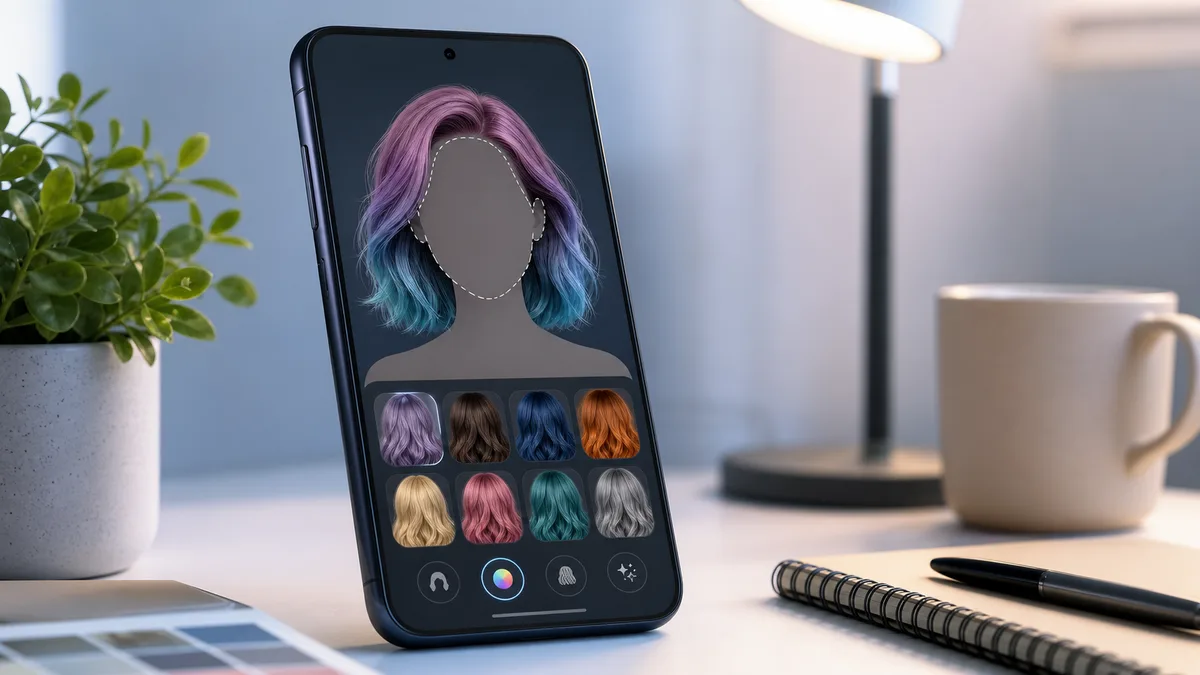
AI photo tools are often discussed in dramatic terms, but many useful mobile AI features are much smaller and more personal. A limited-time free offer for an AI hairstyle and hair color try-on app is a good example. It is not trying to replace a designer or create a cinematic image from scratch. It is helping someone answer a simple visual question before making a real-world change.
That is where phone-based AI can feel practical. A smartphone already has the camera, the display, and the personal photo library. If an app can use those pieces to preview a haircut, hair color, makeup style, glasses frame, or outfit, the value is immediate. The user does not need to understand model architecture; they only need a believable preview.
These apps also show how mobile AI is moving closer to everyday shopping and self-expression. People use phones at salons, clothing stores, and mirrors. A convincing visual preview can reduce hesitation, make a conversation with a stylist easier, or simply let someone experiment without risk.
NewMobileLife highlighted the temporary free lifetime offer for Hairstyle Try On, and the deal is interesting because it turns a paid AI utility into something more people may test casually. Free promotions can quickly reveal whether an app solves a real need or only looks impressive in screenshots.
Why visual AI fits phones so well
Phones are the natural home for this category because the use case is visual and personal. The camera captures the face, the screen shows the result, and the user can compare options in seconds. Unlike desktop AI tools, these apps are used in the same context where the decision may happen.
There are risks. Beauty and style apps must handle privacy carefully because face photos are sensitive. They also need to avoid unrealistic previews that create disappointment. A hairstyle app is only helpful if lighting, face shape, hair texture, and color output feel close enough to reality to support a decision.
The trend connects with broader mobile software changes. Apple, Google, and Samsung are all adding more AI features into default photo and editing experiences, while independent developers explore narrower use cases. Our coverage of Apple's expanding default toolkit shows why app makers have to offer clear, specific value as platform features grow.
The Hairstyle Try On offer may be a small app deal, but the category is worth watching. Mobile AI will not only be about chatbots. It will also live in tiny decisions: what color to choose, whether a look works, and how confident someone feels before trying something new.
For developers, the opportunity is in trust and restraint. Users do not need every AI app to become a social network or a subscription maze. A focused tool that does one visual job clearly, processes data responsibly, and gives believable results can earn a place on a phone. The winners in this category may be the least noisy apps, not the flashiest ones.
That is also why limited-time free deals can matter. They lower the barrier for cautious users who would never pay first but might keep the app if the first preview feels useful.