Apple price increases usually feel like a fall launch story, but the latest reporting from China suggests the timeline may be moving earlier. That matters for anyone planning an iPhone, iPad, Mac, or wearable upgrade because the usual strategy of waiting for the next event may carry more risk if pricing changes before the new hardware cycle arrives.
The reported reason is familiar across the industry: AI demand is driving memory and component costs higher. Phones and computers are being asked to carry more local intelligence, more storage, and more capable chips at the same time that data-center buyers are pulling hard on the same supply chain. Even Apple cannot fully ignore that pressure.
The interesting part is timing. If Apple lets price-rise talk circulate before the fall, it may be preparing customers for a broad adjustment rather than a single premium model increase. It may also be trying to soften the message with promotions, education discounts, or trade-in programs that make the final checkout price feel less sharp.
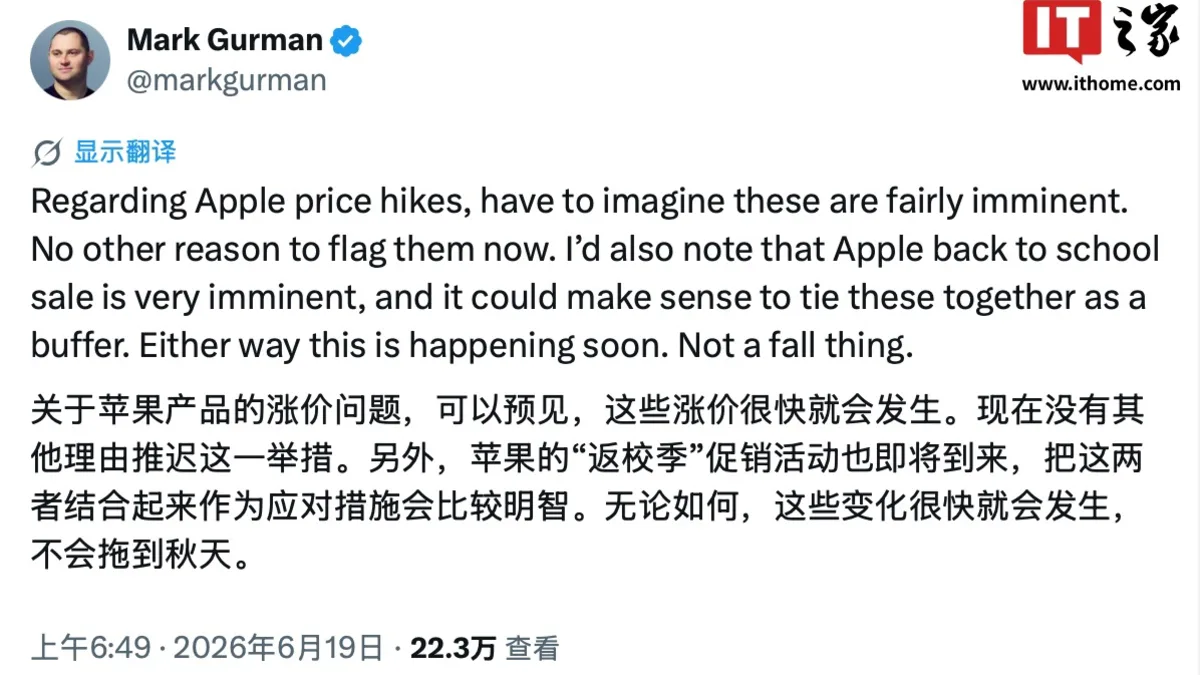
IT之家 reported Mark Gurman's comments that Apple product price increases may come soon and not wait until autumn. The supply-chain logic lines up with our earlier analysis of iPhone chip cost pressure, where next-generation silicon makes the Pro lineup harder to price gently.
Price increases change buying behavior
When buyers expect prices to fall after a new launch, they wait. When they expect prices to rise, they start comparing current inventory, carrier offers, and refurbished options more seriously. That can shift demand toward older iPhones and current Macs, especially if those devices still have long software support ahead.
Apple has several tools to manage the reaction. It can keep headline prices stable while changing storage tiers. It can raise certain regions more than others. It can bundle services or offer stronger trade-in values. It can also let retailers carry the promotional burden. The result may not look like one clean global price hike, but consumers will still feel it.
The risk for Apple is perception. Customers are more willing to accept higher prices when the new features are obvious. They are less forgiving if the increase is explained mostly through supply cost. AI features need to feel useful, private, and fast enough that buyers understand why the hardware had to become more expensive.
This also affects the standard iPhone. If the Pro models get better chips, cameras, and memory while the regular models rise in price, the gap can feel awkward. Apple needs the entry point to remain credible, especially in markets where installment plans and trade-ins do not fully hide the increase.
For buyers, the practical move is to compare total ownership cost rather than launch price alone. Battery health, storage, expected update life, trade-in value, and repair costs all matter. If prices are going up sooner than expected, a carefully chosen current device may be a better deal than waiting for a model that arrives with a higher floor.
Retailers will also shape the story. If Apple raises list prices while stores answer with credits, bundles, and bank offers, the public reaction may vary widely by market. That makes it harder to compare prices across countries, but easier for careful buyers to find a narrow window where the current generation still looks like the smarter purchase.