SmartNICs and DPUs started as a way to move networking tasks away from the host CPU. They are now becoming much more ambitious. Modern data centers want cards that can handle networking, security, storage, virtualization and telemetry with enough intelligence to reduce pressure on the main server. That makes a Xeon 6-based DPU card more than a curiosity.
The interesting part is the direction of travel. A DPU that borrows more from server CPU design can run richer control-plane workloads and support more familiar software environments. That does not mean every accelerator card should become a general-purpose server. It means infrastructure offload is getting complex enough that simple fixed-function hardware may not be flexible enough for cloud and enterprise operators.
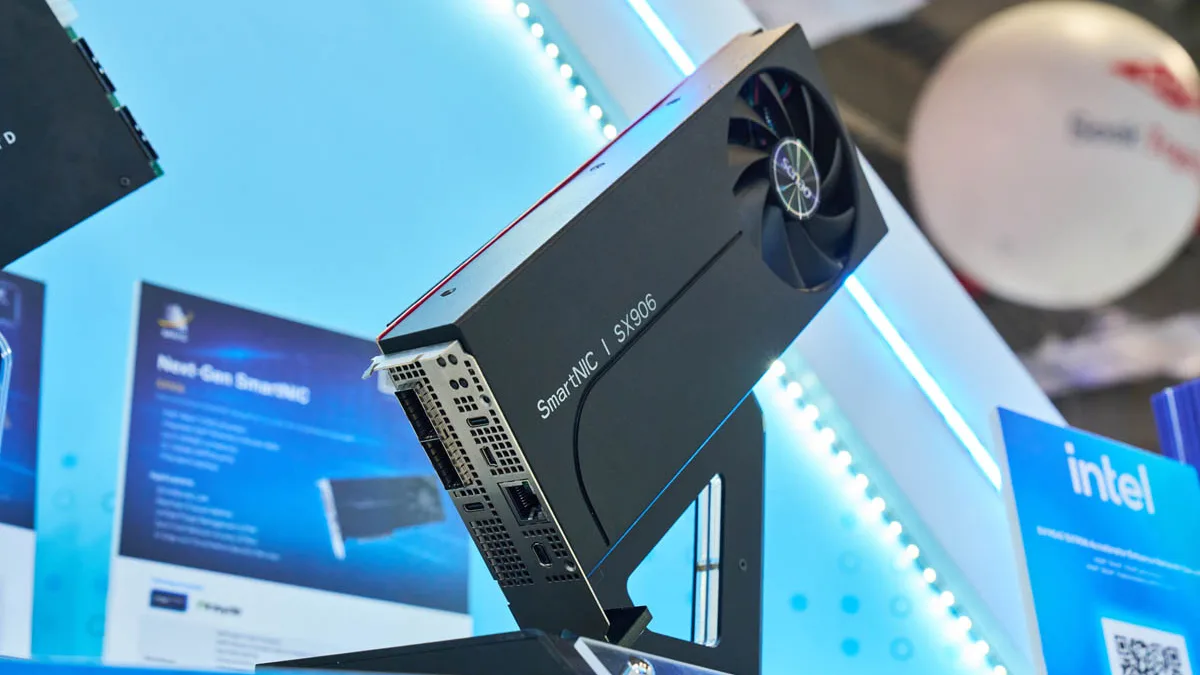
ServeTheHome reported on a Senao PCIe card at Computex 2026 built around an Intel Xeon 6 SoC as a next-generation SmartNIC or DPU. That detail matters because it shows vendors experimenting with server-class ingredients inside infrastructure cards. The card is not just about port speed; it is about what can be processed before traffic reaches the host.
This connects naturally with our discussion of AWS networking improvements inside the data center. Hyperscale performance is increasingly won by optimizing the invisible layers between servers. DPUs are one of the places where those optimizations can happen because they sit directly in the path of network and storage traffic.
For cloud providers, offload can free expensive CPUs for customer workloads. For enterprises, it can improve isolation and create cleaner security boundaries. A DPU can enforce policies, manage encryption, inspect traffic or accelerate storage without relying entirely on host software. That is valuable in multi-tenant environments and in private clouds where administrators want stronger separation between infrastructure and applications.
The challenge is software maturity. A powerful DPU is only useful if teams can program, update and observe it safely. Infrastructure cards can become another operational surface with firmware, drivers, orchestration hooks and security patches. If the management stack is weak, the card adds complexity instead of reducing it. This is why the ecosystem around DPUs matters as much as the hardware itself.
Intel's role is also worth watching. The company has CPU, networking and platform relationships that could make DPU-style products easier to integrate. But it faces competition from vendors with strong accelerator, cloud and networking portfolios. Winning this market will require not only silicon but a convincing software and deployment story.
The Xeon 6 DPU card shows that data center hardware is becoming less neatly divided. CPUs, NICs, accelerators and security devices are blending into specialized infrastructure computers. That shift will not be visible to most end users, but it can affect cloud performance, security and cost. The server of the future may be defined as much by what happens on the cards around the CPU as by the CPU itself.
Operators will judge the idea by lifecycle management. If these cards can be provisioned, patched, monitored and replaced with the same confidence as servers, they become strategic infrastructure. If they require specialist handling for every update, adoption will slow no matter how elegant the hardware looks on a show floor.