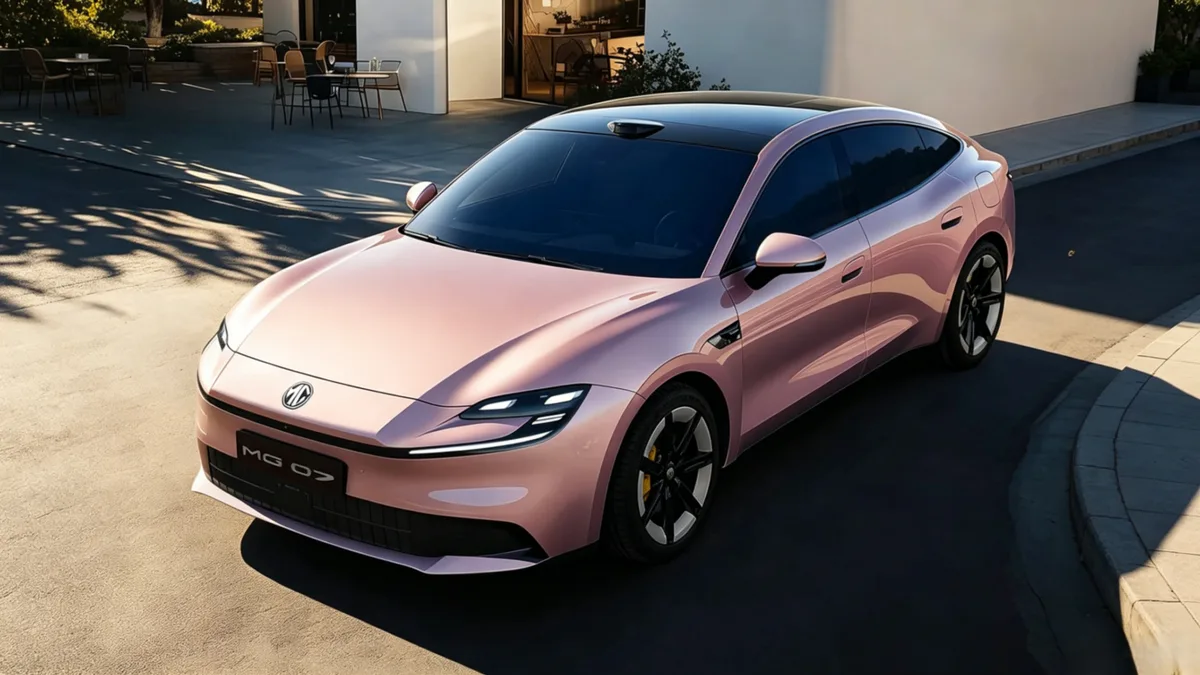
The MG 07 reveal shows why China's new-energy market remains so difficult for global rivals to read. The car is not simply another electric fastback. It appears with both a battery-electric version and a plug-in hybrid option, giving MG two ways to meet buyers who want lower running costs, modern software, and long-distance confidence.
That dual-power strategy is becoming increasingly common in China. Full EVs attract attention and help brands talk about future technology, but plug-in hybrids and extended-range models keep winning buyers who are not ready to rely entirely on charging. A fastback sedan with both choices can serve city drivers, private owners, fleets, and long-distance users without forcing one answer on everyone.
The reported 650km BEV range gives the electric version a strong headline. The 185km PHEV electric range may be even more practical for many users because it covers daily driving while keeping a combustion engine available for longer trips. That combination helps reduce charging anxiety without giving up the benefits of electric commuting.
CarNewsChina reported that the MG 07 has entered the Chinese regulatory catalog with a 650km battery-electric version, a 185km PHEV variant, and Momenta R7 smart-driving software. The regulatory appearance makes the car feel much closer to market than a design teaser would.
The MG 07 also fits a pattern seen in our coverage of the Ford Mondeo Sport Hybrid launch in China. The Chinese sedan and fastback market is not dead; it is being reshaped around electrified powertrains, large screens, smart-driving features, and aggressive value. Brands that ignore that shift risk looking outdated quickly.
Software will be central to the MG 07's appeal. Momenta's involvement suggests MG wants the car to compete on driver assistance and smart-road features, not only range. In China, that matters because buyers increasingly compare cars by assisted driving behavior, parking functions, cockpit intelligence, and how frequently features improve after delivery.
The design also matters. Fastbacks occupy a useful space between sedan efficiency and coupe-like styling. They can look more premium than traditional sedans while keeping enough practicality for families. If MG prices the 07 aggressively, it could pressure both domestic rivals and joint-venture brands still trying to defend older sedan nameplates.
The MG 07 is a reminder that China's EV transition is not a single-lane road. BEVs, PHEVs, and range-extenders are all fighting for space. The winning formula may not be the purest technology. It may be the one that gives buyers the fewest compromises while still feeling modern.
What makes the MG 07 especially relevant is that it does not ask buyers to choose ideology before they choose a car. Some will pick the BEV because they have home charging and want the cleanest daily experience. Others will choose the PHEV because they travel farther or live where charging is less predictable. MG can use the same body, cabin, and software promise for both groups. That reduces the risk of backing one technology too narrowly while the market is still moving quickly.
The export question is also worth watching. MG already has recognition outside China, and a flexible sedan like this could give overseas distributors something more interesting than another compact crossover. Regulations, pricing, and local charging habits will decide where it fits, but the basic formula travels well.