MSI's new Wi-Fi 7 gaming router concept is interesting because it treats networking as more than raw wireless speed. A high-end router with an internal M.2 SSD slot starts to blur the line between gaming router, light NAS, and home media hub. That is a useful direction because many homes need better local storage and faster wireless access, but not everyone wants a dedicated NAS box.
Wi-Fi 7 already gives hardware makers plenty to advertise: higher throughput, multi-link operation, wider channels, and lower latency. Gamers care about those numbers, but normal households often care just as much about where files live, how easy backups are, and whether large media can move quickly around the home. Adding storage makes the router feel less like a single-purpose device.
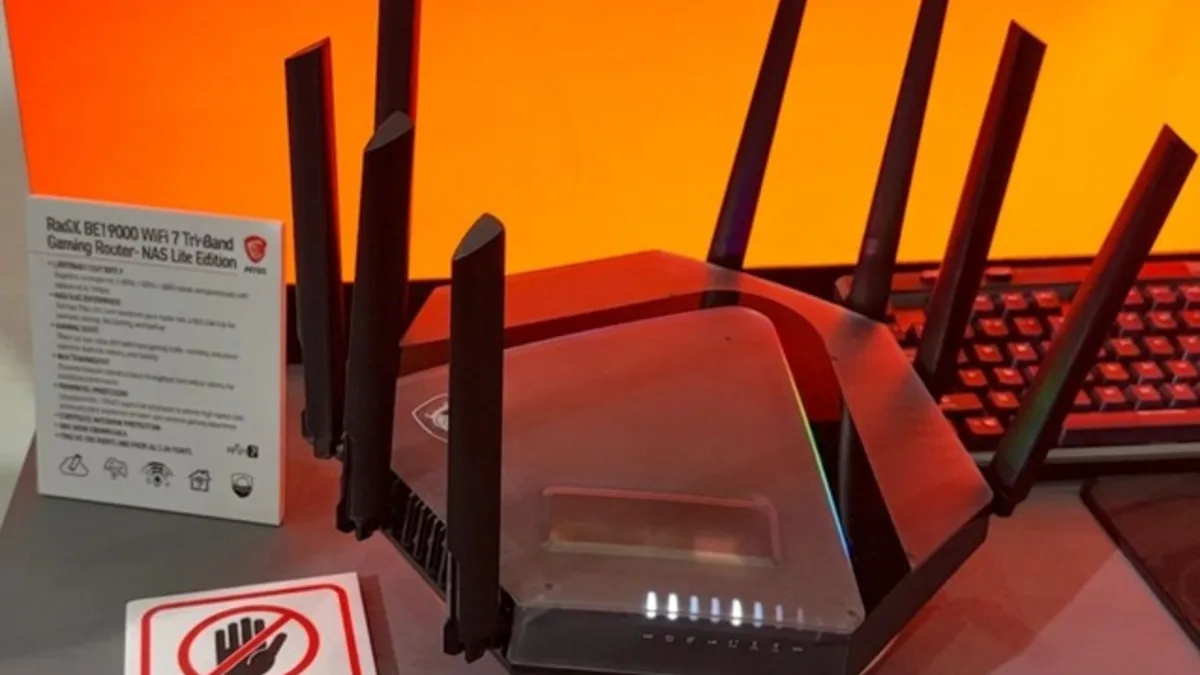
HKEPC reported from Computex 2026 that MSI displayed the RadiX BE19000 WiFi 7 Tri-Band Gaming Router NAS Lite Edition, featuring a 1.8GHz quad-core processor and an internal M.2 2280 SSD slot. The report positions it as a router that can also provide lightweight network storage.
The NAS Lite idea is smart if MSI keeps expectations realistic. A router-based storage feature is not going to replace a multi-bay NAS for enthusiasts with RAID arrays, surveillance storage, and heavy Docker workloads. It can, however, handle shared files, local media, quick backups, and game-related downloads for users who want one less box on the shelf.
This fits the broader network operations theme we discussed in Cisco Cloud Control and AI Canvas putting agentic AI into network operations. Enterprise networking and home networking are different worlds, but both are moving toward devices that do more than route packets. Management, automation, storage, and security are becoming part of the same conversation.
The gaming label can help or hurt. It attracts buyers looking for performance, but it can also create skepticism if the product is covered in aggressive styling and vague latency claims. MSI will need to show real numbers: wired port speeds, Wi-Fi throughput, SSD performance, cooling behavior, file-sharing options, and whether storage features remain stable under heavy network load.
Security will be critical. A router already sits at the edge of the home network. Adding storage increases the consequences of weak firmware, poor access controls, or slow patching. MSI should treat the NAS feature as a security responsibility, not a convenience add-on. Users need clear permissions, update support, and simple ways to keep outside access locked down.
The concept is promising because it solves a practical problem. Many people want faster Wi-Fi and simple local storage but do not want to learn NAS administration. If MSI can deliver that without making the router expensive or fragile, Wi-Fi 7 gaming routers may become more useful than the category's flashy reputation suggests.
Pricing will determine whether the idea reaches normal buyers. If the NAS Lite edition costs far more than a strong router plus an entry NAS, the integration loses appeal. If MSI keeps it within premium router territory, the product becomes easier to understand. One box, one power cable, one admin panel, and one SSD slot could be persuasive for apartments and small home offices.