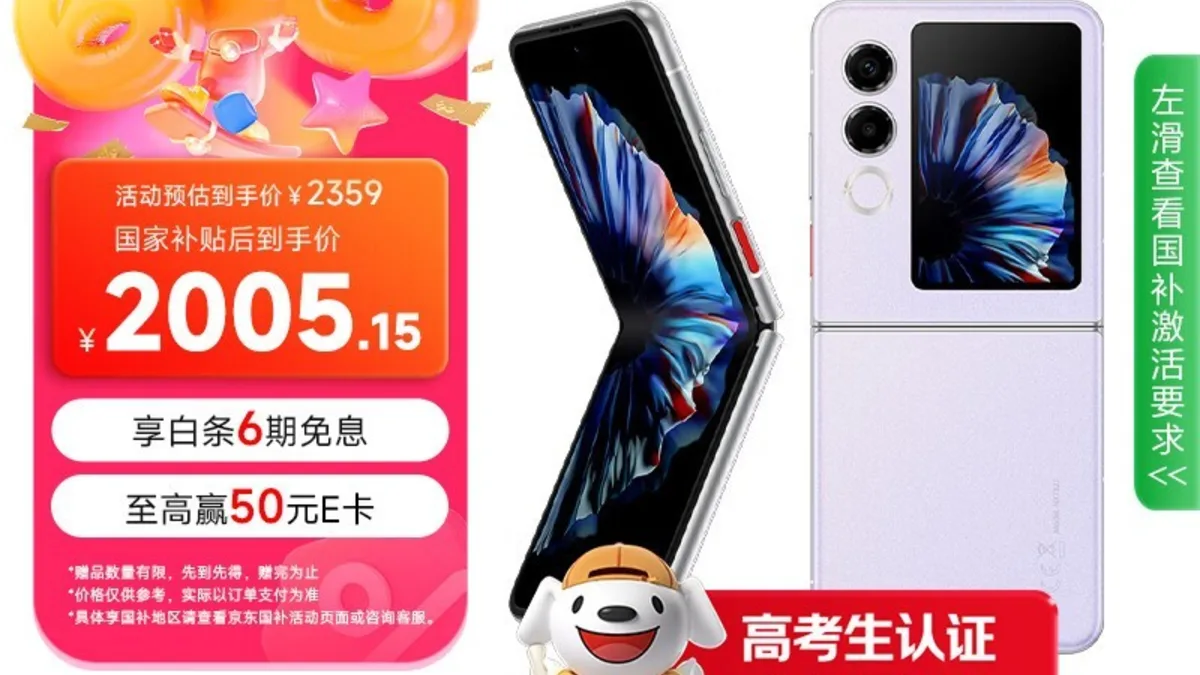
The Nubia Flip 2 is a useful reminder that foldable phones are no longer only luxury experiments. A new Chinese retail listing and deal report places the clamshell foldable in a much more approachable price range, especially after stacked promotions. That changes the psychology of the category. When a folding phone costs close to a normal midrange or upper-midrange device, curiosity becomes a stronger sales driver.
Clamshell foldables have always had the easiest mainstream pitch. They are familiar when open, compact when shut, and visually different enough to feel special. The barrier has been price. Many buyers liked the idea but did not want to spend flagship money on a device that might have weaker battery life, a visible crease, or a less flexible camera system. Lower pricing reduces that fear.
Nubia's role is interesting because the brand does not need to beat Samsung on global recognition to influence the market. Affordable foldables from Chinese brands push the entire category downward. They teach shoppers that a hinge and flexible OLED do not automatically require ultra-premium pricing. That pressure also connects with other Chinese foldable rumors, including the Xiaomi wide fold leak, where form factor competition is moving faster than in traditional slab phones.
ZOL reported the Nubia Flip 2 5G deal, highlighting a 12GB/256GB configuration, Snapdragon 7 Gen 3 class hardware, 30W charging, a 4500mAh battery, and a promotional price that can fall sharply after discounts. Those details matter because they position the phone as usable rather than merely cheap. A foldable only works as a deal if it can still survive daily expectations.
The battery figure is especially important. Clamshell phones often face skepticism around endurance because the design splits internal space. A 4500mAh cell does not guarantee excellent battery life, but it gives the Nubia Flip 2 a stronger foundation than early compact foldables had. Combined with a midrange chip, the phone could be efficient enough for buyers who care more about style and portability than raw gaming performance.
Cameras remain a likely compromise. A foldable in this price class will not replace top-tier camera phones, and buyers should not expect it to. But for many users, social photos, video calls, and pocketability are enough. The cover-screen camera framing advantage can also make a clamshell more fun for selfies and hands-free shots, even if the sensor hardware is not flagship-grade.
Durability will decide whether that fun survives after the discount excitement fades. A cheaper foldable still needs a hinge that feels tight, a display protector that stays clean, and service terms that do not scare people away from using the device normally.
The bigger market effect is that affordable foldables make premium foldables justify themselves more clearly. If a Nubia Flip 2 can deliver the basic folding experience at a sale price, Samsung, Motorola, and others must explain why their models cost more. The answers may be durability, software, water resistance, cameras, trade-ins, or update promises. But the question becomes unavoidable.
This is how categories become normal. First, they are expensive proof-of-concept devices. Then they become aspirational flagships. Finally, they reach prices where people buy them because they look useful or fun, not because they are making a statement. The Nubia Flip 2 deal suggests clamshell foldables are getting closer to that final stage.