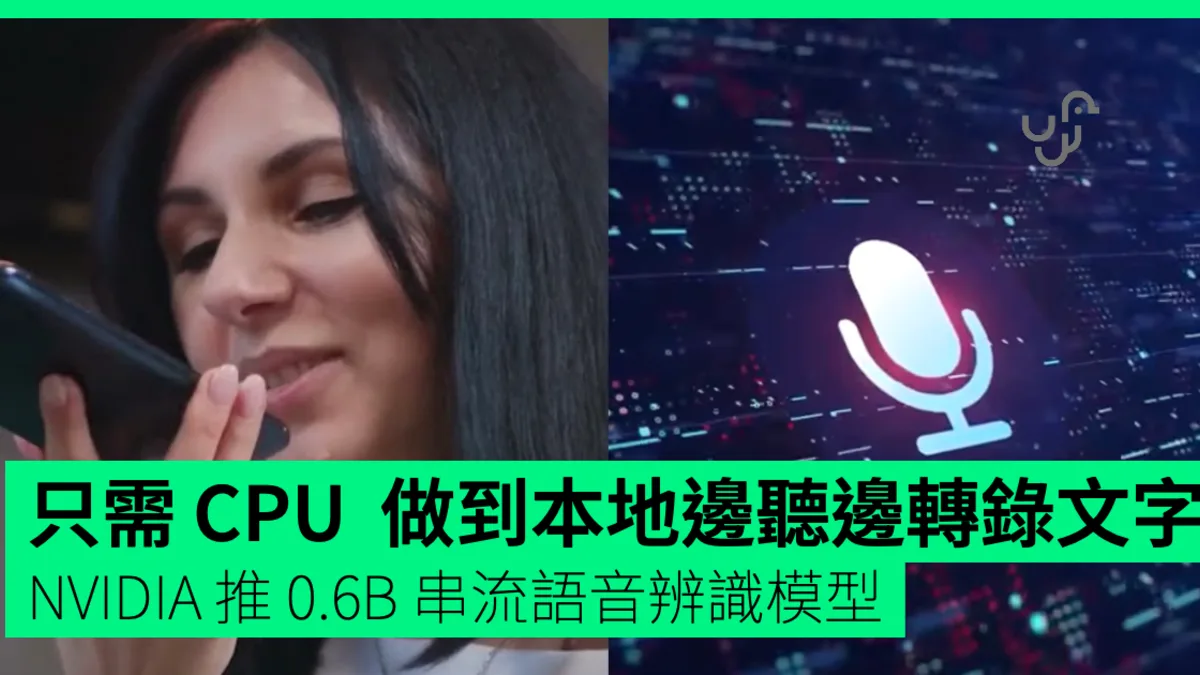
Voice AI has spent years moving to the cloud, but NVIDIA Nemotron 3.5 ASR points in the opposite direction. A smaller streaming speech-recognition model that can run on CPUs or Apple Silicon is important because voice interfaces are most useful when they are fast, private, and available even when the network is not ideal.
The reported model has 600 million parameters and supports real-time transcription across 40 languages. That is not just a developer milestone. It suggests that more voice features can live on personal devices, enterprise machines, call-center terminals, meeting-room systems, and accessibility tools without sending every spoken phrase to a remote server.
Local speech recognition matters for trust. People may be willing to ask a cloud assistant about weather, but they are more cautious with meetings, medical notes, customer calls, legal dictation, or private voice memos. If transcription can happen close to the user, companies can build voice tools with stronger privacy and lower latency.
UNWIRE reported that Nemotron 3.5 ASR is available through Hugging Face and can run without a dedicated GPU. That device-side direction matches the local-AI pressure we discussed in NVIDIA's laptop chip bet, where the challenge was making local AI useful without pretending the cloud disappears.
Small models can change daily tools
A speech model does not need to be the largest model in the world to be useful. It needs to be accurate enough, responsive enough, and easy enough for developers to integrate. If it can run on normal hardware, it lowers the barrier for note-taking apps, accessibility software, podcast tools, translation workflows, and customer-support products.
The streaming part is especially important. People do not speak in neat files. They pause, correct themselves, change languages, and use background noise-filled environments. A good local ASR system has to follow speech as it happens, not only process a clean recording afterward.
Multilingual support can also make local AI more practical outside English-first markets. Developers in Asia, Europe, the Middle East, and Africa need models that handle real linguistic diversity. A 40-language footprint is a useful start, especially if it works without expensive infrastructure.
The tradeoff will be accuracy versus hardware demand. Cloud models may still win on difficult audio, specialized vocabulary, or heavy post-processing. But many everyday tasks do not need perfection. They need a transcript that is good enough to search, summarize, caption, or correct quickly.
Nemotron 3.5 ASR shows the AI market splitting into two useful layers. Huge models will remain important in data centers, but smaller local models can make devices smarter in immediate ways. For users, that could mean faster captions, more private dictation, better offline notes, and voice tools that feel less dependent on a distant server.
For gadget makers, the opportunity is clear. Recorders, earbuds, conference bars, phones, and laptops can all become more useful if transcription is fast and private by default. The winners will be the companies that hide the model complexity and turn local speech recognition into a feature people simply trust during work, study, and travel.