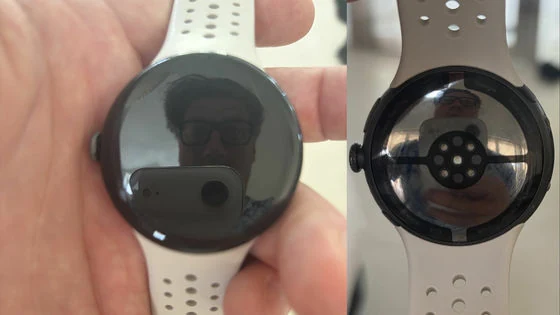
Most gadget leaks come from factories, certifications, retail listings, or early accessory files. This one apparently came from the water. GIGAZINE covered the unusual story of a device marked as a Pixel Watch 5 reportedly being found underwater near St. Martin, with Borderlands executive Randy Pitchford connected to the discovery through a friend who recovered it while diving.
The story is strange enough to sound like a marketing stunt, but the hardware clues are still worth reading. The report describes a watch with markings that identify it as Pixel Watch 5 and points to familiar health and connectivity features such as heart-rate tracking, pulse readings, skin-temperature sensing, and ultra-wideband. None of that confirms a retail product, yet it gives a rare look at what a field-tested wearable prototype may carry.
What can be learned from a lost prototype
A lost device is not the same as an official leak sheet. It may be an engineering validation unit, an old prototype, or a test sample with parts that will change before launch. But wearables reveal more than phones when they are physically photographed because the back sensor layout, strap mechanism, charging contact style, and case shape all affect daily use.
| Clue from the report | Likely category | What to watch next |
|---|---|---|
| Pixel Watch 5 marking | Prototype identification | Whether retail branding matches the recovered unit. |
| Health sensor references | Wellness tracking | Accuracy improvements and new coaching features. |
| Underwater recovery | Durability signal | Water resistance rating and real-world swim support. |
| UWB mention | Connectivity | Better device finding, car keys, or proximity features. |
Google has spent the last few Pixel Watch generations trying to make its wearable feel less like an Android experiment and more like a complete health device. Hardware design is only one part of that. Battery life, workout reliability, sensor accuracy, Fitbit integration, repairability, and price all shape whether people stay with the watch after the first week.
The underwater angle is interesting because durability is one of the areas where smartwatches earn trust slowly. A formal IP rating tells buyers what a product is certified to survive, but people judge a watch by how confidently it handles rain, sweat, pool water, beach trips, and accidental impacts. If Google is testing a Pixel Watch 5 in real outdoor conditions, that would be normal. If one was lost during that testing, the leak simply exposes the messy reality of hardware development.
Ultra-wideband could be the more important clue. UWB is useful when proximity matters: finding a phone, unlocking a car, locating a tag, or handing off smart-home interactions. A watch is a natural place for that because it sits on the body all day. If Google expands UWB support, the Pixel Watch can become a stronger companion device rather than just a notification screen.
The final product may look different from the recovered unit, so buyers should not treat the image as a confirmed retail design. Still, the leak is valuable because it suggests Google's next wearable is being tested around the areas that actually matter: health sensing, durability, location awareness, and everyday integration with the Pixel ecosystem. That is more useful than a flashy render.