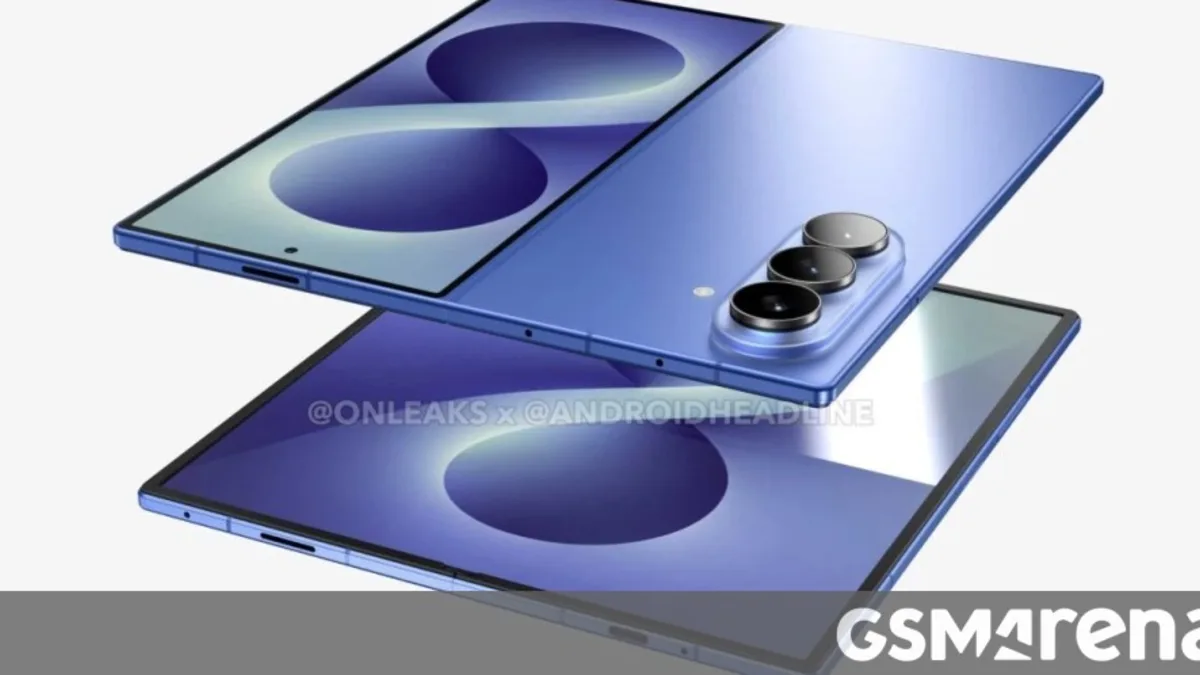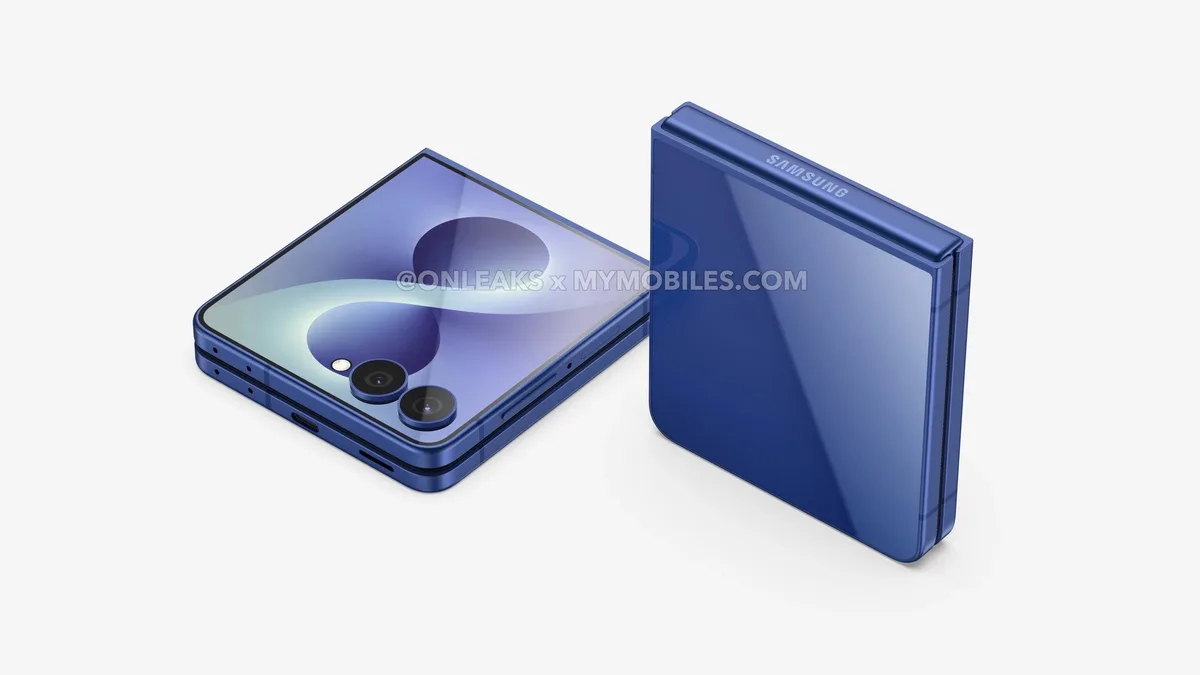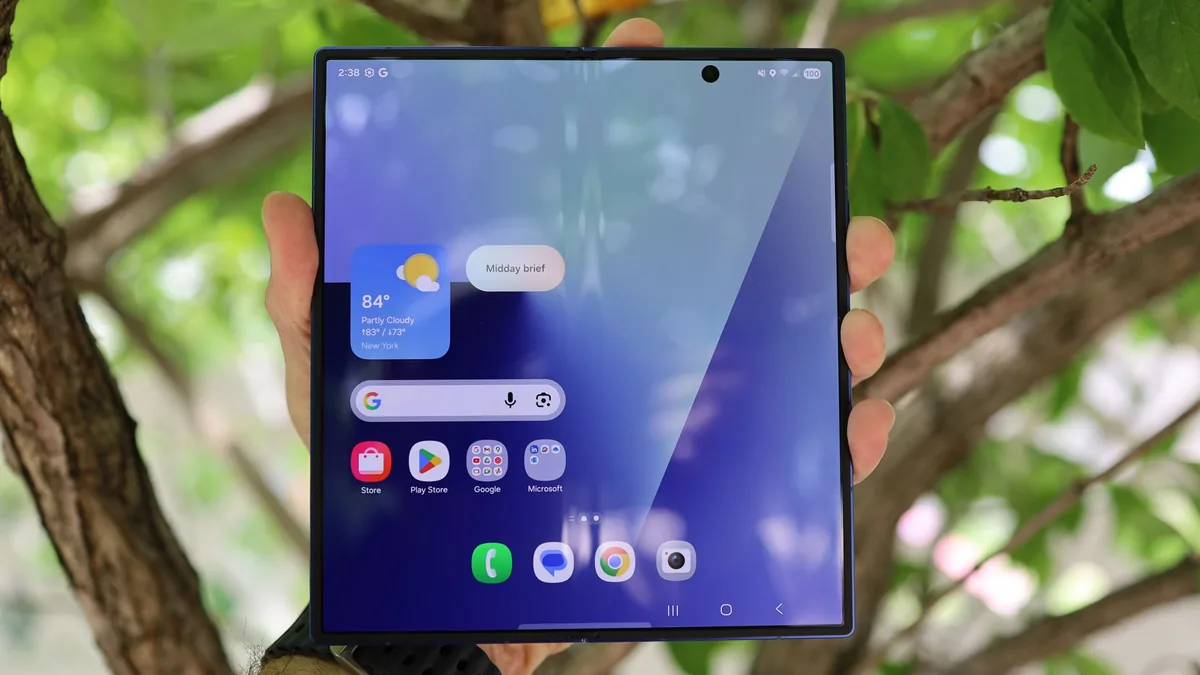
Samsung already sells foldables, but its newest patent talk is much stranger than another hinge refinement. The design being discussed is closer to a compact block that can open out and then extend again, using both folding and rolling display ideas. It sounds excessive, yet it tells us something useful about where phone makers are looking now that basic book-style foldables have become familiar.
The attraction is easy to understand. A normal foldable gives you a phone that becomes a small tablet, but it still has a fixed inner screen size. A rollable section could push that idea further by turning the unfolded device into something wider when the user actually needs more canvas. That would matter for reading documents, editing photos, multitasking, or watching video without carrying a separate tablet.
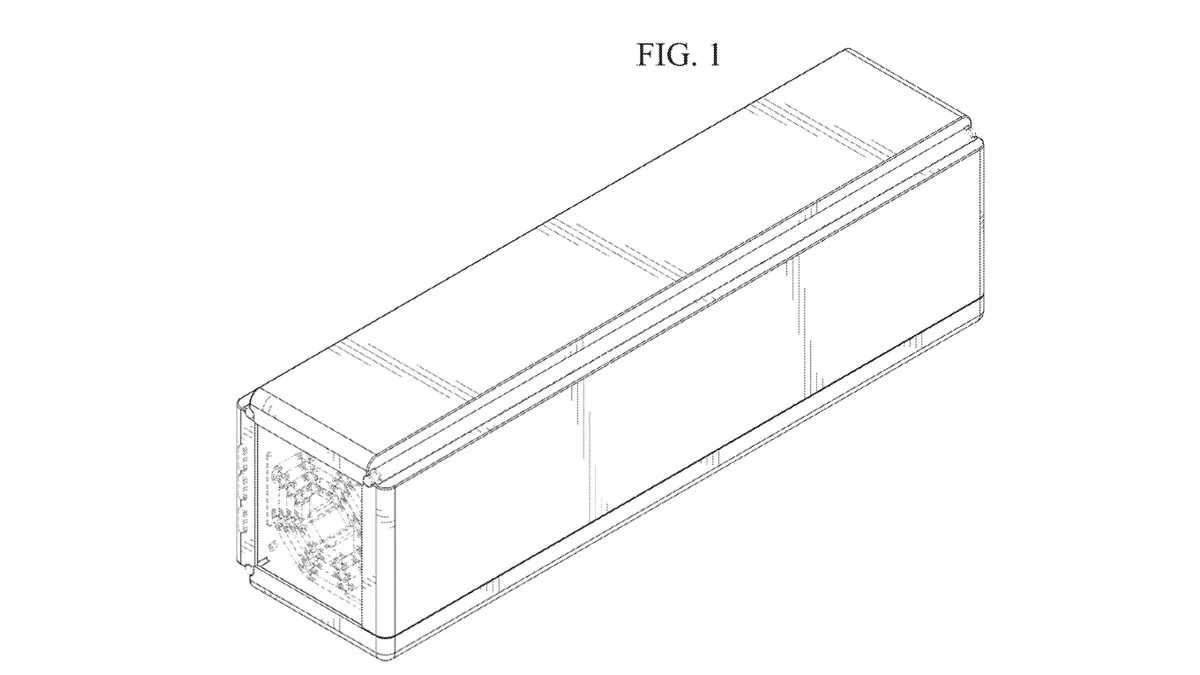
The awkward part is the starting shape. Patent images suggest a thick, brick-like device with screens wrapping around more than one side. That makes it look more like a technology sample than a phone someone would casually keep in a pocket. Still, patents are often about protecting ideas before they become commercial designs. They do not have to show the final product to be useful.
Android Authority reported the patent details and noted that Samsung combines foldable, bendable, and rollable display thinking in the filing. The most important takeaway is not that this exact brick phone is likely to launch. It is that Samsung is still testing ways to make pocket devices become larger screens without simply copying the current Galaxy Z Fold formula.
That matters because the foldable market is beginning to separate into practical and experimental paths. Our earlier look at the Xiaomi wide fold leak showed how rivals are stretching the book-style design with broader displays and thinner bodies. Samsung, meanwhile, appears to be studying how far flexible screens can be pushed before the whole category needs a new shape.
The engineering problems would be serious. A device like this would need a hinge system, a rolling mechanism, dust protection, display support layers, battery placement, cooling, and software that can jump between several screen states without confusion. Durability would be the first buyer concern. Thickness would be the second. Price would be the third, and it might be the hardest one to solve if the design needs multiple advanced display panels.
Software could be just as important as hardware. A bigger screen is only valuable if apps know how to use it. Samsung has more experience than most companies here because of DeX, tablets, and years of foldable multitasking, but a foldable-rollable device would still need new layout rules. The phone cannot feel like a gimmick that only looks impressive in demos. It has to give users a reason to expand the screen every day.
For now, this is best treated as a window into Samsung Display and Samsung Mobile research rather than a near-term Galaxy product. Even so, the patent keeps the foldable conversation alive at a time when regular smartphones are becoming hard to distinguish. The next big phone fight may not be about adding another camera ring. It may be about who can make a larger screen appear from a smaller object without making the device feel ridiculous.