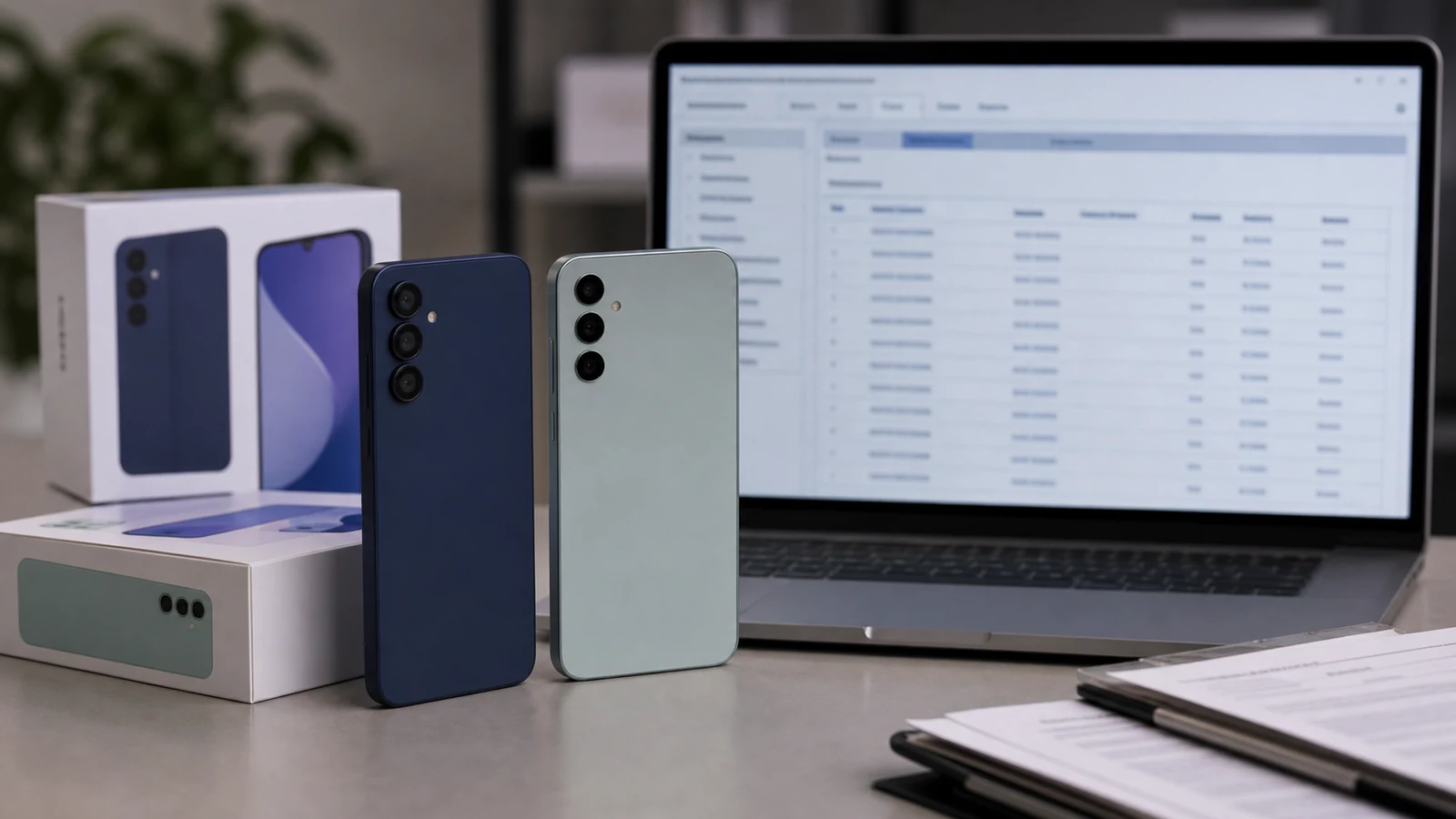
The Galaxy F08 and Galaxy M08 leak is easy to overlook because the phones are not expected to be exciting. That is exactly why it matters. Entry-level 4G phones still serve millions of buyers who care more about price, battery life, repairability, and familiar software than the latest radio standard. Samsung may be pushing AI and premium foldables at the top of its lineup, but it still needs low-cost models to defend market share in places where the jump to 5G hardware can make a phone too expensive.
The leaked model numbers, SM-E085F and SM-M085F, point to two related phones in Samsung's familiar F and M budget families. These models usually share parts with the Galaxy A line, then receive small changes for online retail channels, battery priorities, or regional pricing. That strategy is not glamorous, but it lets Samsung fill shelves without designing every low-end phone from scratch. It also gives buyers multiple Samsung-branded choices at the same price point, which is useful in markets where local discounts move quickly.
The interesting question is whether Samsung uses these models as simple refreshes or gives them meaningful improvements over the Galaxy A07 era. A better display, cleaner software, longer update promise, stronger battery, or improved fingerprint placement could matter more than a new chip. Budget buyers remember basic annoyances. Slow storage, weak charging, and bad cameras are often more damaging than missing 5G.
The database appearance reported by SamMobile says the two LTE models were spotted in the GSMA database, which confirms development but not specifications. The expected timing around late 2026 would follow the yearly cycle of earlier F and M phones. This is not the kind of leak that changes Samsung's image overnight, but it shows how the smartphone market really works. Premium devices create the headlines; cheap phones create the installed base. Samsung cannot ignore either side, especially when Chinese rivals keep improving the low end.
Samsung also has a software advantage if it chooses to use it. Budget phones often launch with old Android builds, weak update promises, and heavy preloaded apps. A cleaner experience would help the F08 and M08 stand out more than a tiny processor upgrade. Buyers at this level may not talk about update policies every day, but they do notice when banking apps, messaging, and camera software remain usable over time. Stability is a real feature in the low-end market.
The 4G decision should not be treated as failure either. In many regions, 5G coverage, pricing, and battery impact still do not justify the extra cost for every user. A cheaper LTE phone can be the right product if the saved money goes into battery, screen quality, storage, or build. Samsung's job is to make these devices feel intentionally practical, not outdated before they launch.
For carriers and retailers, these models can also be important bundle phones. A cheap Samsung with dependable basics is easy to sell with prepaid plans, student offers, and first-phone packages, especially where brand trust matters more than spec novelty.